ClapMove · clapmove.com
Exercise handout — move better, feel better.
Abdominal Bracing
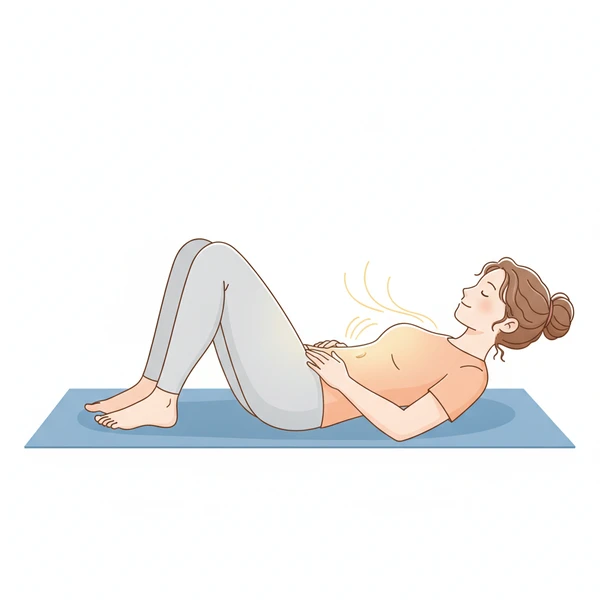
Learn to gently tighten your core muscles to protect your spine during movement. This is the foundation of all lumbar stability exercises.
Stop if
Choose an easier exercise if pain reaches 6 out of 10 or becomes sharp. Stop and rest if pain reaches 8 out of 10.
This is the general ClapMove rule. This exercise has no extra stop rule of its own.
- Pain 6 out of 10 or more: choose an easier exercise.
- Pain 8 out of 10 or more: stop and rest.
Equipment needed
- Works at home
- Works at the gym
chair
Home Options
- chair
Dosage
2
Sets
10
Reps / Time
30 sec
Rest
hold 5-10 seconds each rep
Tempo
Step-by-Step Guide
Set up
- Lie on your back with knees bent, or sit in a chair
- Place fingers on sides of abdomen just above hip bones
- This is where you will feel the brace
Step 1 of 6
Take a normal breath in
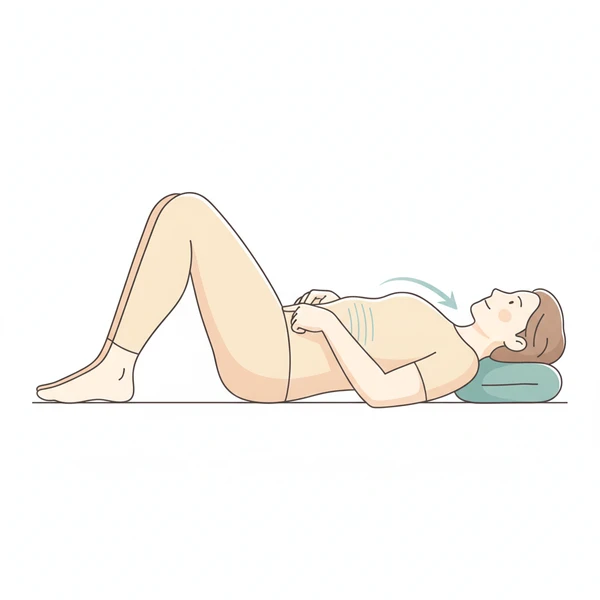
Step 2 of 6
Gently tighten your abdominal muscles 20-30%
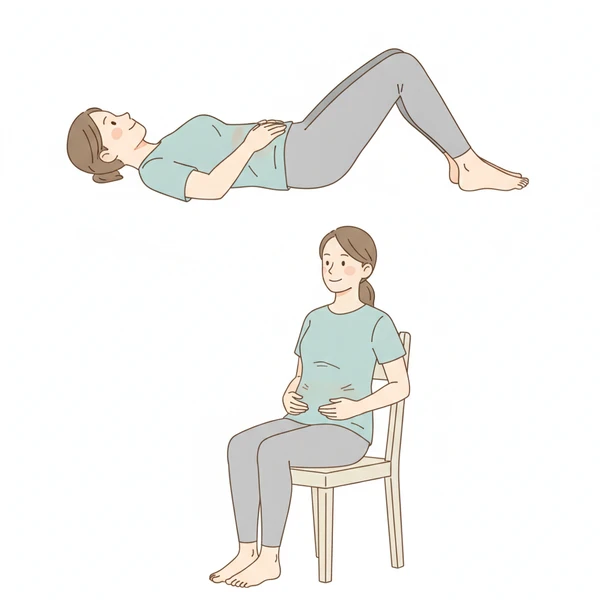
Step 3 of 6
Imagine someone is about to poke your belly
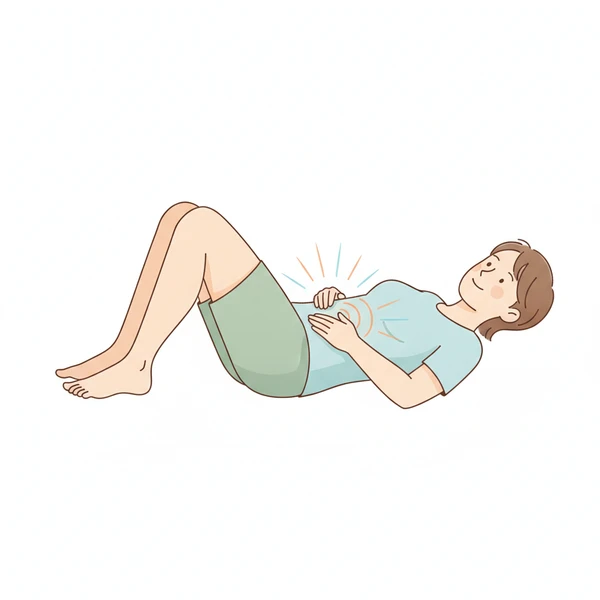
Step 4 of 6
Keep breathing normally while maintaining brace
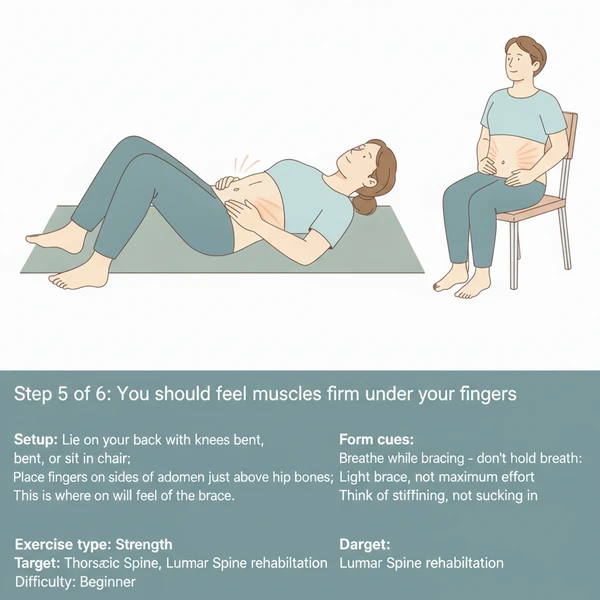
Step 5 of 6
You should feel muscles firm under your fingers
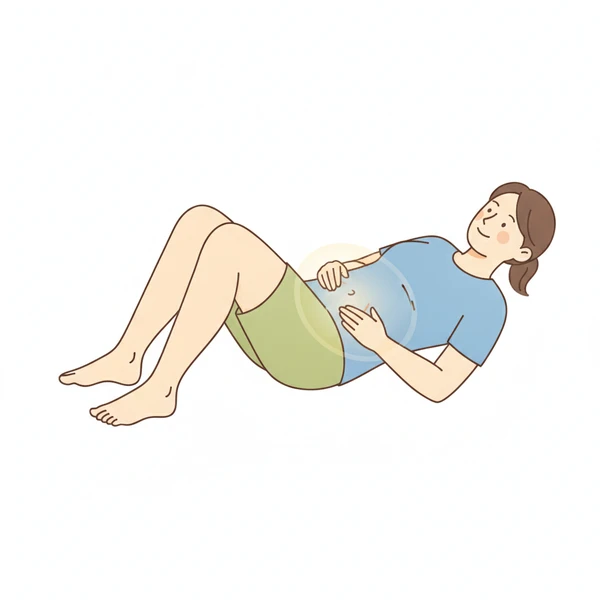
Step 6 of 6
Hold 5-10 seconds, then fully relax
Breathing
- Keep breathing throughout
- Shallow breaths are okay at first
Form Cues
- Breathe while bracing - don't hold breath
- Light brace, not maximum effort
- Think of stiffening, not sucking in
- Keep shoulders and jaw relaxed
Common Mistakes to Avoid
- Holding breath
- Bracing too hard (max effort)
- Sucking belly in instead of bracing out
- Unable to maintain while breathing
Safety Information
Do not hold your breath. The brace should be light, not maximal effort.
Progressions
Apply brace during heel slides, bridges, or dead bugs
Regressions
Start with shorter holds, 3-5 seconds
Get your free personalized program at clapmove.com/register
Printed from clapmove.com. ClapMove is not a replacement for professional medical advice — always consult a healthcare provider before starting any exercise program.