ClapMove · clapmove.com
Exercise handout — move better, feel better.
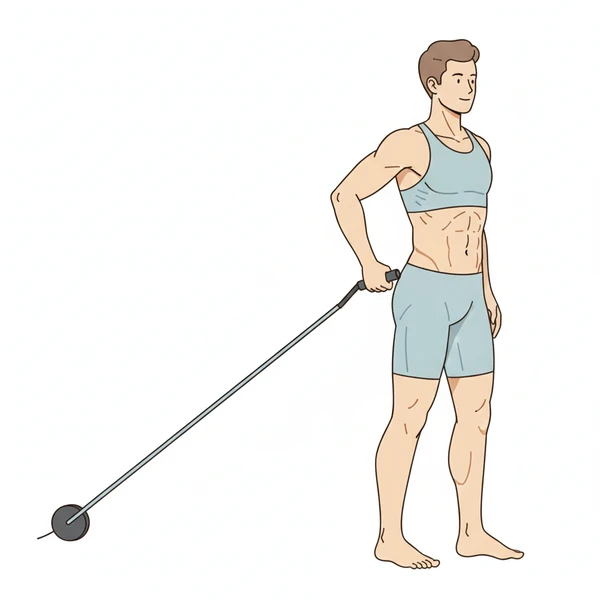
Cable Lift (Anti-Rotation)
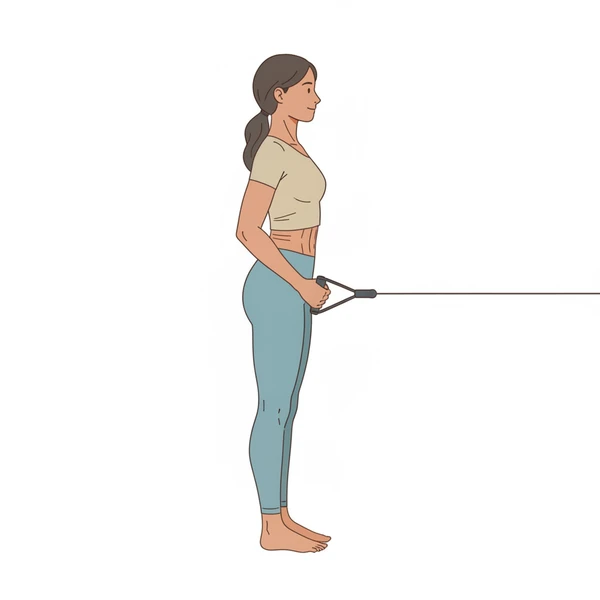
Diagonal pushing pattern for rotational core strength. Complements the chop pattern for balanced rotational training.
Stop if
Choose an easier exercise if pain reaches 6 out of 10 or becomes sharp. Stop and rest if pain reaches 8 out of 10.
This is the general ClapMove rule. This exercise has no extra stop rule of its own.
- Pain 6 out of 10 or more: choose an easier exercise.
- Pain 8 out of 10 or more: stop and rest.
Equipment needed
- Works at home
- Works at the gym
resistance_bands
No equipment? Try: cable machine, resistance band
Dosage
2
Sets
10
Reps / Time
45 sec
Rest
2 sec lift / 2 sec return
Tempo
Step-by-Step Guide
Set up
- Set cable or anchor band at low position
- Stand sideways, feet shoulder-width apart
- Hold handle with both hands at hip height
Step 1 of 5
Brace core firmly
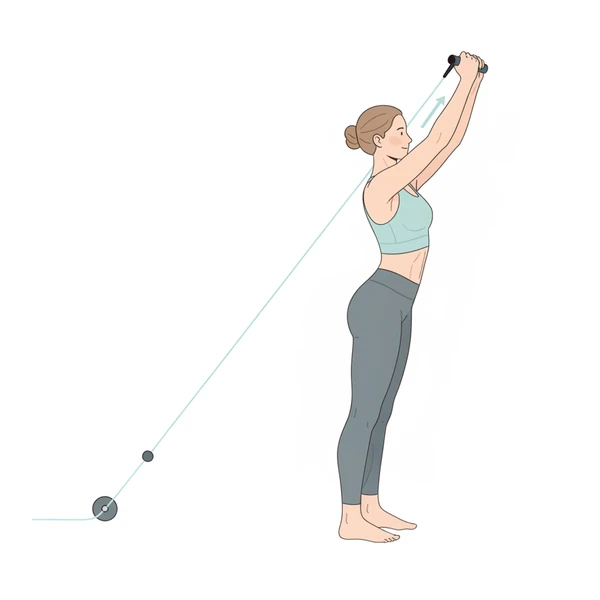
Step 2 of 5
Push handle diagonally up and across body
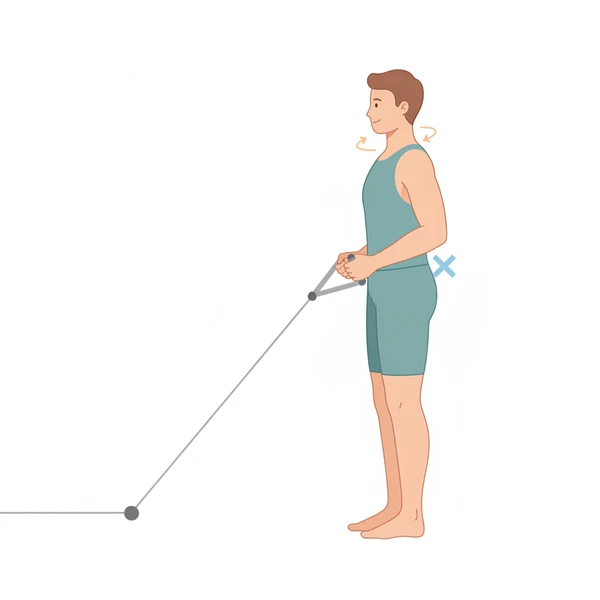
Step 3 of 5
Rotate through upper back only
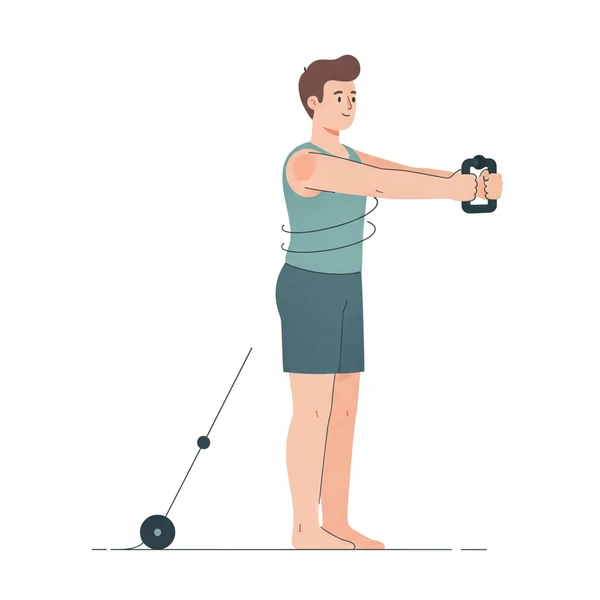
Step 4 of 5
Keep hips facing forward
Step 5 of 5
Return with control
Breathing
- Exhale as you push up
- Inhale as you return
Form Cues
- Rotation through upper back only
- Hips stay square
- Arms stay relatively straight
- Control both directions
Common Mistakes to Avoid
- Rotating through low back
- Letting hips rotate
- Using momentum
- Not controlling the return
Safety Information
No rotation through pain. Keep rotation in upper back.
Progressions
Heavier resistance, half-kneeling position
Regressions
Lighter resistance, kneeling position
Get your free personalized program at clapmove.com/register
Printed from clapmove.com. ClapMove is not a replacement for professional medical advice — always consult a healthcare provider before starting any exercise program.