ClapMove · clapmove.com
Exercise handout — move better, feel better.
Stability Ball Crunch
Lie back on a stability ball with your shoulders, back and tailbone on it and your feet flat. Curl your upper back up toward your thighs, keeping your tailbone on the ball. You may feel the front of your stomach working.
Stop if
Stop the exercise if this happens. Seek advice if it persists or you are unsure.
- Also stop if you notice
- Neck or low back pain.
- Pain 6 out of 10 or more: choose an easier exercise.
- Pain 8 out of 10 or more: stop and rest.
Equipment needed
- Works at home
- Works at the gym
stability_ball
Home Options
- stability ball
Dosage
3
Sets
10
Reps / Time
45 sec
Rest
controlled
Tempo
Step-by-Step Guide
Set up
- Sit on an inflated stability ball with your feet flat, then walk your feet forward and lean back until your shoulders, back and tailbone rest on the ball.
- Set your knees bent about ninety degrees with your feet about hip-width apart, then place your hands behind your head with your elbows held back.
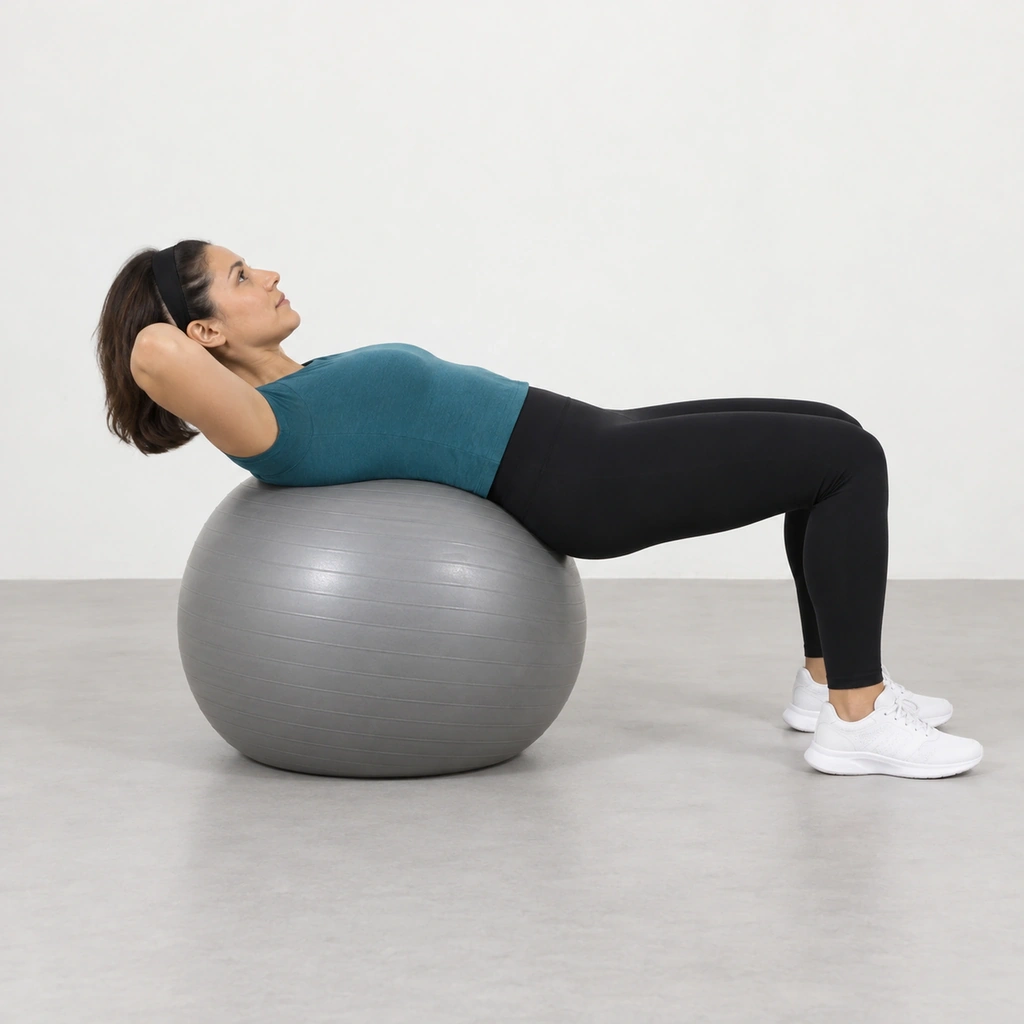
Step 1 of 3
Rest your shoulders, back and tailbone on the ball with your knees bent and feet flat.
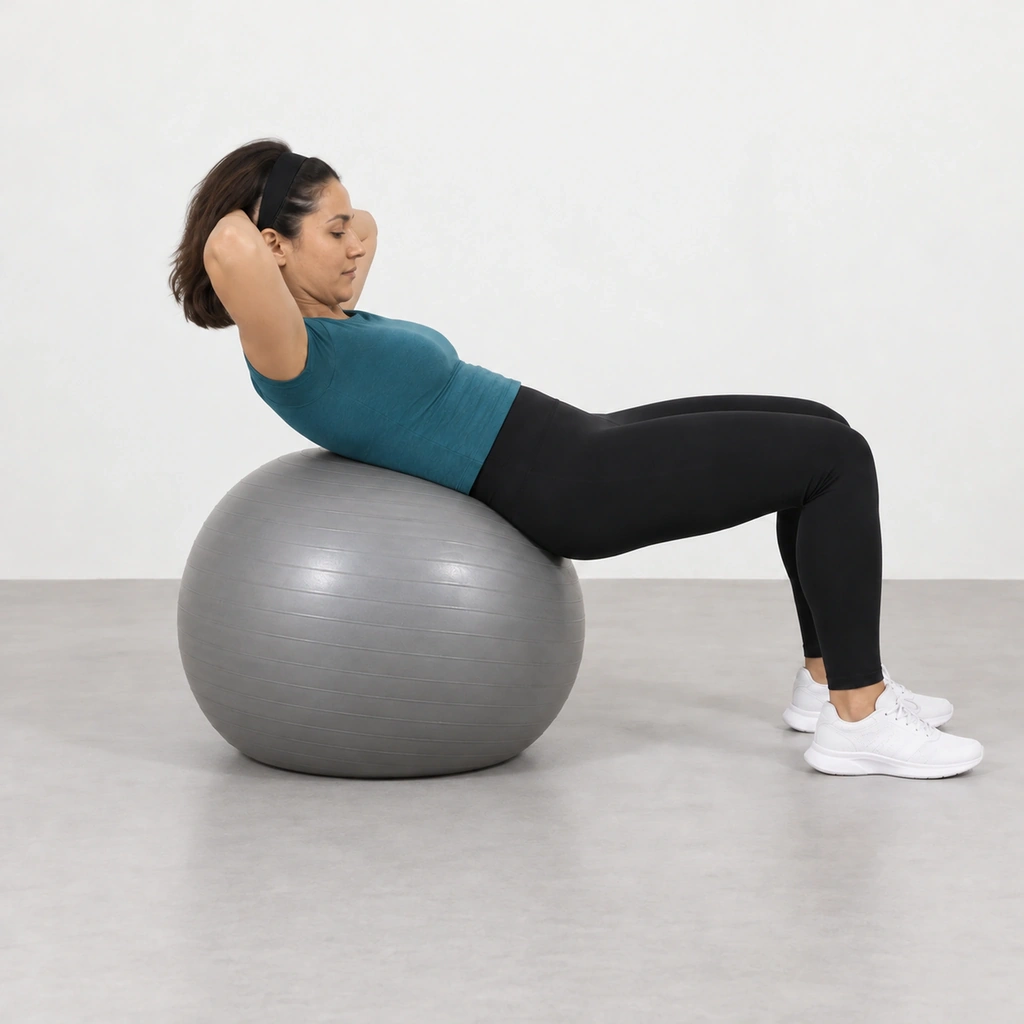
Step 2 of 3
Curl your trunk toward your thighs until your upper back lifts clear, keeping your tailbone on the ball.
Step 3 of 3
Rest your shoulders, back and tailbone on the ball with your knees bent and feet flat.
What you should feel
You may feel the front of your stomach working as you curl up.
Breathing
- Breathe out as you curl up and in as you lower back down.
Safety Information
Keep your tailbone and low back on the ball; do not sit all the way up. Rest your hands behind your head without pulling on your neck. Stop if the exercise causes pain or you become unwell. Seek appropriate professional advice about symptoms or suitability.
Get your free personalized program at clapmove.com/register
Printed from clapmove.com. ClapMove is not a replacement for professional medical advice — always consult a healthcare provider before starting any exercise program.