ClapMove · clapmove.com
Exercise handout — move better, feel better.
Reverse Crunch
Lie on your back with your knees bent above your hips and your palms down. Curl your hips off the mat so your knees move toward your chest, then roll back down. You may feel your stomach muscles working, especially low down.
Stop if
Stop the exercise if this happens. Seek advice if it persists or you are unsure.
- Also stop if you notice
- Pain in your back, neck or hips, or dizziness.
- Pain 6 out of 10 or more: choose an easier exercise.
- Pain 8 out of 10 or more: stop and rest.
Equipment needed
- Works at home
- Works at the gym
none
Home Options
- bodyweight
Dosage
3
Sets
10
Reps / Time
45 sec
Rest
controlled
Tempo
Step-by-Step Guide
Set up
- Lie on your back on a mat with your knees bent and your feet flat on the floor.
- Rest your arms on the floor a little out from your sides with your palms down, then lift your feet until your knees are straight above your hips, bent at a right angle.
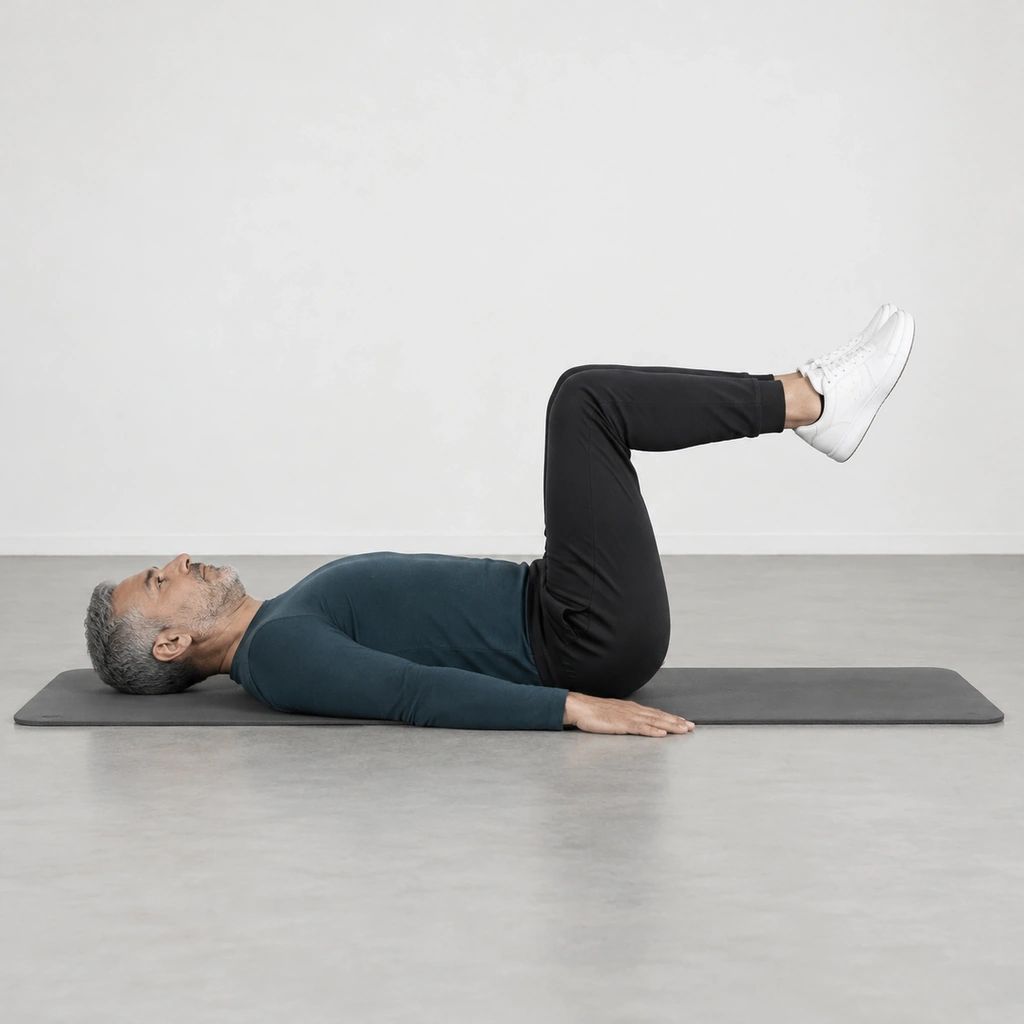
Step 1 of 3
Lie with your knees bent above your hips, palms down.
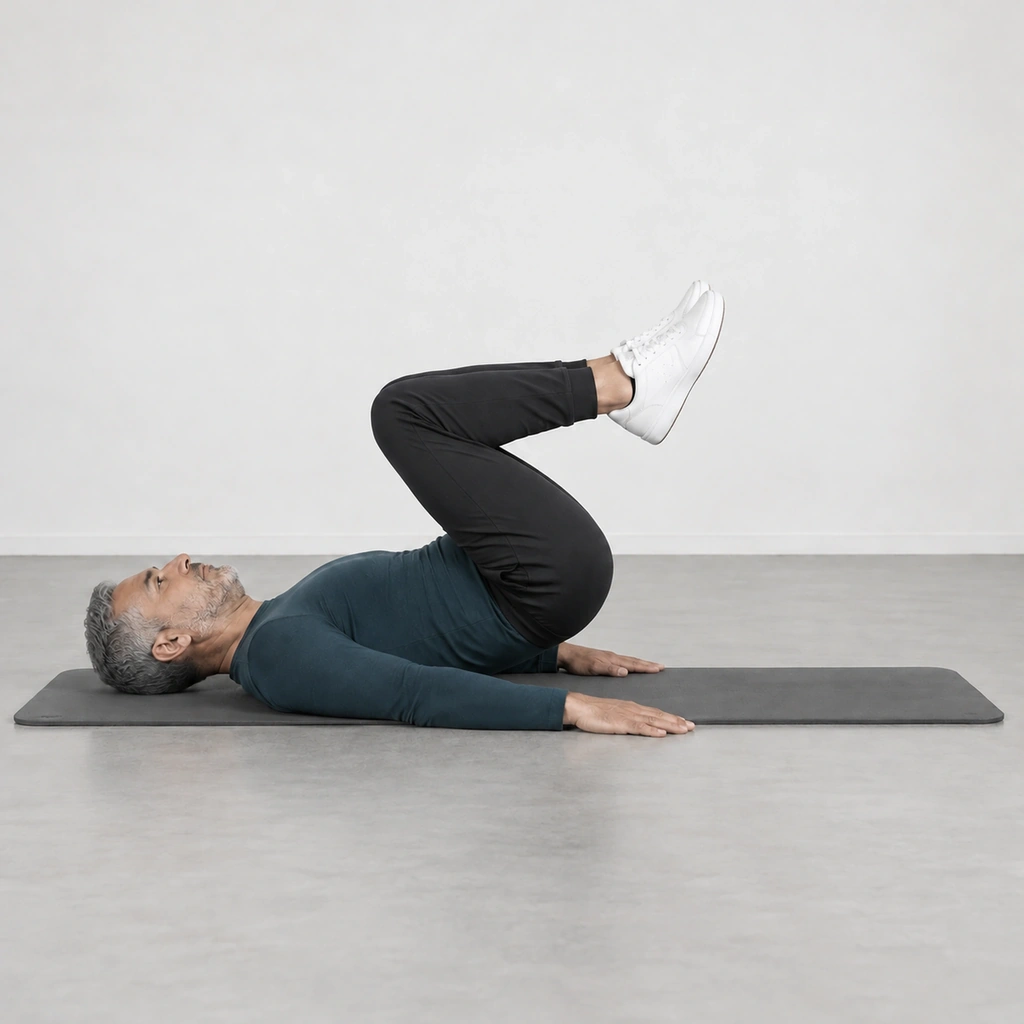
Step 2 of 3
Curl your hips off the mat, knees toward your chest.
Step 3 of 3
Lie with your knees bent above your hips, palms down.
What you should feel
You may feel your stomach muscles working, especially low down.
Breathing
- Breathe steadily throughout; do not hold your breath.
Safety Information
This exercise bends the lower back; if you have a back or neck problem, are pregnant, or have been told to avoid bending exercises, ask a health professional before trying it. Move slowly and lift only your hips and lower back; do not swing your legs or roll onto your upper back. Stop if it hurts your back, neck or hips, or if you feel dizzy. Stop if the exercise causes pain or you become unwell. Seek appropriate professional advice about symptoms or suitability.
Get your free personalized program at clapmove.com/register
Printed from clapmove.com. ClapMove is not a replacement for professional medical advice — always consult a healthcare provider before starting any exercise program.