ClapMove · clapmove.com
Exercise handout — move better, feel better.
Warrior II Yoga Pose
Stand with your feet wide, front foot turned out and arms level with your shoulders. Bend the front knee over the ankle while the back leg stays straight and your trunk stays upright. You may feel your thighs and hips working and a stretch along the inner thighs.
Stop if
Stop the exercise if this happens. Seek advice if it persists or you are unsure.
- Also stop if you notice
- Pain in your hips, groin, knees, ankles, back or shoulders, dizziness or unsteadiness.
- Pain 6 out of 10 or more: choose an easier exercise.
- Pain 8 out of 10 or more: stop and rest.
Equipment needed
- Works at home
- Works at the gym
none
Home Options
- bodyweight
Dosage
1
Sets
30 sec
Reps / Time
45 sec
Rest
controlled
Tempo
Step-by-Step Guide
Set up
- Stand across the middle of your mat with your feet about twice hip width apart, then turn your right foot to point toward the right end of the mat and turn your left toes slightly in.
- Face your hips and chest forward, stand tall with both knees straight but not locked, and let your arms hang at your sides.
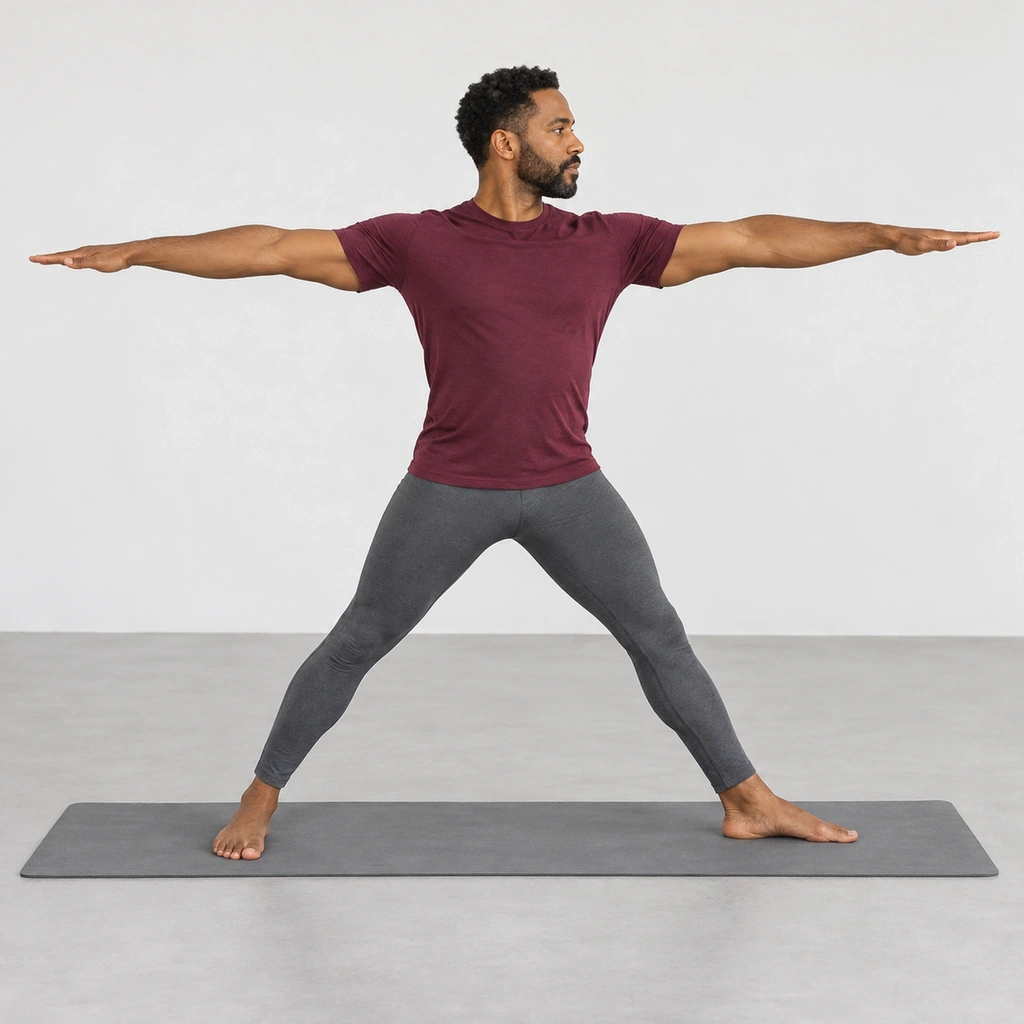
Step 1 of 3
Wide stance, right foot turned out, both legs straight, arms level, looking over the right hand.
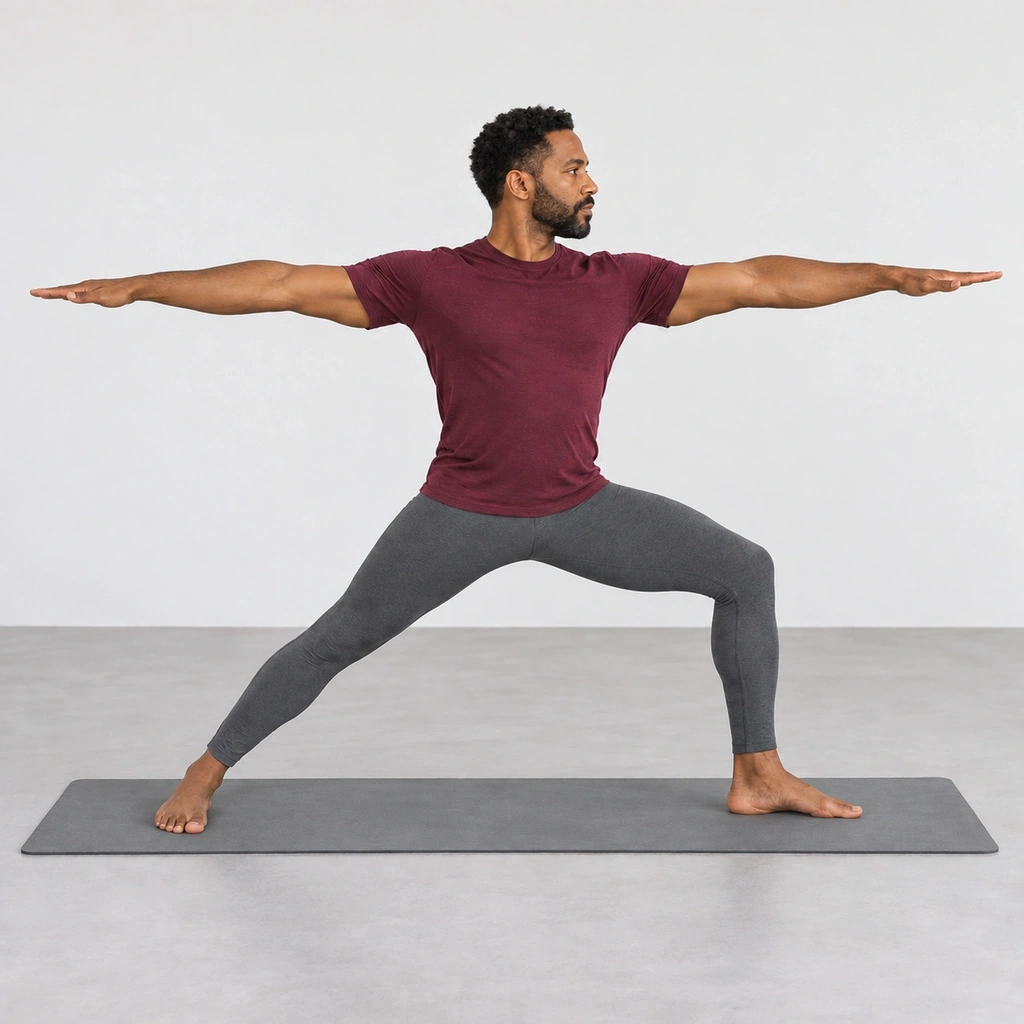
Step 2 of 3
Right knee bent over the ankle, left leg straight, trunk upright, arms level.
Step 3 of 3
Wide stance, right foot turned out, both legs straight, arms level, looking over the right hand.
What you should feel
You may feel your thighs and hips working, a stretch along your inner thighs and across your chest, and your shoulders working to hold your arms up.
Breathing
- Breathe slowly and steadily through the hold, for example for a few breaths; do not hold your breath.
Safety Information
This is a standing pose with a wide stance and a bent front knee; if you have a hip, groin, knee, ankle, back or shoulder problem, a balance problem, or have had recent surgery, ask a health professional before trying it. Keep the front knee over the ankle and pointing the same way as the front toes, use a shorter stance and a smaller knee bend if your knee or hip complains, rest your hands on your hips if your shoulders tire, and stand near a wall if your balance is unsteady. Stop if it hurts your hips, groin, knees, ankles, back or shoulders, or if you feel dizzy or unsteady. Stop if the exercise causes pain or you become unwell. Seek appropriate professional advice about symptoms or suitability.
Get your free personalized program at clapmove.com/register
Printed from clapmove.com. ClapMove is not a replacement for professional medical advice — always consult a healthcare provider before starting any exercise program.