ClapMove · clapmove.com
Exercise handout — move better, feel better.
Frankenstein Walk
Walk forward with your arms straight out at shoulder height. With each step, kick the opposite straight leg up toward your hand, then lower it and step into the next kick. You may feel a stretch along the back of the kicking thigh and work in the standing leg.
Stop if
Stop, put both feet down, stand still and rest. Seek advice if it persists or you are unsure.
- Also stop if you notice
- Sharp or pulling pain in the back of your thigh, pain in your hip, knee or lower back, losing your balance or dizziness.
- Pain 6 out of 10 or more: choose an easier exercise.
- Pain 8 out of 10 or more: stop and rest.
Equipment needed
- Works at home
- Works at the gym
none
Home Options
- bodyweight
Dosage
2
Sets
10
Reps / Time
30 sec
Rest
controlled
Tempo
Step-by-Step Guide
Set up
- Stand tall at one end of a clear walking space with your feet about hip-width apart.
- Raise both arms straight out in front of you to shoulder height with your palms facing down, and brace your trunk gently.
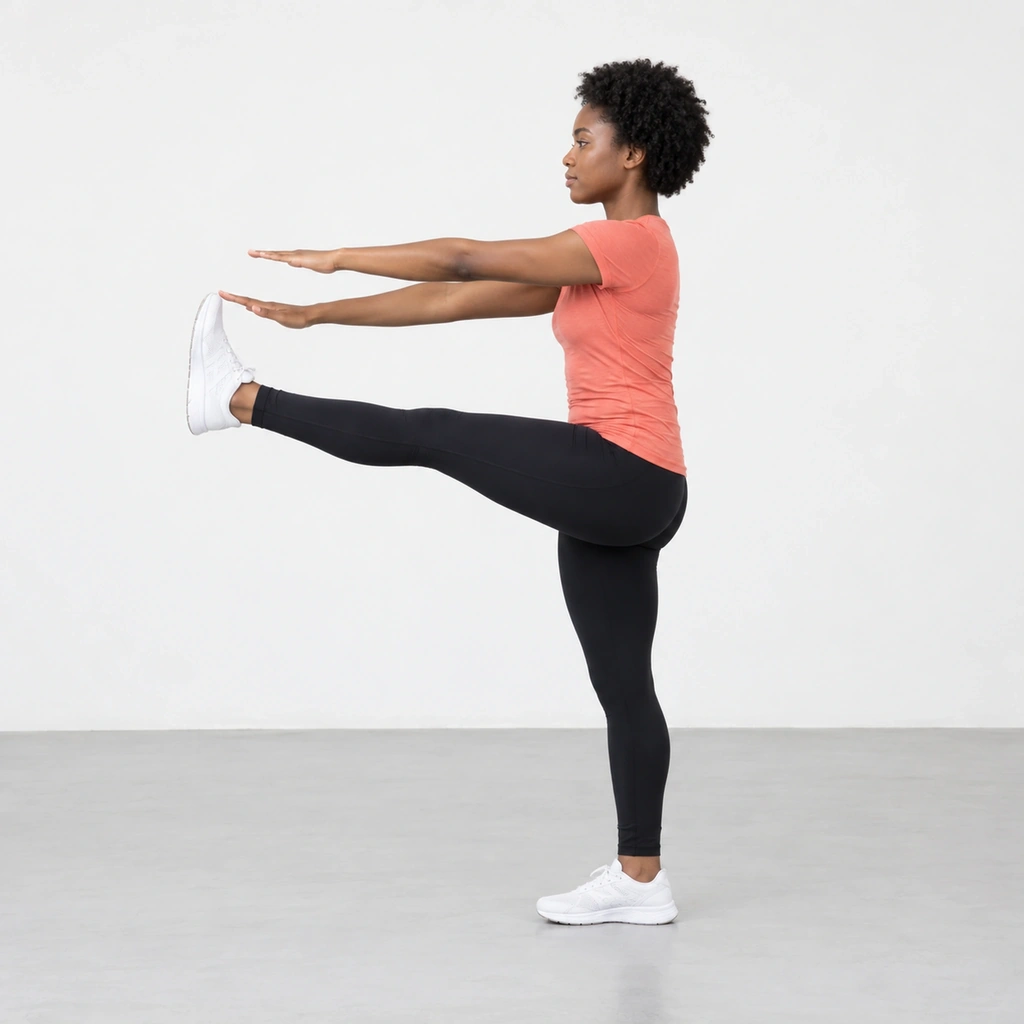
Step 1 of 3
Straight right leg kicked to hip height, toes below the left hand, trunk upright.
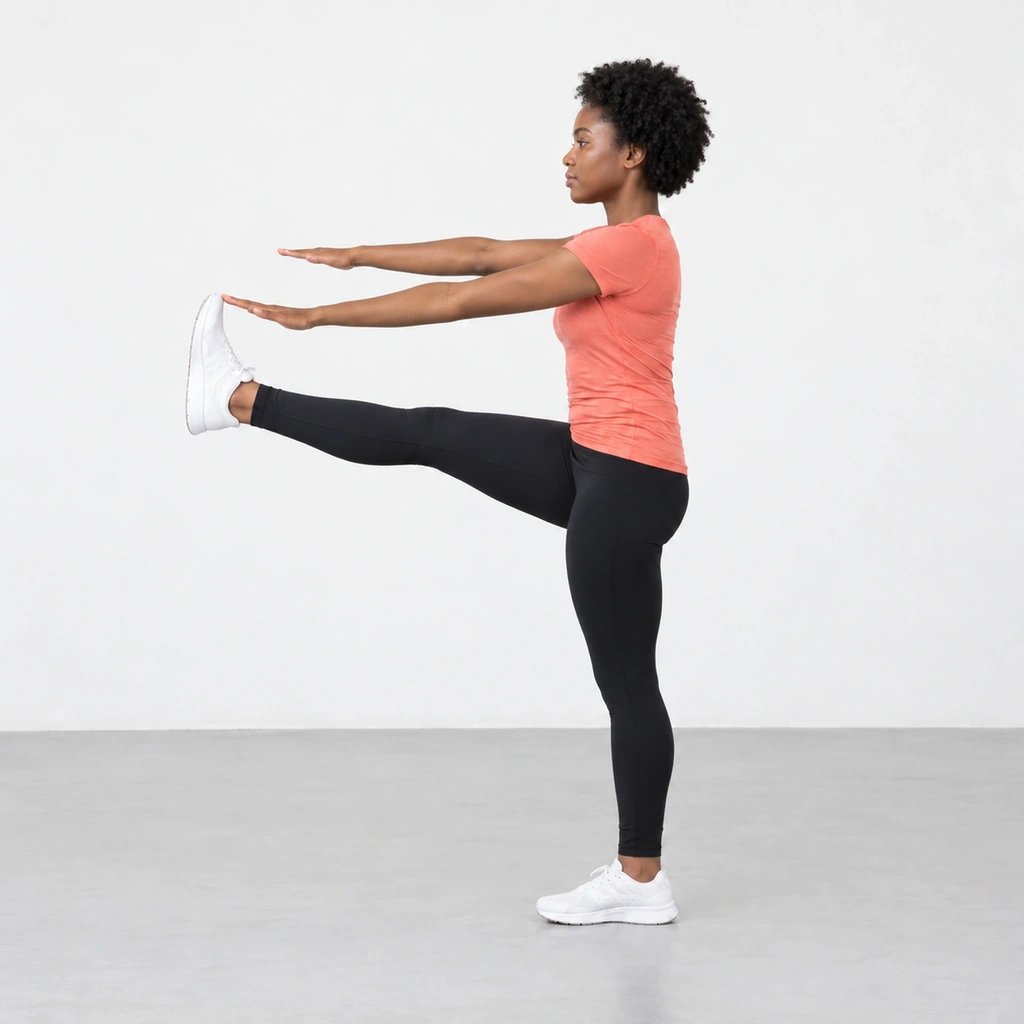
Step 2 of 3
Straight left leg kicked to hip height, toes below the right hand, trunk upright.
Step 3 of 3
Straight right leg kicked to hip height, toes below the left hand, trunk upright.
What you should feel
You may feel a stretch along the back of the kicking thigh and some work at the front of the hip and in the standing leg.
Breathing
- Breathe steadily through the whole walk; do not hold your breath as you kick.
Safety Information
If you have a hip, hamstring, knee, ankle or lower back problem, a balance problem, or have had recent surgery, ask a health professional before trying this exercise. Walk on a flat, clear, non-slip floor with space in front of you, start with small, slow kicks, and only kick as high as you can while keeping your trunk upright and your standing knee soft; do not swing your leg hard or force it toward your hand. Stop if you feel sharp or pulling pain in the back of your thigh, your hip, knee or back, if you lose your balance, or if you feel dizzy. Stop if the exercise causes pain or you become unwell. Seek appropriate professional advice about symptoms or suitability.
Get your free personalized program at clapmove.com/register
Printed from clapmove.com. ClapMove is not a replacement for professional medical advice — always consult a healthcare provider before starting any exercise program.