ClapMove · clapmove.com
Exercise handout — move better, feel better.
Seated Chest Stretch
Sit upright away from the chair back with your shoulders drawn back and down. Reach both arms out to the sides at shoulder height, then ease your chest forward and up. You may feel a stretch across the chest.
Stop if
Choose an easier exercise if pain reaches 6 out of 10 or becomes sharp. Stop and rest if pain reaches 8 out of 10.
This is the general ClapMove rule. This exercise has no extra stop rule of its own.
- Pain 6 out of 10 or more: choose an easier exercise.
- Pain 8 out of 10 or more: stop and rest.
Equipment needed
- Works at home
- Works at the gym
chair
Home Options
- chair
Dosage
1
Sets
30 sec
Reps / Time
15 sec
Rest
controlled
Tempo
Step-by-Step Guide
Set up
- Choose a solid, stable chair without wheels or arms, and sit with your feet flat on the floor and your knees bent at right angles.
- Wear loose, comfortable clothing, keep some water handy, and build up the repetitions gradually over time.
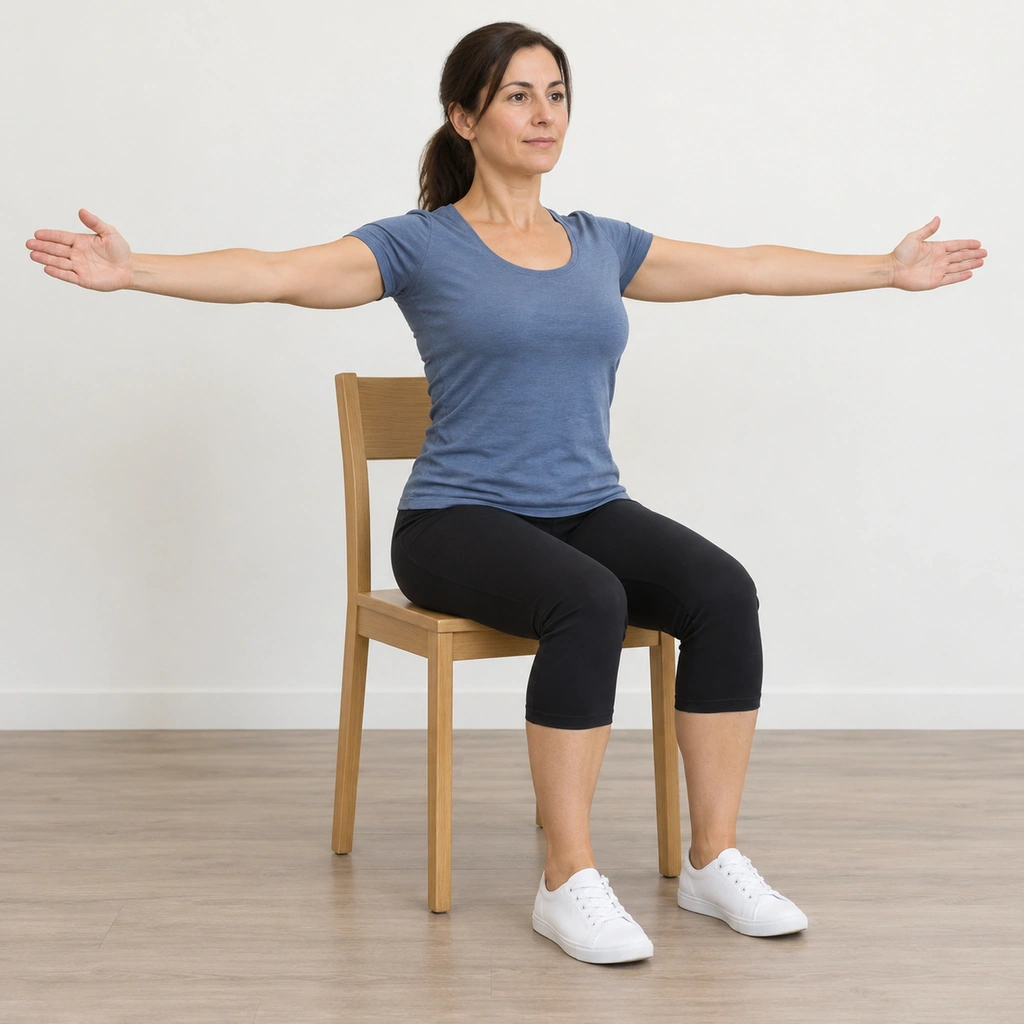
Step 1 of 3
Sit upright, clear of the chair back, and draw your shoulders back and down. Reach both arms straight out to the sides at shoulder height.
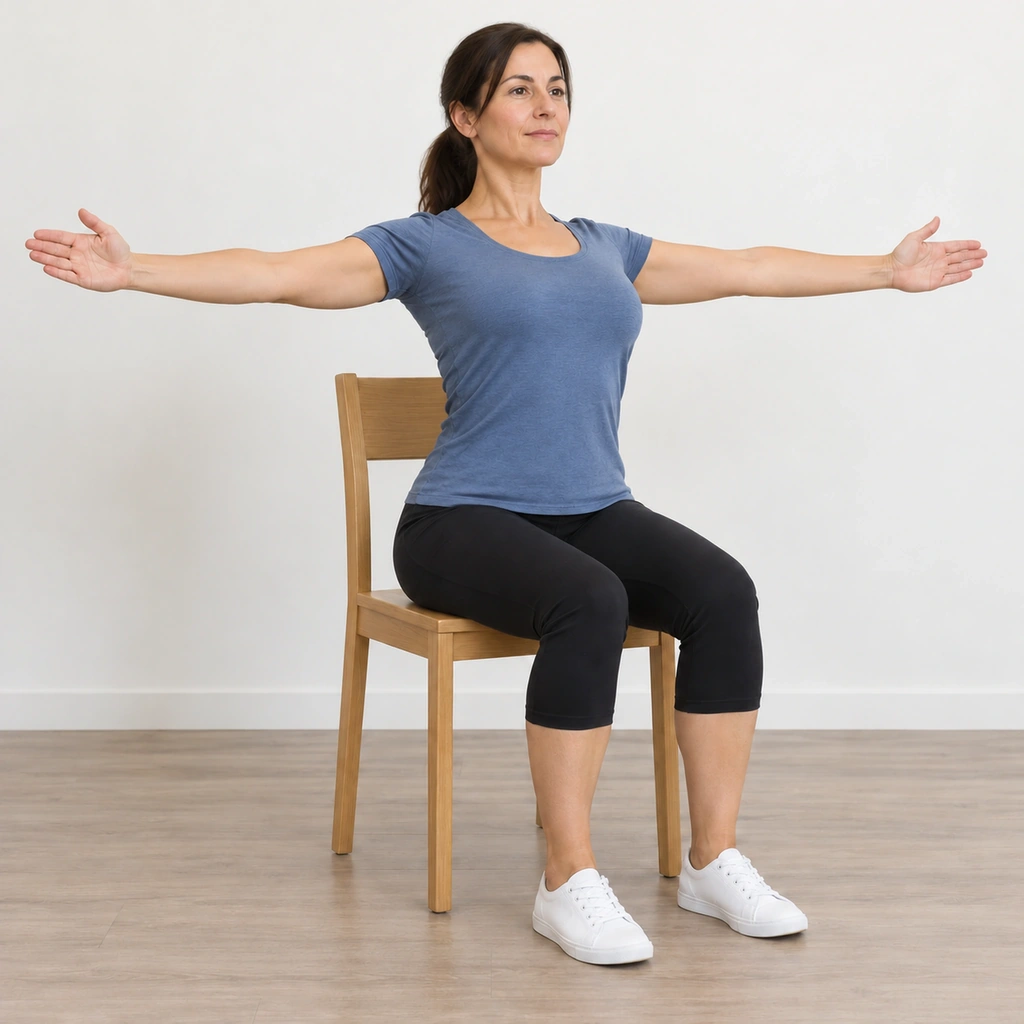
Step 2 of 3
Keeping both arms held out to the sides, ease your chest forward and upward until a stretch is felt across the front of your chest.
Step 3 of 3
Sit upright, clear of the chair back, and draw your shoulders back and down. Reach both arms straight out to the sides at shoulder height.
What you should feel
A stretch felt across the chest.
Breathing
- Breathe normally throughout the hold.
Safety Information
These seated exercises are gentle and easy to follow, but check with a GP or a health professional involved with your care if you are not sure they are suitable for you. Choose a solid, stable chair that does not have wheels and does not have arms, so your movement is not restricted. Stop if the exercise causes pain or you become unwell. Seek appropriate professional advice about symptoms or suitability.
Get your free personalized program at clapmove.com/register
Printed from clapmove.com. ClapMove is not a replacement for professional medical advice — always consult a healthcare provider before starting any exercise program.