ClapMove · clapmove.com
Exercise handout — move better, feel better.
Standing Isometric Shoulder Flexion Against a Wall
Stand facing a wall with your upper arm close to your side and your elbow bent to a right angle. Rest your fist on the wall, then push it into the wall and hold for 10 seconds without moving your joints.
Stop if
Lifting heavy objects should not be attempted initially. Seek advice from your doctor or physiotherapist.
- Pain 6 out of 10 or more: choose an easier exercise.
- Pain 8 out of 10 or more: stop and rest.
Equipment needed
- Works at home
- Works at the gym
Home Options
- wall
Dosage
1
Sets
30 sec
Reps / Time
45 sec
Rest
controlled
Tempo
Step-by-Step Guide
Set up
- Stand close enough to the wall that your elbow can bend to a right angle with your fist reaching the wall, upper arm held close to your side throughout.
- Lifting heavy objects should not be attempted initially; build up gradually and seek advice from your doctor or physiotherapist if unsure.
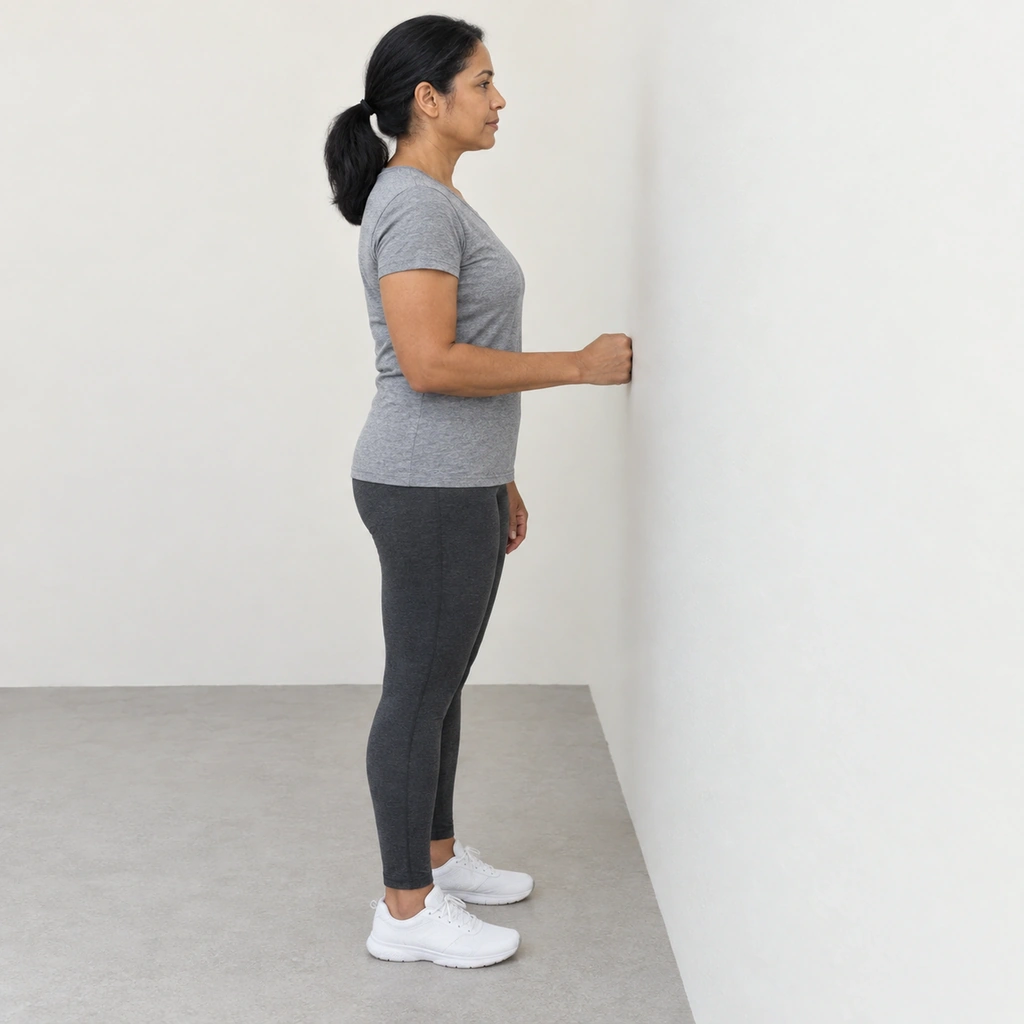
Step 1 of 3
Stand facing a wall with your upper arm close to your side and your elbow bent to a right angle. Rest your fist lightly against the wall.
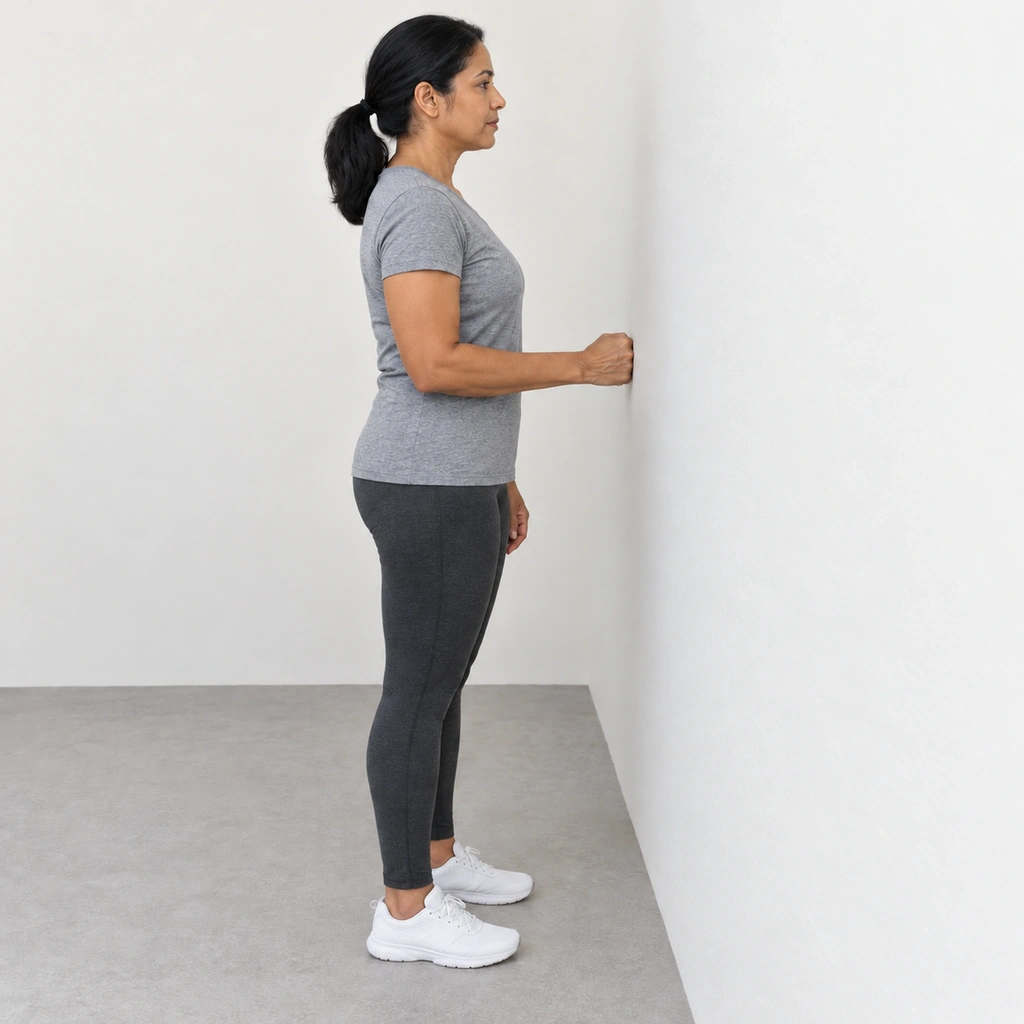
Step 2 of 3
Push your fist against the wall. Hold for 10 seconds.
Step 3 of 3
Stand facing a wall with your upper arm close to your side and your elbow bent to a right angle. Rest your fist lightly against the wall.
Breathing
- Breathe normally.
Safety Information
Check that the elbow bends and straightens fully and that the wrist and hand move well, since these joints can become stiff if the arm is not being used normally. Lifting heavy objects should not be attempted initially. The weight lifted should be increased gradually with advice from a doctor or physiotherapist. This is an unloaded push against an immovable wall, not an added weight. The exercises will be most effective when practiced regularly. Stop if the exercise causes pain or you become unwell. Seek appropriate professional advice about symptoms or suitability.
Get your free personalized program at clapmove.com/register
Printed from clapmove.com. ClapMove is not a replacement for professional medical advice — always consult a healthcare provider before starting any exercise program.