ClapMove · clapmove.com
Exercise handout — move better, feel better.
Wrist Flexion Hold
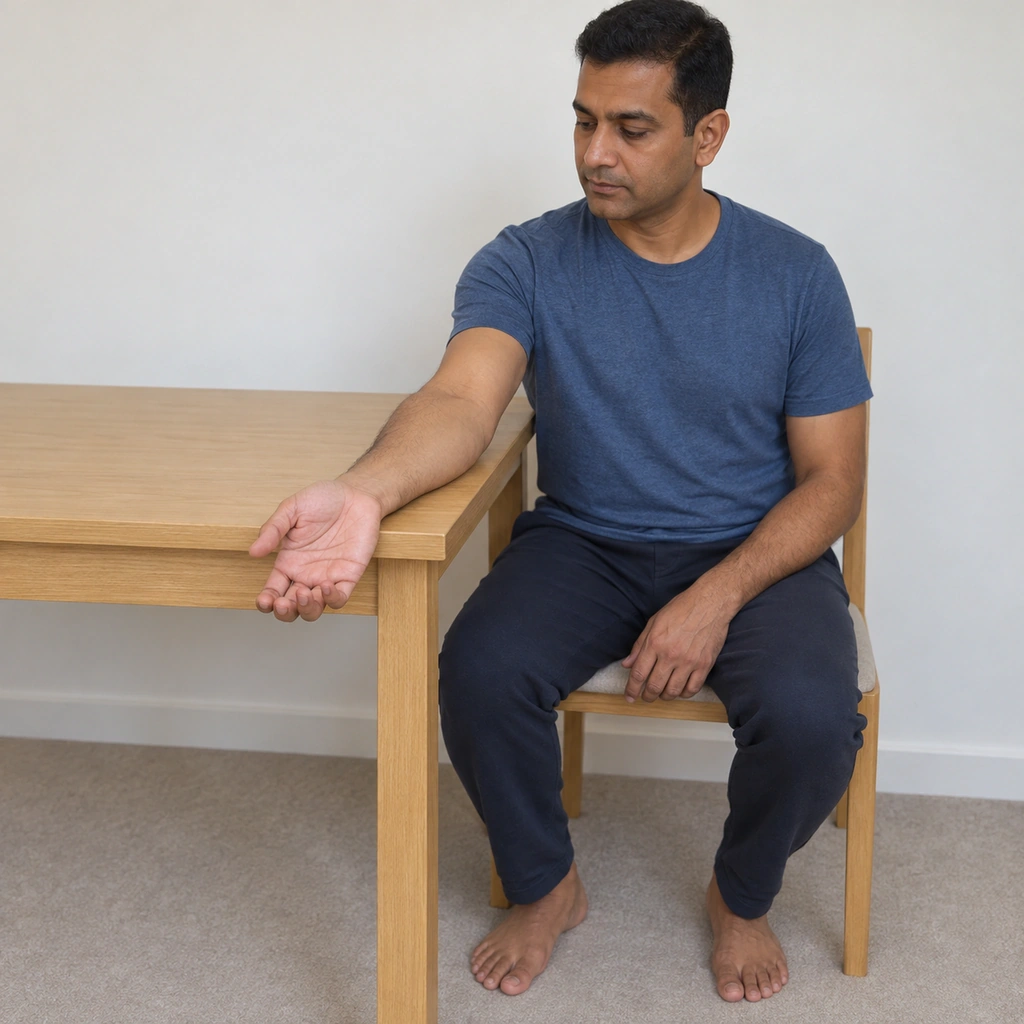
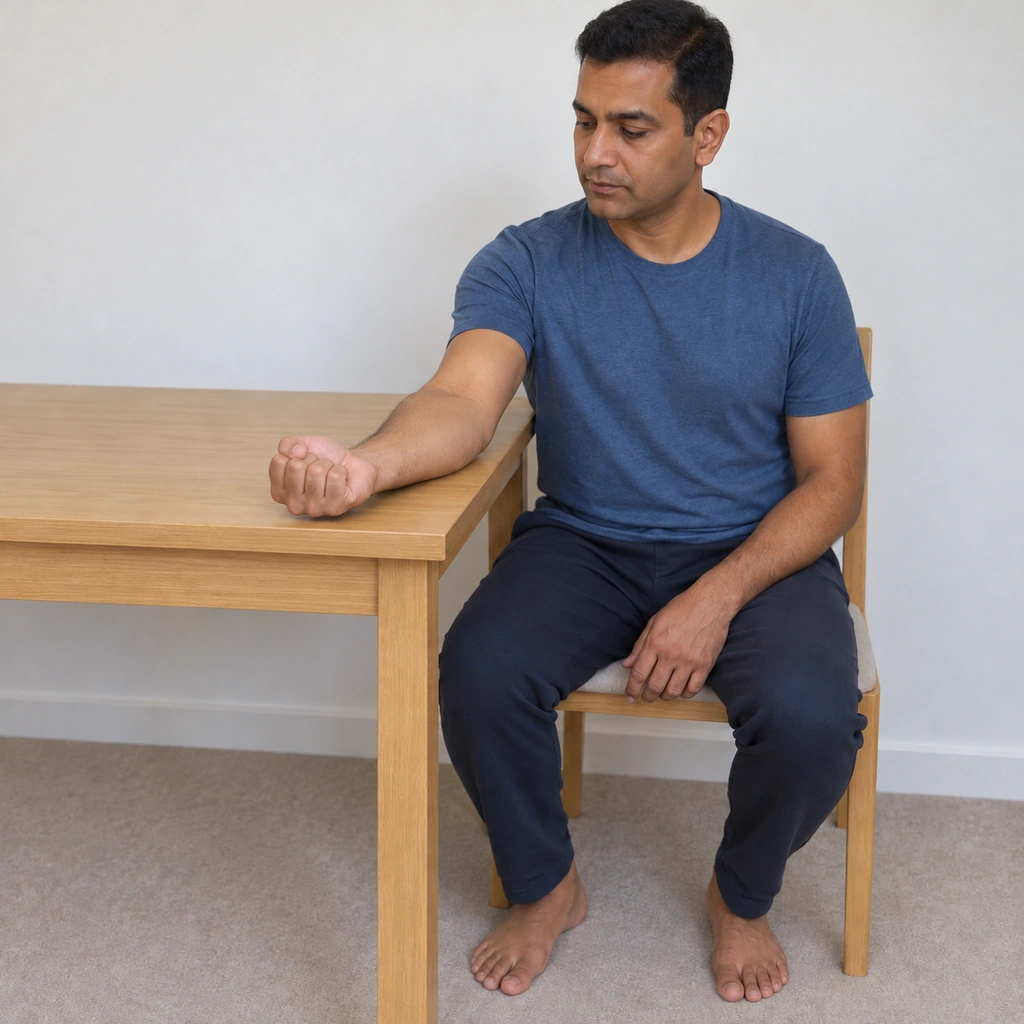
Sit at a table with your forearm flat on it, wrist just past the edge and palm up. Close your hand into a gentle fist, lift it until it lines up with your forearm, and hold for a few seconds before easing down.
Stop if
Stop these exercises if they make your symptoms worse or cause new pain, and talk to a healthcare professional if your elbow pain hasn't improved within 6 weeks of following this advice.
- Pain 6 out of 10 or more: choose an easier exercise.
- Pain 8 out of 10 or more: stop and rest.
Equipment needed
- Works at home
- Works at the gym
Home Options
- table or counter
Dosage
2
Sets
10
Reps / Time
30 sec
Rest
controlled
Tempo
Step-by-Step Guide
Set up
- Rest your forearm flat on a table with your wrist just past the edge and your palm turned up toward the ceiling.
- These exercises can feel a little uncomfortable at first; that usually eases with regular practice, and asking your GP or pharmacist about pain relief can help if discomfort makes it hard to keep going.
Step 1 of 4
Sit at a table and rest your forearm flat on it, wrist just past the edge and palm turned up toward the ceiling.
Step 2 of 4
Close your hand into a gentle fist and lift it until it lines up with your forearm, then hold that position for a few seconds.
Step 3 of 4
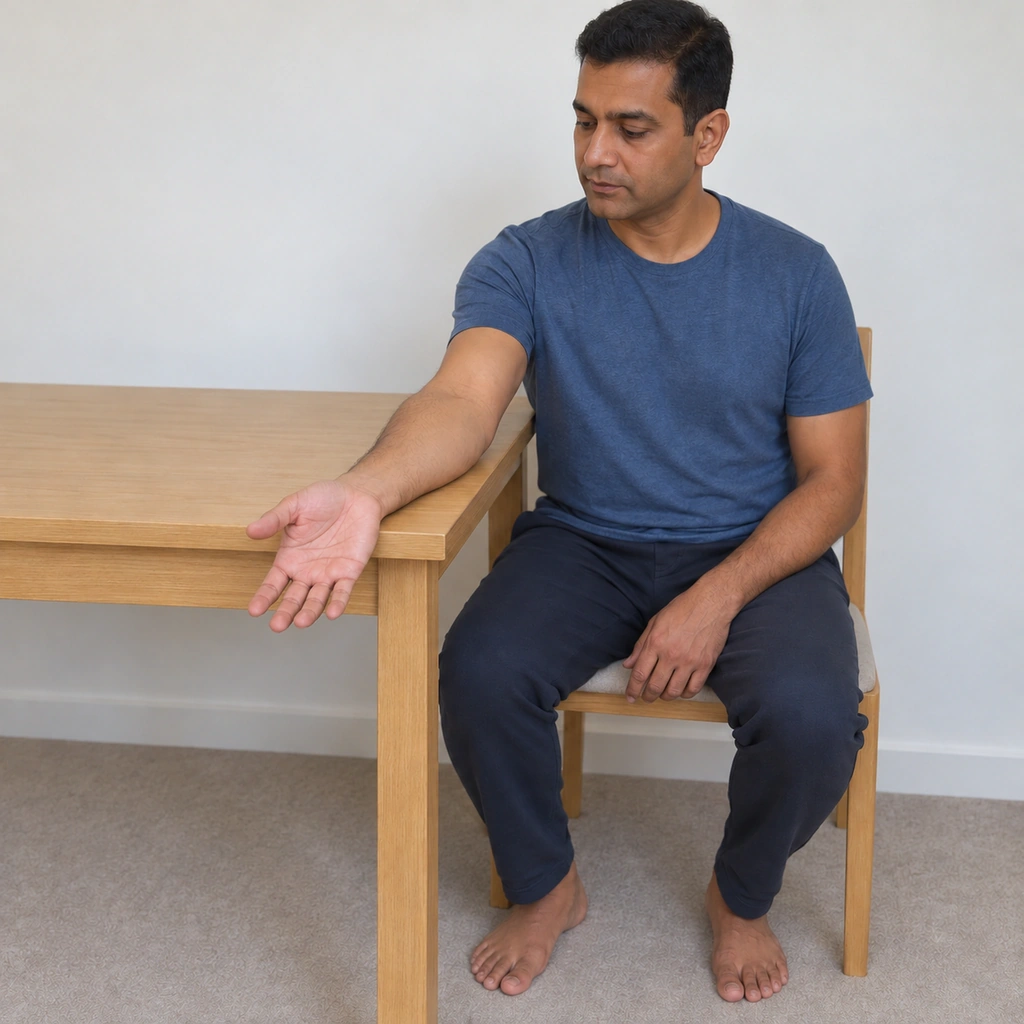
Let the hold go: open your fingers and let your wrist ease back down.
Step 4 of 4
Sit at a table and rest your forearm flat on it, wrist just past the edge and palm turned up toward the ceiling.
Breathing
- Breathe normally.
Safety Information
You should listen to your pain levels, especially in the early stages. These exercises may increase your symptoms slightly at first but should get easier over time with regular practice. Aim to keep pain within 0 to 5 out of 10 during exercise, and change the exercises by reducing repetitions, slowing down or resting longer between movements if pain rises above that. Stop the exercises immediately if you start to feel unwell, and stop altogether if they make your symptoms worse or cause new pain. Stop if the exercise causes pain or you become unwell. Seek appropriate professional advice about symptoms or suitability.
Get your free personalized program at clapmove.com/register
Printed from clapmove.com. ClapMove is not a replacement for professional medical advice — always consult a healthcare provider before starting any exercise program.