ClapMove · clapmove.com
Exercise handout — move better, feel better.
Behind-the-Back Assisted Internal-Rotation Slide
Stand tall and reach both arms behind your back. Hold the hand of the working arm with your other hand and slide it up your back as far as is comfortable.
Stop if
Pain lasting longer than three weeks may not go away without treatment. See a GP if there is little or no improvement in pain or movement at two to three weeks after an injury.
- Pain 6 out of 10 or more: choose an easier exercise.
- Pain 8 out of 10 or more: stop and rest.
Equipment needed
- Works at home
- Works at the gym
Home Options
- towel
Dosage
2
Sets
10
Reps / Time
30 sec
Rest
controlled
Tempo
Step-by-Step Guide
Set up
- Complete the assisted exercises 3 to 5 times per day, repeating this slide up to 10 times each time, as your shoulder gets better.
- A warm wheat pack or ice pack, wrapped in a towel and used for 10 to 15 minutes daily, may help reduce shoulder pain. It is not specific to this exercise.
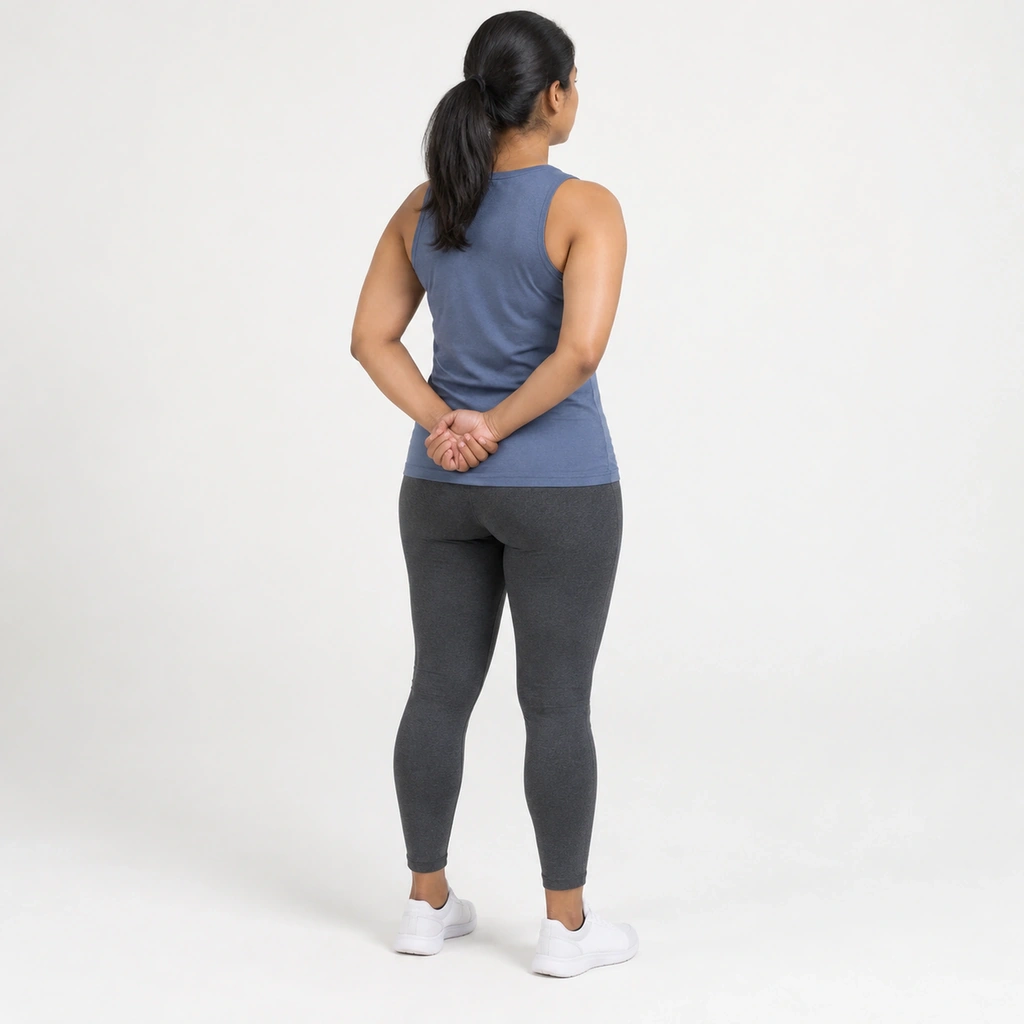
Step 1 of 3
Stand tall and reach both arms behind your back. Hold the hand of your affected arm with your other hand, low on your back.
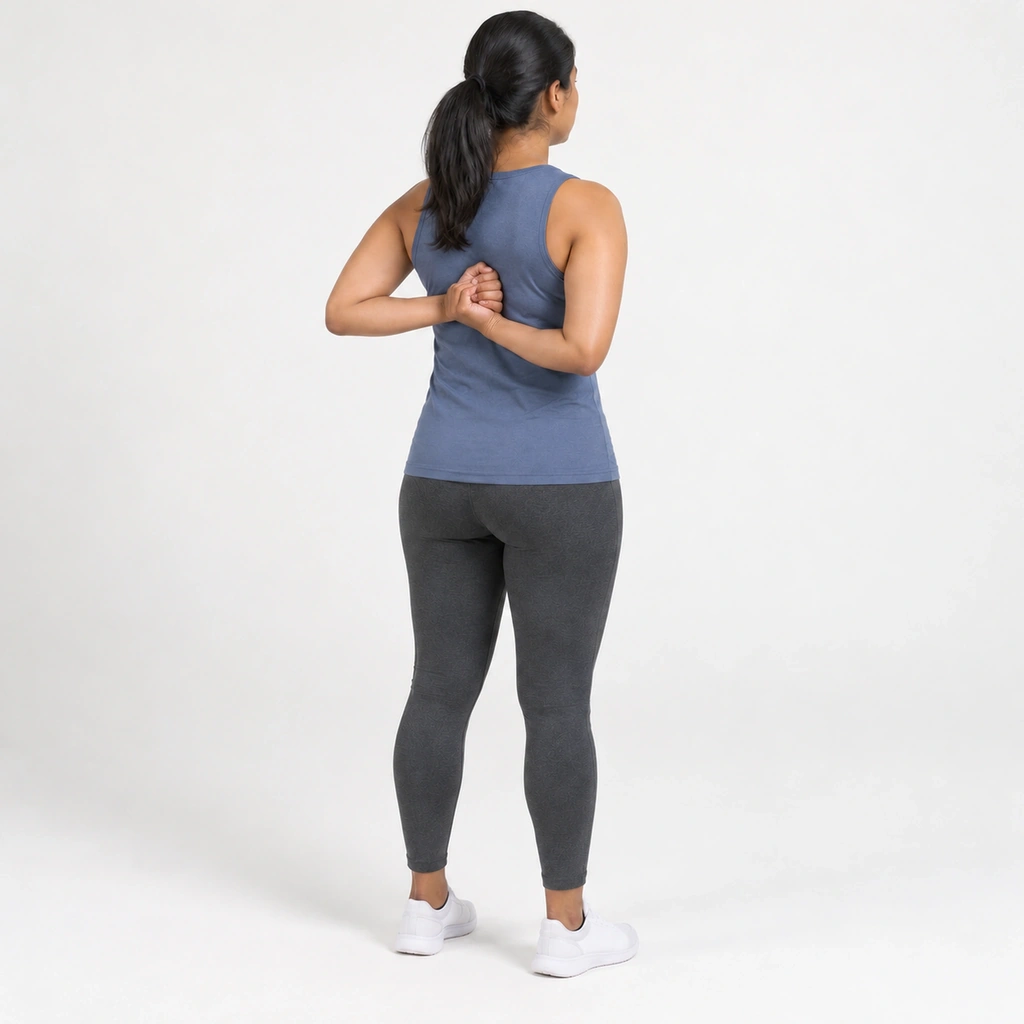
Step 2 of 3
Using your other hand's grip, slide your affected hand up your back as far as is comfortable.
Step 3 of 3
Stand tall and reach both arms behind your back. Hold the hand of your affected arm with your other hand, low on your back.
Breathing
- Breathe normally.
Safety Information
Start the assisted exercises, including this one, as your shoulder gets better. This is a later-stage exercise, not a first-stage one. It is important to keep the elbow, wrist and fingers moving regularly when the shoulder is injured or painful, as all these joints can become stiff if the arm is not used normally. Pain lasting longer than three weeks may not go away without treatment. Visit a GP if there is little or no improvement in pain or movement at two to three weeks after an injury. Stop if the exercise causes pain or you become unwell. Seek appropriate professional advice about symptoms or suitability.
Get your free personalized program at clapmove.com/register
Printed from clapmove.com. ClapMove is not a replacement for professional medical advice — always consult a healthcare provider before starting any exercise program.