ClapMove · clapmove.com
Exercise handout — move better, feel better.
Standing Lumbar Extension, Hands on Hips, No Support
Stand upright with your feet shoulder-width apart, shoulder blades squeezed and hands on your hips. Bend backward from your lower back as far as feels comfortable, then return upright.
Stop if
If the exercise causes pain that lasts for more than 2 hours after finishing, decrease the repetitions; contact the physiotherapy department if the exercises are making the pain worse overall.
- Also stop if you notice
- Severe pain indicates the bend has gone too far.
- Pain 6 out of 10 or more: choose an easier exercise.
- Pain 8 out of 10 or more: stop and rest.
Equipment needed
- Works at home
- Works at the gym
none
Home Options
- bodyweight
Dosage
2
Sets
10
Reps / Time
30 sec
Rest
controlled
Tempo
Step-by-Step Guide
Set up
- Complete the exercise slowly and in a controlled manner; take your time and do not rush.
- Aim to do the exercise plan 3 to 4 times per week, with at least 1 day off in between to allow for recovery; repeat the movement 10 times, resting 30 seconds between sets.
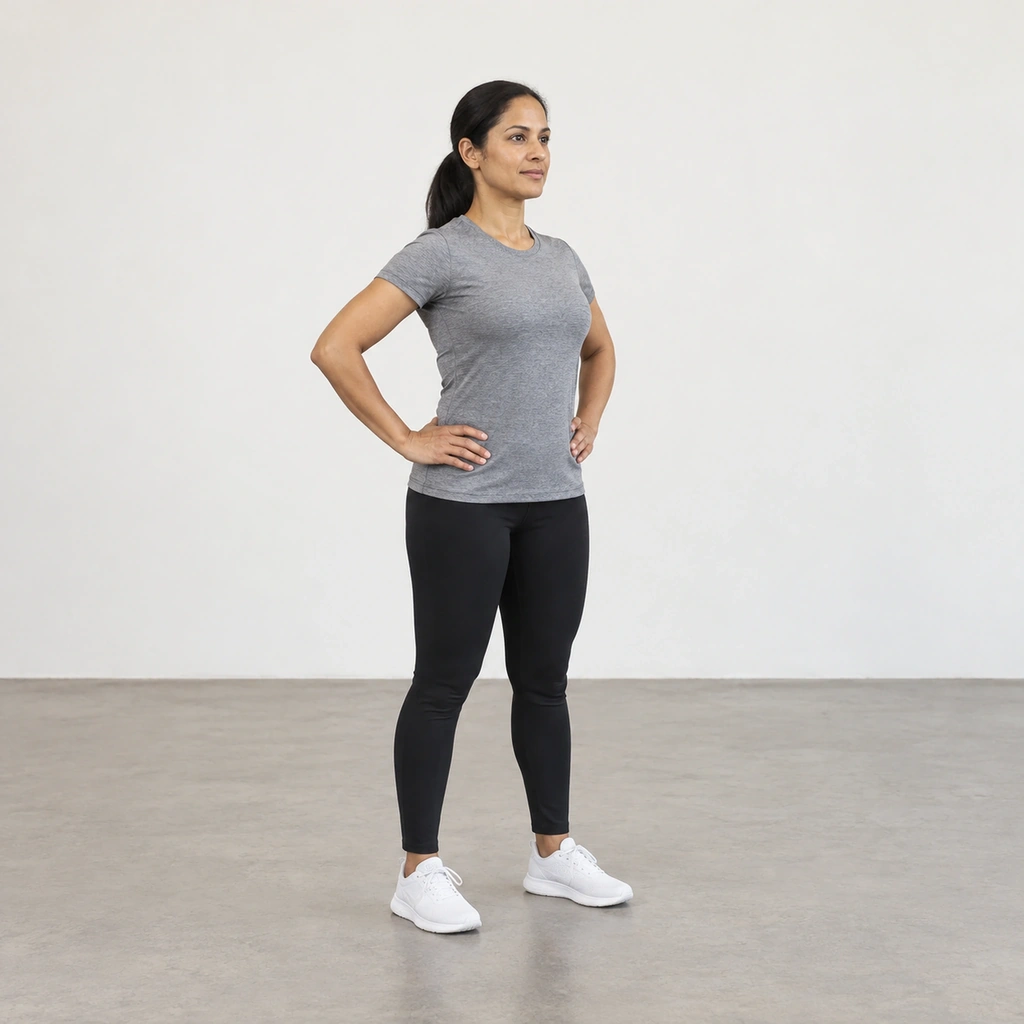
Step 1 of 3
Stand upright with your feet shoulder-width apart, squeeze your shoulder blades together, and place both hands on your hips.
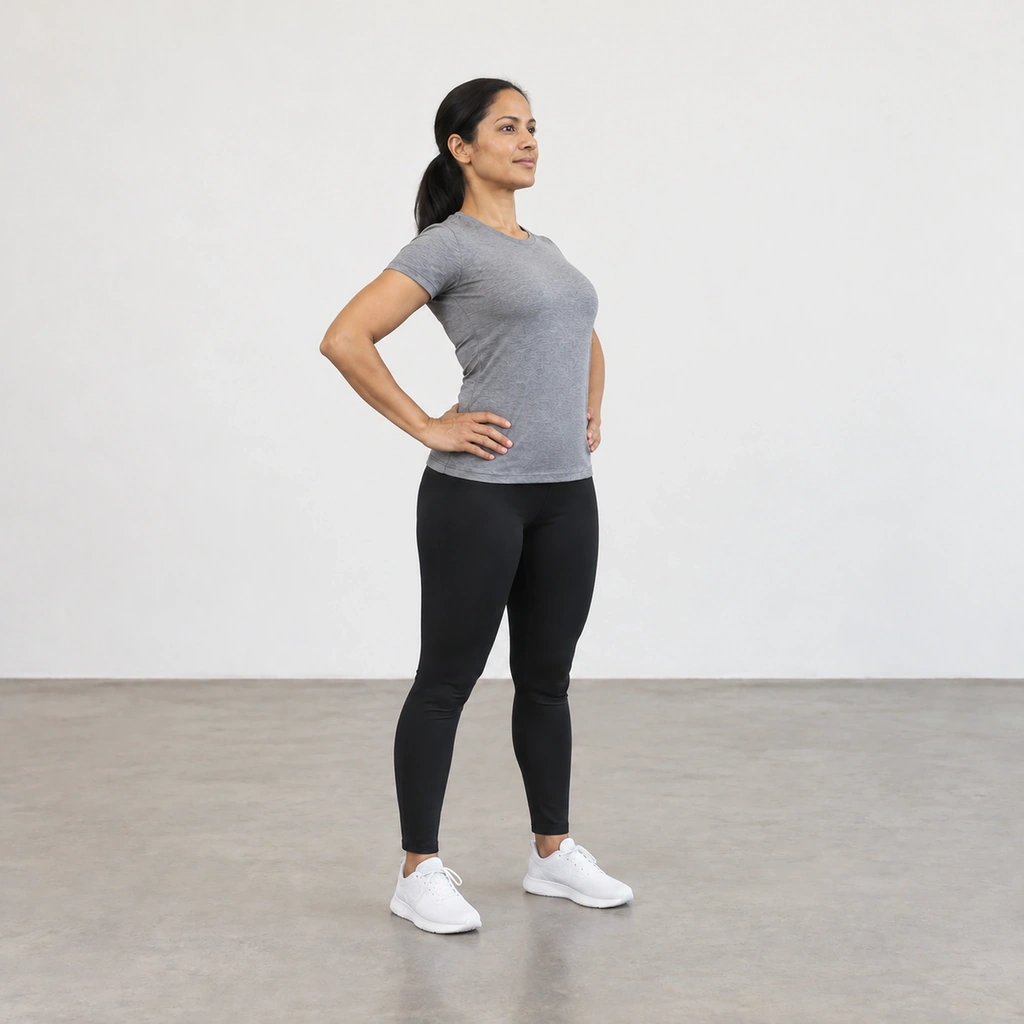
Step 2 of 3
Keeping your hands on your hips, bend backward from your back only, as far as feels comfortable within a pain-free range.
Step 3 of 3
Stand upright with your feet shoulder-width apart, squeeze your shoulder blades together, and place both hands on your hips.
Breathing
- Breathe normally.
Safety Information
Severe pain during the backward bend means the range has gone too far; stay within a pain-free range of movement throughout. It is normal to feel some discomfort after this exercise, but the discomfort should ease within 2 hours of finishing; if pain lasts longer than 2 hours after finishing, decrease the repetitions. This exercise is not suitable for everyone; anyone with concerns about injury or whether to attempt it should consult a GP or physiotherapist first. Stop if the exercise causes pain or you become unwell. Seek appropriate professional advice about symptoms or suitability.
Get your free personalized program at clapmove.com/register
Printed from clapmove.com. ClapMove is not a replacement for professional medical advice — always consult a healthcare provider before starting any exercise program.