ClapMove · clapmove.com
Exercise handout — move better, feel better.
Supine Hands-Behind-Head Elbow Drop-Out Stretch
You lie on your back on a mat with your knees bent and feet flat, and place both hands behind your head. Then you let both elbows fall outward toward the mat and hold. You may feel an ache or stretch.
Stop if
If severe pain continues, reduce how often or how forcefully the exercise is done, or discontinue it and see your physiotherapist or doctor.
- Also stop if you notice
- Severe pain lasting more than 30 minutes.
- Pain 6 out of 10 or more: choose an easier exercise.
- Pain 8 out of 10 or more: stop and rest.
Equipment needed
- Works at home
- Works at the gym
Home Options
- backpack or water bottles
Dosage
1
Sets
30 sec
Reps / Time
15 sec
Rest
controlled
Tempo
Step-by-Step Guide
Set up
- Lie on a mat with your knees bent and your feet flat, in a space clear enough to let both elbows drop out to the sides.
- You may find this exercise easier after a hot shower or bath, or using a hot water bottle; some people prefer an ice pack, particularly after surgery.
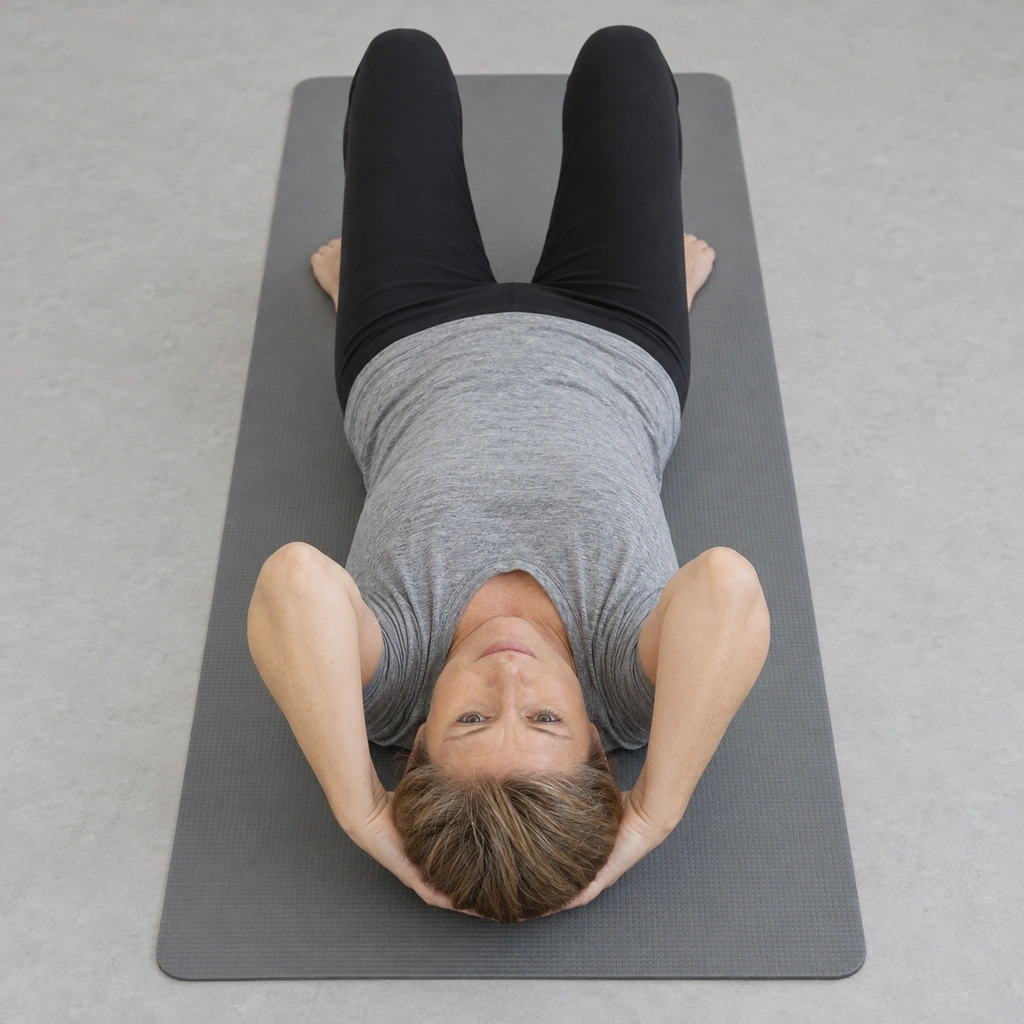
Step 1 of 3
Lying on your back with your knees bent and feet flat, place both hands behind your neck or head with your elbows pointing toward the ceiling.
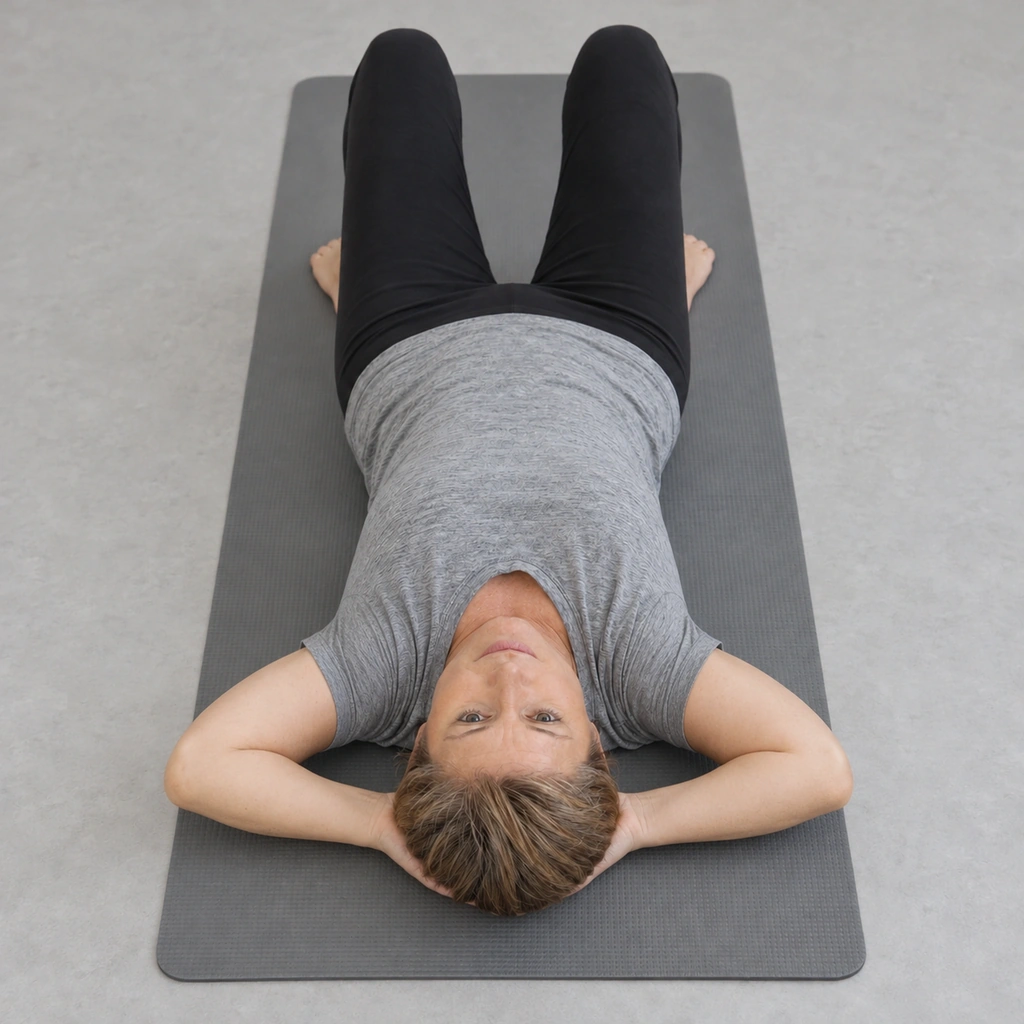
Step 2 of 3
Let both elbows fall outward and fold down toward the mat, and hold.
Step 3 of 3
Lying on your back with your knees bent and feet flat, place both hands behind your neck or head with your elbows pointing toward the ceiling.
What you should feel
An aching or stretching sensation.
Breathing
- Breathe normally.
Safety Information
It is normal to feel aching or stretching sensations doing these exercises, but severe and lasting pain (for example more than 30 minutes) is not recommended; reduce the exercise by doing it less often or less forcefully, or stop and see your physiotherapist or doctor if severe pain continues. Short frequent sessions (for example 5-10 minutes, 4 times a day) are recommended after a dilatation or surgery rather than one long session, gradually increasing the repetitions; without recent surgery or dilatation, doing the exercise regularly 1-2 times a day is recommended. The exercise may be easier after a hot shower or bath, using a hot water bottle, or taking pain killers half an hour before starting; some people find ice packs better than heat, particularly after surgery. Stop if the exercise causes pain or you become unwell. Seek appropriate professional advice about symptoms or suitability.
Get your free personalized program at clapmove.com/register
Printed from clapmove.com. ClapMove is not a replacement for professional medical advice — always consult a healthcare provider before starting any exercise program.