ClapMove · clapmove.com
Exercise handout — move better, feel better.
Side-Incline
You lean forward with both hands flat on a low step so your body makes one straight line from head to feet. You tighten your stomach muscles. Then you lift your right leg out to the side and hold it just off the floor.
Stop if
Pain should calm within about an hour and not disturb sleep; if it does, modify or reduce that day's amount, following the reps-in-reserve principle.
- Pain 6 out of 10 or more: choose an easier exercise.
- Pain 8 out of 10 or more: stop and rest.
Equipment needed
- Works at home
- Works at the gym
Home Options
- stairs or step
Dosage
3
Sets
10
Reps / Time
45 sec
Rest
controlled
Tempo
Step-by-Step Guide
Set up
- Complete a selection of the exercises three times a week with at least a day's rest in between, choosing ones you can perform comfortably while still feeling challenged.
- This exercise uses only a stable elevated support for the hands.
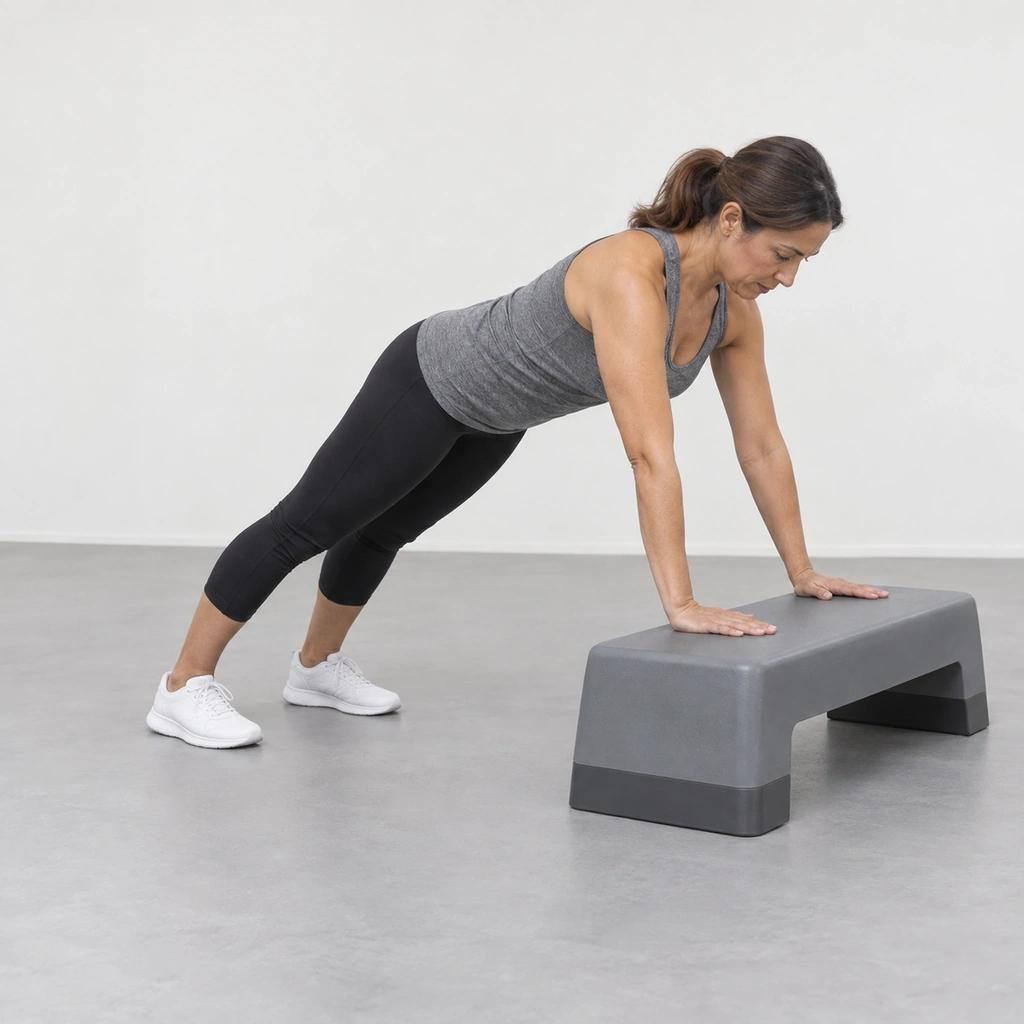
Step 1 of 3
Lean forward and place both hands flat on the step so your body forms one straight line from your head to your feet, and brace your stomach muscles.
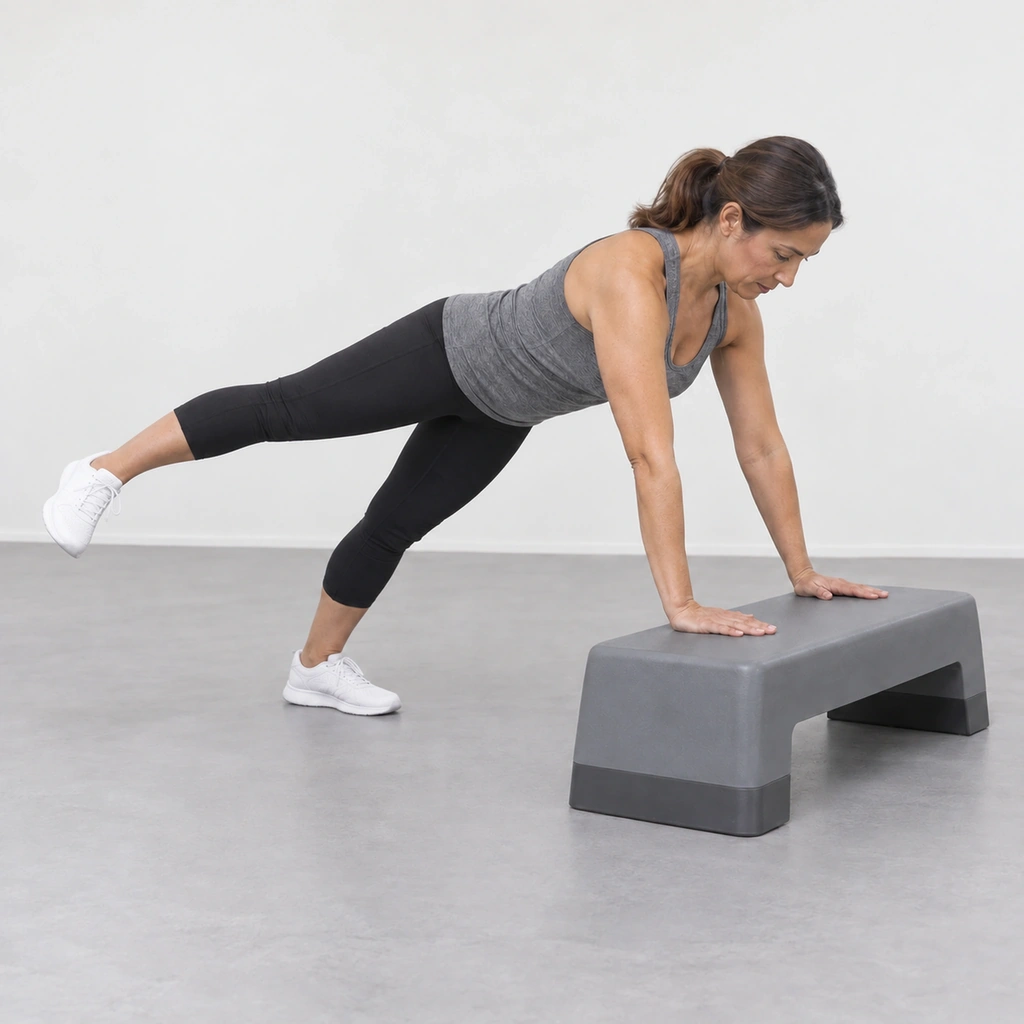
Step 2 of 3
Slowly lift your right leg out to the side and hold it hovering just off the floor.
Step 3 of 3
Lean forward and place both hands flat on the step so your body forms one straight line from your head to your feet, and brace your stomach muscles.
Breathing
- Breathe normally.
Safety Information
Do not let pain go above 4 out of 10, and it should calm down within about an hour without disturbing that night's sleep. Hurt doesn't equal harm – pain during exercise is not on its own a sign of damage – but if pain disturbs sleep or is still raised the next day, modify or reduce that day's amount. Choose exercises that can be performed comfortably while still feeling challenging, and move between levels according to symptoms. Stop if the exercise causes pain or you become unwell. Seek appropriate professional advice about symptoms or suitability.
Get your free personalized program at clapmove.com/register
Printed from clapmove.com. ClapMove is not a replacement for professional medical advice — always consult a healthcare provider before starting any exercise program.