ClapMove · clapmove.com
Exercise handout — move better, feel better.
Seated Bump-Ball Chest Press
You sit tall holding a soft ball at chest height with a hand on each side. You squeeze the ball between your palms. Then you slowly extend both arms forward and hold.
Stop if
Choose an easier exercise if pain reaches 6 out of 10 or becomes sharp. Stop and rest if pain reaches 8 out of 10.
This is the general ClapMove rule. This exercise has no extra stop rule of its own.
- Pain 6 out of 10 or more: choose an easier exercise.
- Pain 8 out of 10 or more: stop and rest.
Equipment needed
- Works at home
- Works at the gym
chair
Home Options
- chair + small ball + pillow or cushion
Dosage
3
Sets
10
Reps / Time
45 sec
Rest
controlled
Tempo
Step-by-Step Guide
Set up
- Sit in the chair's working position: front third of the seat, back straight, hips and knees in line with the ankles, feet flat and hip-width apart, looking straight ahead.
- Hold the soft ball (or a large soft ball/cushion substitute) at chest height with one hand on either side of it before starting the press.
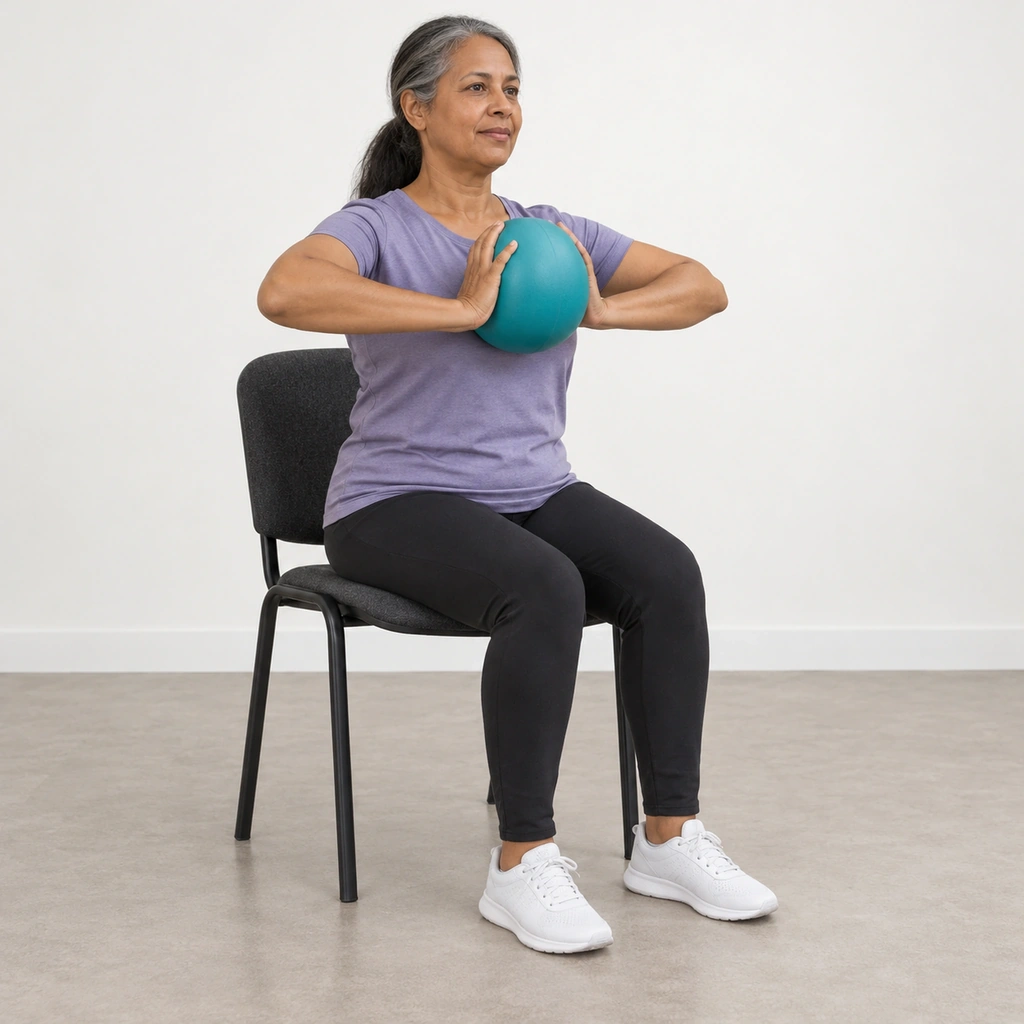
Step 1 of 3
Sit tall, hold the ball at chest height with a hand on either side of it, elbows pointing out to the sides, and squeeze the ball between your palms.
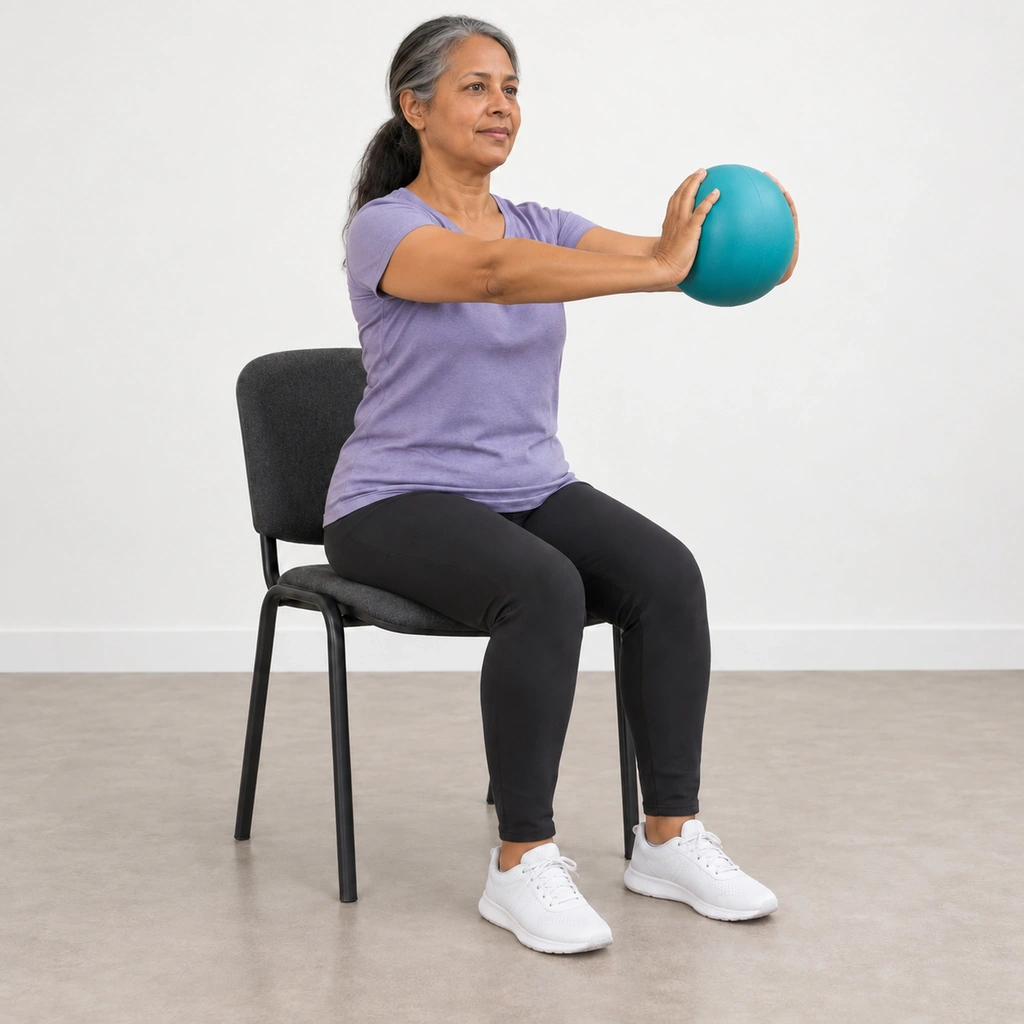
Step 2 of 3
Gradually extend both arms forward, keeping the ball squeezed between your palms, and hold.
Step 3 of 3
Sit tall, hold the ball at chest height with a hand on either side of it, elbows pointing out to the sides, and squeeze the ball between your palms.
Breathing
- Breathe normally.
Safety Information
Any exercise programme carries some risk; check with a doctor or other suitably qualified medical professional first if in any doubt. Keep somebody present while exercising, for safety and to help with any requirements. The exercises should not cause pain or distress; keep a comfortable working position, not a maximal-effort finish. Stop if the exercise causes pain or you become unwell. Seek appropriate professional advice about symptoms or suitability.
Get your free personalized program at clapmove.com/register
Printed from clapmove.com. ClapMove is not a replacement for professional medical advice — always consult a healthcare provider before starting any exercise program.