ClapMove · clapmove.com
Exercise handout — move better, feel better.
Single-Leg Tuck
You lie on your side propped on your forearm with both legs straight and your top leg just off the ground. You draw your top thigh up toward your chest, bending the knee to about 90 degrees. Then you straighten it again.
Stop if
If you feel pain in the hip, groin, lower back, shoulder or wrist, or feel unsteady propped on your forearm, stop and check with a health professional.
- Pain 6 out of 10 or more: choose an easier exercise.
- Pain 8 out of 10 or more: stop and rest.
Equipment needed
- Works at home
- Works at the gym
none
Home Options
- bodyweight
Dosage
3
Sets
10
Reps / Time
45 sec
Rest
controlled
Tempo
Step-by-Step Guide
Set up
- Warm up the hips gently before starting, and perform the movement on a firm, flat, non-slip exercise mat.
- Move slowly and with control; keep the trunk and hips still and avoid rocking or using momentum to swing the leg up.
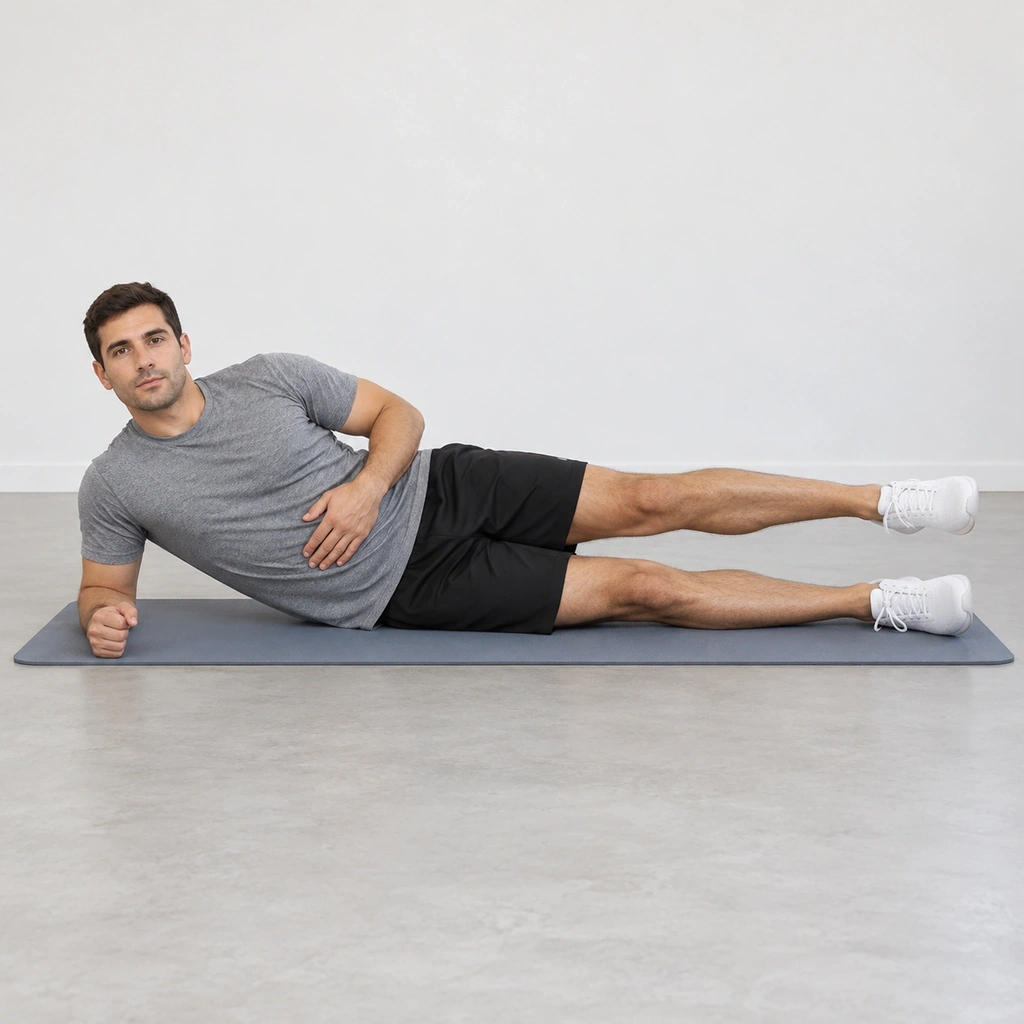
Step 1 of 3
Lie on your side, propped on your forearm, both legs straight and your top leg held just clear of the ground.
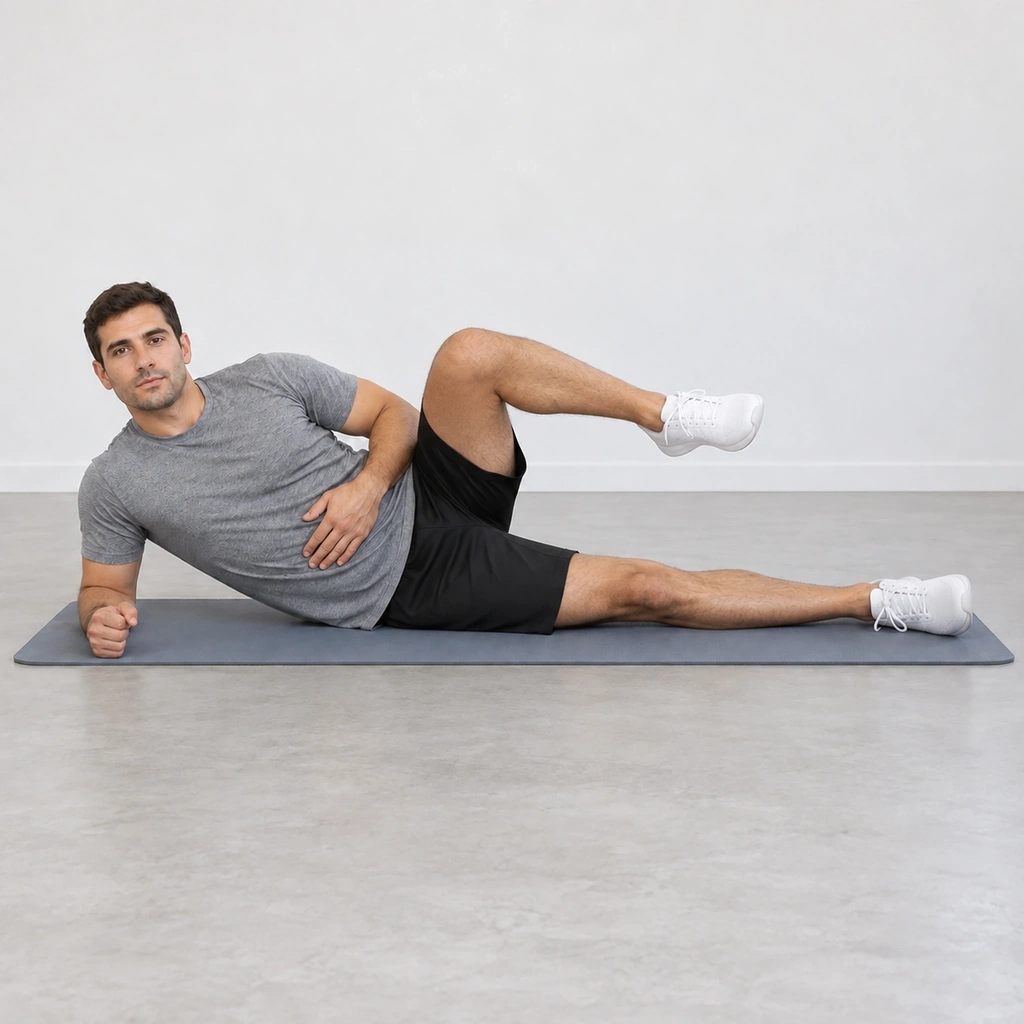
Step 2 of 3
Bring your top thigh up and forward toward your chest, bending your knee to about 90 degrees, keeping your trunk still.
Step 3 of 3
Lie on your side, propped on your forearm, both legs straight and your top leg held just clear of the ground.
Breathing
- Breathe normally.
Safety Information
This is a side-lying exercise that draws one knee up toward the chest while propped on the other forearm; if you have a hip, groin, lower back, shoulder or wrist problem, or have had recent surgery, check with a health professional before trying it. Perform it on a firm, flat, non-slip mat; keep the movement slow and controlled, and keep the trunk and hips still rather than rocking or using momentum to help the leg up. Stop if you feel pain in the hip, groin, lower back, shoulder or wrist, or if you feel unsteady propped on your forearm. Stop if the exercise causes pain or you become unwell. Seek appropriate professional advice about symptoms or suitability.
Get your free personalized program at clapmove.com/register
Printed from clapmove.com. ClapMove is not a replacement for professional medical advice — always consult a healthcare provider before starting any exercise program.