ClapMove · clapmove.com
Exercise handout — move better, feel better.
Standing Low-Pulley Deltoid Raise
You stand beside a low pulley and hold one handle with the arm crossing in front of your body. Your free hand holds the machine frame for support. You raise the working arm out to the side and feel the contraction at the top, then lower it.
Stop if
Choose an easier exercise if pain reaches 6 out of 10 or becomes sharp. Stop and rest if pain reaches 8 out of 10.
This is the general ClapMove rule. This exercise has no extra stop rule of its own.
- Pain 6 out of 10 or more: choose an easier exercise.
- Pain 8 out of 10 or more: stop and rest.
Equipment needed
- Works at the gym
machines
Gym
- gym machine (No safe home substitute has been reviewed yet.)
Dosage
3
Sets
8
Reps / Time
60 sec
Rest
controlled
Tempo
Step-by-Step Guide
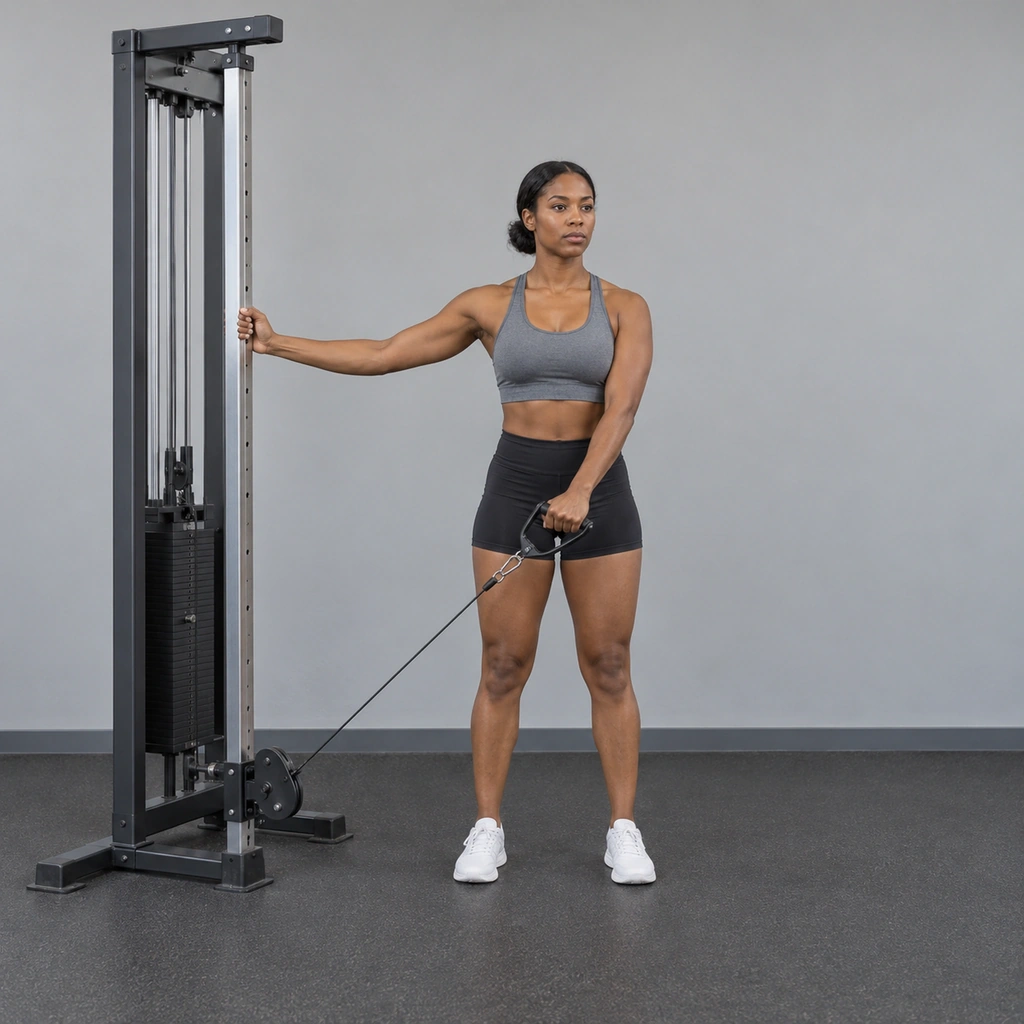
Step 1 of 3
Stand beside the low-pulley tower with your feet at shoulder width and your back erect. Reach your left hand across your body to grip the single handle with a pronated grip, palm facing down, and rest your arm in front of you. Grip the machine frame with your right hand for support and balance.
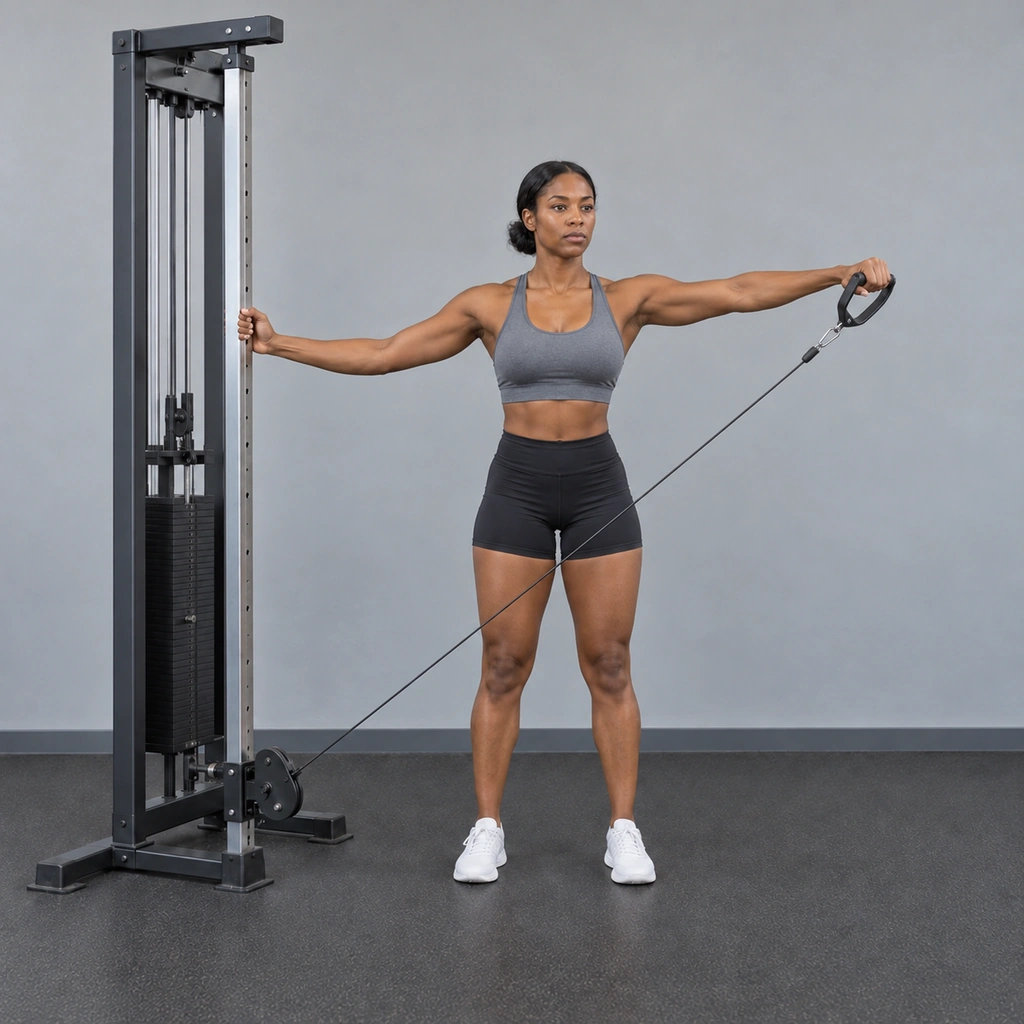
Step 2 of 3
Raise your left arm out to the side until it is elevated to shoulder height, exhaling as you lift, and hold the contraction at the top for a second, keeping your right hand on the machine frame.
Step 3 of 3
Stand beside the low-pulley tower with your feet at shoulder width and your back erect. Reach your left hand across your body to grip the single handle with a pronated grip, palm facing down, and rest your arm in front of you. Grip the machine frame with your right hand for support and balance.
Breathing
- Exhale as you raise your arm out to the side to shoulder height; inhale as you slowly lower the handle back to the starting position.
Safety Information
Keep the working elbow only slightly bent throughout the raise -- raising the working hand out to the side rather than bending the elbow to hook or curl the handle upward. Keep a firm grip on the machine frame with the free hand throughout the set, for support and balance while the working arm crosses the body and raises against the cable. Stop and lower the handle with control if you feel pain, pinching, or numbness in the shoulder, neck, or wrist at any point during the raise. Stop if the exercise causes pain or you become unwell. Seek appropriate professional advice about symptoms or suitability.
Get your free personalized program at clapmove.com/register
Printed from clapmove.com. ClapMove is not a replacement for professional medical advice — always consult a healthcare provider before starting any exercise program.