ClapMove · clapmove.com
Exercise handout — move better, feel better.
Suspended Reverse Crunch
You hold a push-up plank with both feet in hanging suspension-strap handles. Keeping your back straight, you pull your knees in toward your chest, then straighten your legs back to plank.
Stop if
Choose an easier exercise if pain reaches 6 out of 10 or becomes sharp. Stop and rest if pain reaches 8 out of 10.
This is the general ClapMove rule. This exercise has no extra stop rule of its own.
- Pain 6 out of 10 or more: choose an easier exercise.
- Pain 8 out of 10 or more: stop and rest.
Equipment needed
- Works at the gym
fixed_horizontal_bar, suspension_trainer
Gym
- strap or belt + squat rack + suspension trainer (No safe home substitute has been reviewed yet.)
Dosage
3
Sets
8
Reps / Time
60 sec
Rest
controlled
Tempo
Step-by-Step Guide
Set up
- Secure the straps and move into the plank facing away from the rack. Keep the straight plank starting position with both feet suspended in the handles, then keep the top position with the knees drawn to the torso.
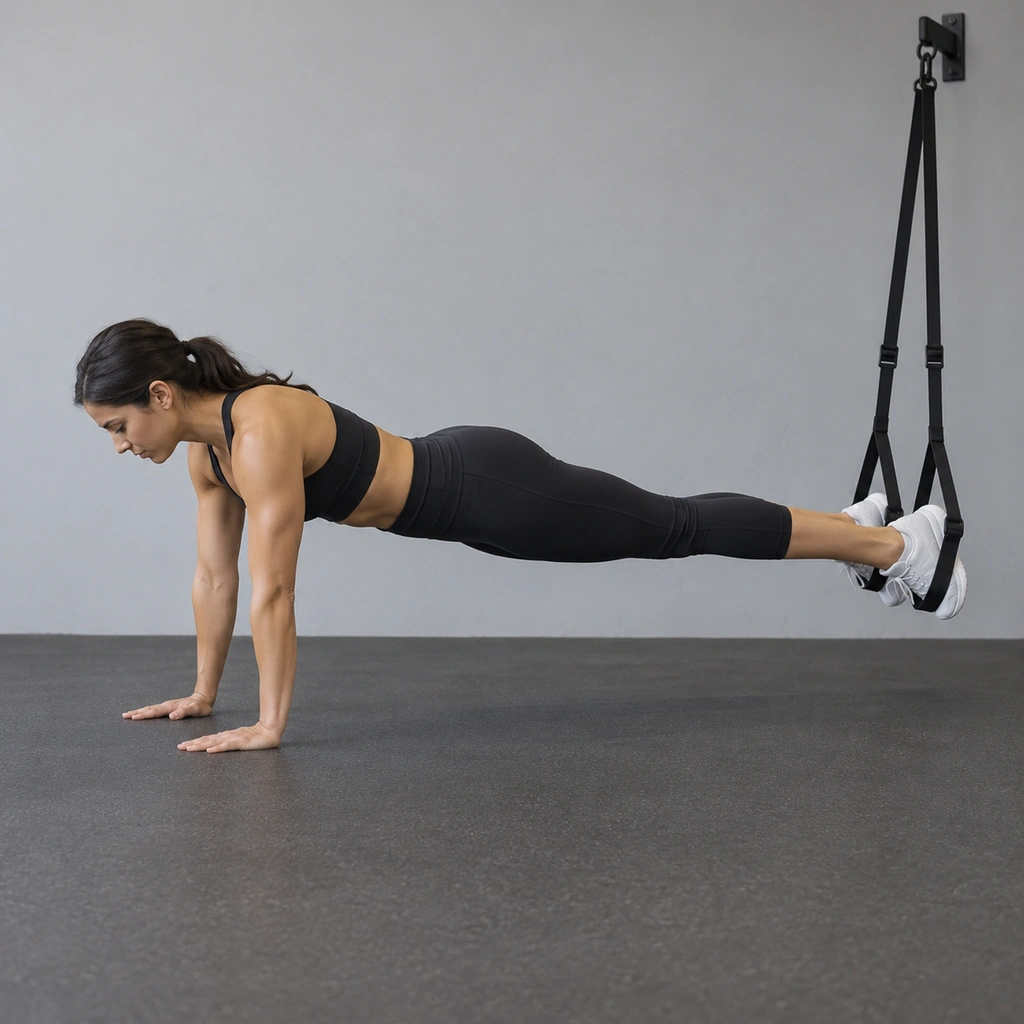
Step 1 of 3
Hold a push-up plank position with both hands on the floor and both feet placed in the suspension-strap handles, keeping a straight posture with your hips level, not allowed to sag.
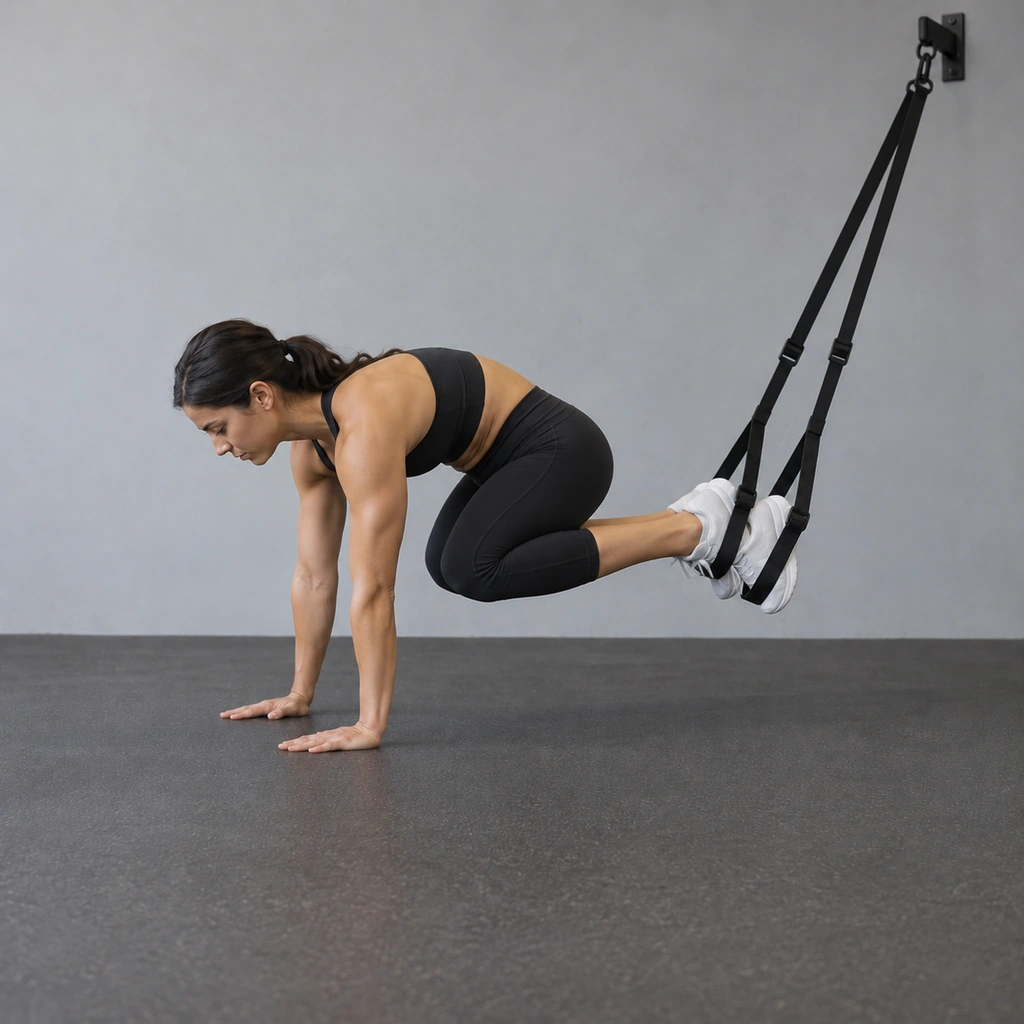
Step 2 of 3
Flex your knees and hips to draw your knees toward your torso, anteriorly tilting your pelvis and allowing your spine to flex.
Step 3 of 3
Hold a push-up plank position with both hands on the floor and both feet placed in the suspension-strap handles, keeping a straight posture with your hips level, not allowed to sag.
Safety Information
Keep a straight posture with the hips level throughout the plank -- never let the hips sag toward the floor -- because this is the required starting-position form. If you have a shoulder impingement, wrist injury, recent abdominal or low-back surgery, or an unstable shoulder, ask a physical therapist or physician before attempting this exercise, because the whole body is supported through the hands and wrists in a plank while the hips and knees move through a suspended range. Stop and return to the straight plank starting position with control immediately if you feel a pinch, sharp pain, or numbness in the low back, hip, wrist, or shoulder at any point in the knee-tuck motion. Stop if the exercise causes pain or you become unwell. Seek appropriate professional advice about symptoms or suitability.
Get your free personalized program at clapmove.com/register
Printed from clapmove.com. ClapMove is not a replacement for professional medical advice — always consult a healthcare provider before starting any exercise program.