ClapMove · clapmove.com
Exercise handout — move better, feel better.
Kettlebell Bicep Curl
You stand with your feet a little apart, holding one kettlebell with both hands on its handle. You curl it up from arm's length toward your chest, then lower it.
Stop if
Choose an easier exercise if pain reaches 6 out of 10 or becomes sharp. Stop and rest if pain reaches 8 out of 10.
This is the general ClapMove rule. This exercise has no extra stop rule of its own.
- Pain 6 out of 10 or more: choose an easier exercise.
- Pain 8 out of 10 or more: stop and rest.
Equipment needed
- Works at home
- Works at the gym
kettlebells
Home Options
- kettlebell
Dosage
3
Sets
8
Reps / Time
60 sec
Rest
controlled
Tempo
Step-by-Step Guide
Step 1 of 3
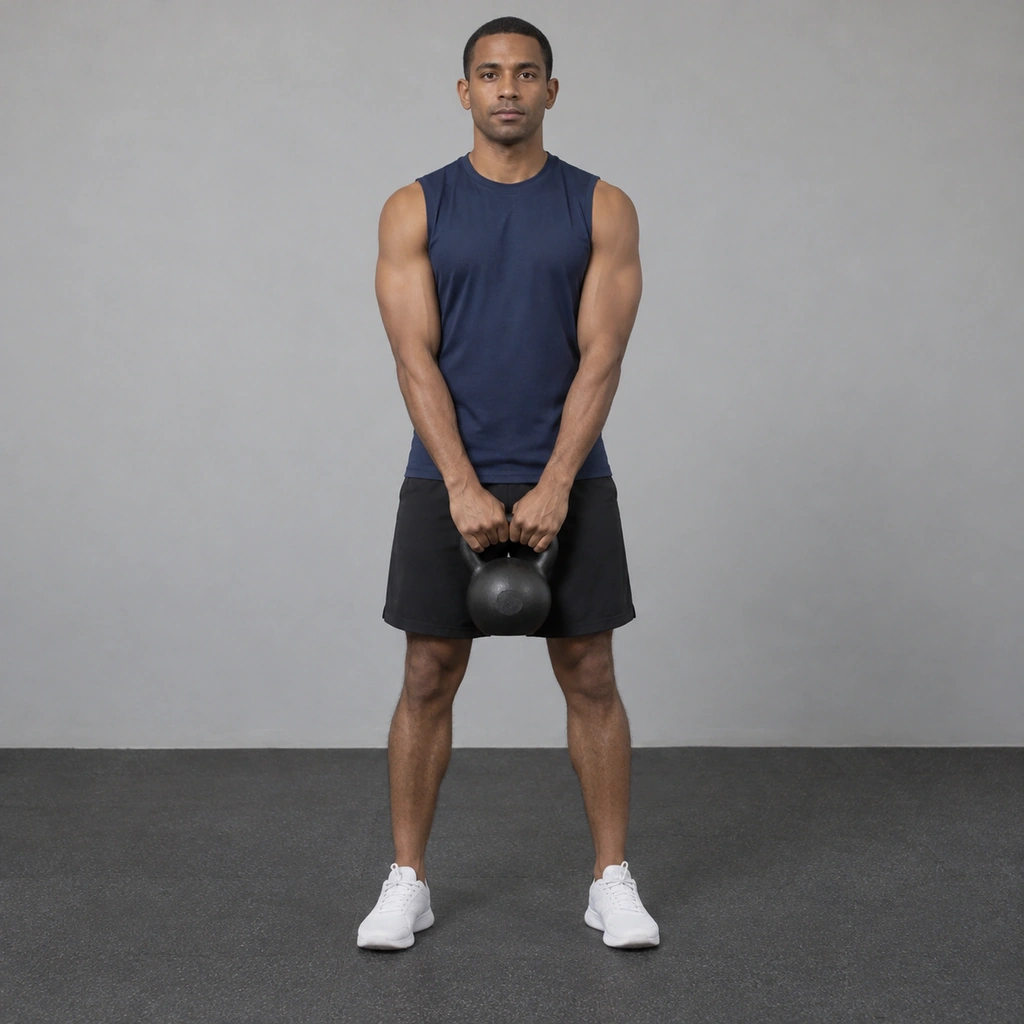
Stand upright with your feet spread a little for stability, gripping the kettlebell with both hands together on its handle, arms fully extended down in front of your thighs.
Step 2 of 3
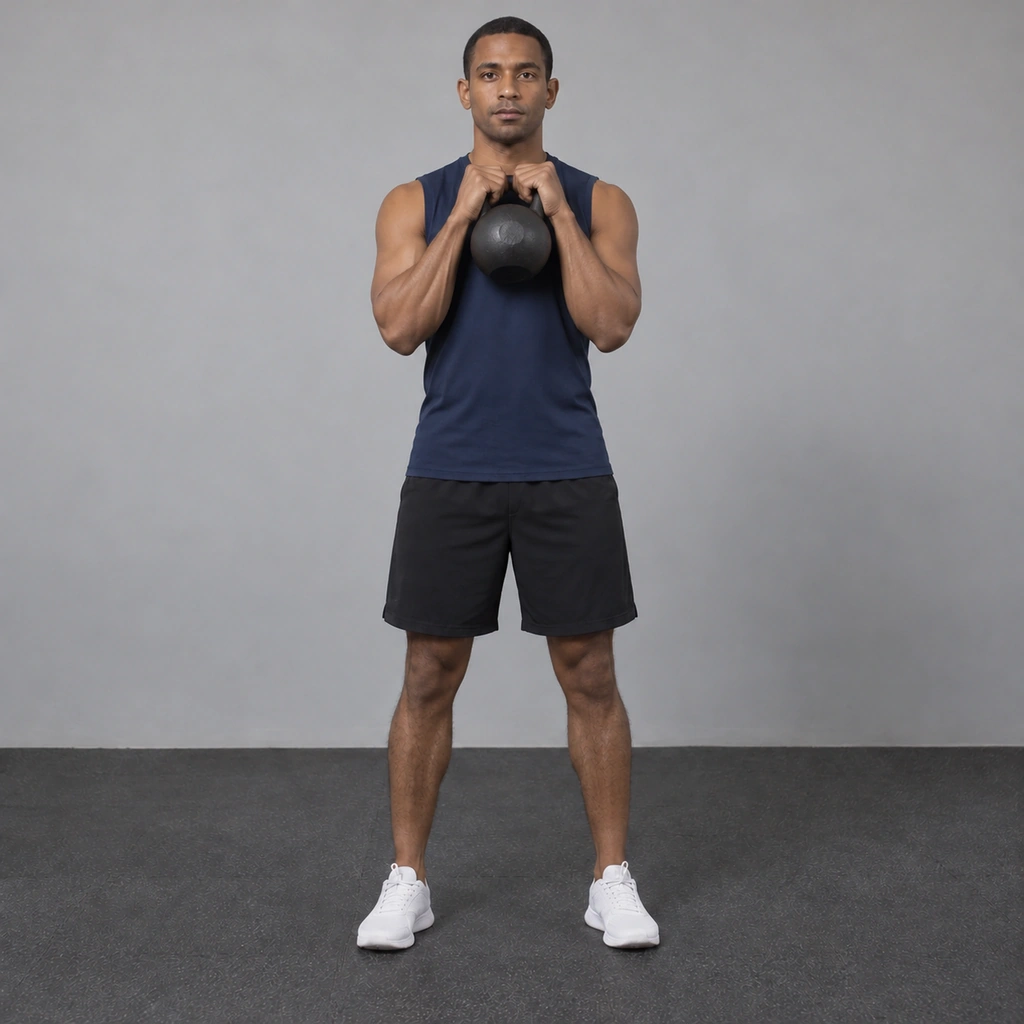
Keeping your legs spread for stability and without pushing with your back or body, curl the kettlebell up by flexing both elbows until your hands reach shoulder height.
Step 3 of 3
Stand upright with your feet spread a little for stability, gripping the kettlebell with both hands together on its handle, arms fully extended down in front of your thighs.
Safety Information
Warning: keep the elbows close to the sides of the torso throughout the curl, and do not use the back or hips to help swing the kettlebell upward. Avoid pushing with the back or body in general to lift the weight. If you have a wrist, elbow, or shoulder injury, or any grip condition that limits holding a single weighted object with both hands together, ask a physical therapist or physician before attempting this exercise, since both hands must sustain a continuous, shared two-handed grip on the kettlebell throughout the full range of motion. Stop and lower the kettlebell back to the starting position with control immediately if you feel a sharp pain, pinch, or instability in the wrists, elbows, shoulders, or low back at any point in the curl. Stop if the exercise causes pain or you become unwell. Seek appropriate professional advice about symptoms or suitability.
Get your free personalized program at clapmove.com/register
Printed from clapmove.com. ClapMove is not a replacement for professional medical advice — always consult a healthcare provider before starting any exercise program.