ClapMove · clapmove.com
Exercise handout — move better, feel better.
Trap Bar Bent-Over Row
You stand inside a trap bar and hinge forward at the hips, gripping its two neutral handles. You row the bar up toward your body, then lower it.
Stop if
Choose an easier exercise if pain reaches 6 out of 10 or becomes sharp. Stop and rest if pain reaches 8 out of 10.
This is the general ClapMove rule. This exercise has no extra stop rule of its own.
- Pain 6 out of 10 or more: choose an easier exercise.
- Pain 8 out of 10 or more: stop and rest.
Equipment needed
- Works at the gym
barbell
Gym
- barbell (No safe home substitute has been reviewed yet.)
Dosage
3
Sets
8
Reps / Time
60 sec
Rest
controlled
Tempo
Step-by-Step Guide
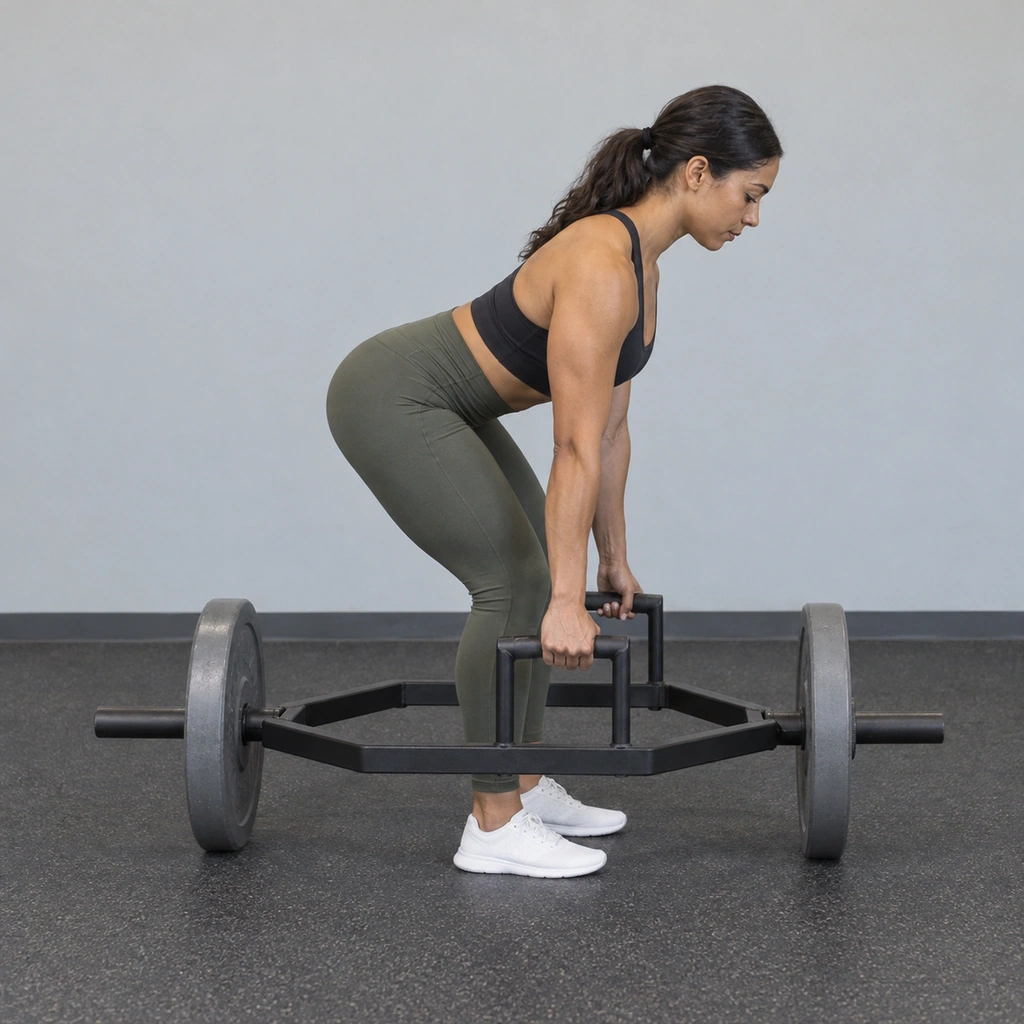
Step 1 of 3
Stand centered inside the trap bar, hinge forward at your hips with your back flat, and grip either side of the bar's own handles, arms hanging straight down.
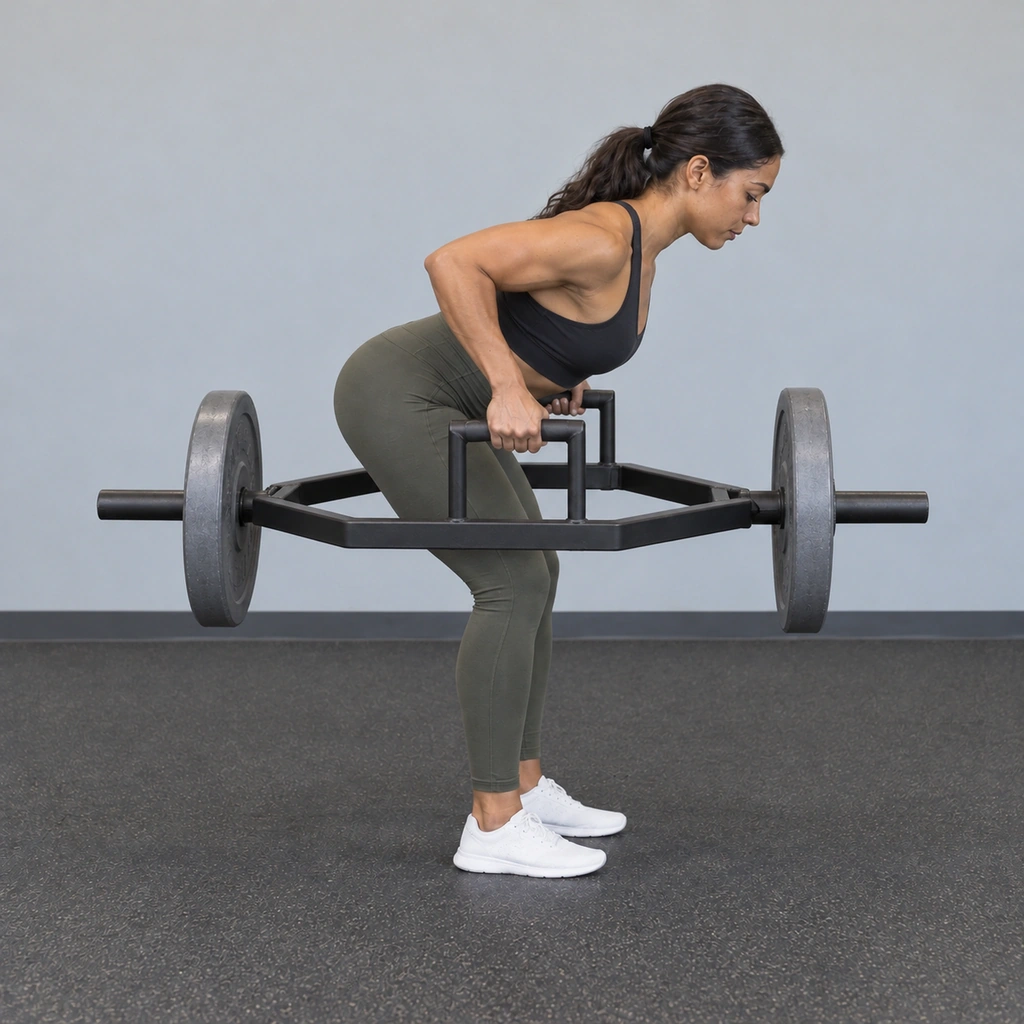
Step 2 of 3
Squeeze your shoulder blades together and row the trap bar upward until its back edge nearly touches your glutes, angling your elbows back at roughly 45 degrees, and hold this top position for a beat.
Step 3 of 3
Stand centered inside the trap bar, hinge forward at your hips with your back flat, and grip either side of the bar's own handles, arms hanging straight down.
Breathing
- Breathe naturally throughout both the hinge and the row.
Safety Information
Lower the trap bar back down slowly and under control on every rep; letting the bar drop or swing removes the control this exercise is built around and can jar the low back at the bottom of the hinge. Hold only a brief pause at the top of the row, rather than an extended static hold. If you have any concerns about performing this exercise, speak with a physician before attempting it. Stop if the exercise causes pain or you become unwell. Seek appropriate professional advice about symptoms or suitability.
Get your free personalized program at clapmove.com/register
Printed from clapmove.com. ClapMove is not a replacement for professional medical advice — always consult a healthcare provider before starting any exercise program.