ClapMove · clapmove.com
Exercise handout — move better, feel better.
Prone Shoulder Extension with Dumbbells
You lie face down holding a dumbbell in each hand with your arms at your sides and elbows straight. You lift both arms back and up behind you, then lower them.
Stop if
Choose an easier exercise if pain reaches 6 out of 10 or becomes sharp. Stop and rest if pain reaches 8 out of 10.
This is the general ClapMove rule. This exercise has no extra stop rule of its own.
- Pain 6 out of 10 or more: choose an easier exercise.
- Pain 8 out of 10 or more: stop and rest.
Equipment needed
- Works at home
- Works at the gym
dumbbells
Home Options
- dumbbells
Dosage
3
Sets
8
Reps / Time
60 sec
Rest
controlled
Tempo
Step-by-Step Guide
Set up
- Squeeze your shoulder blades together and do not arch your back as you raise your arms.
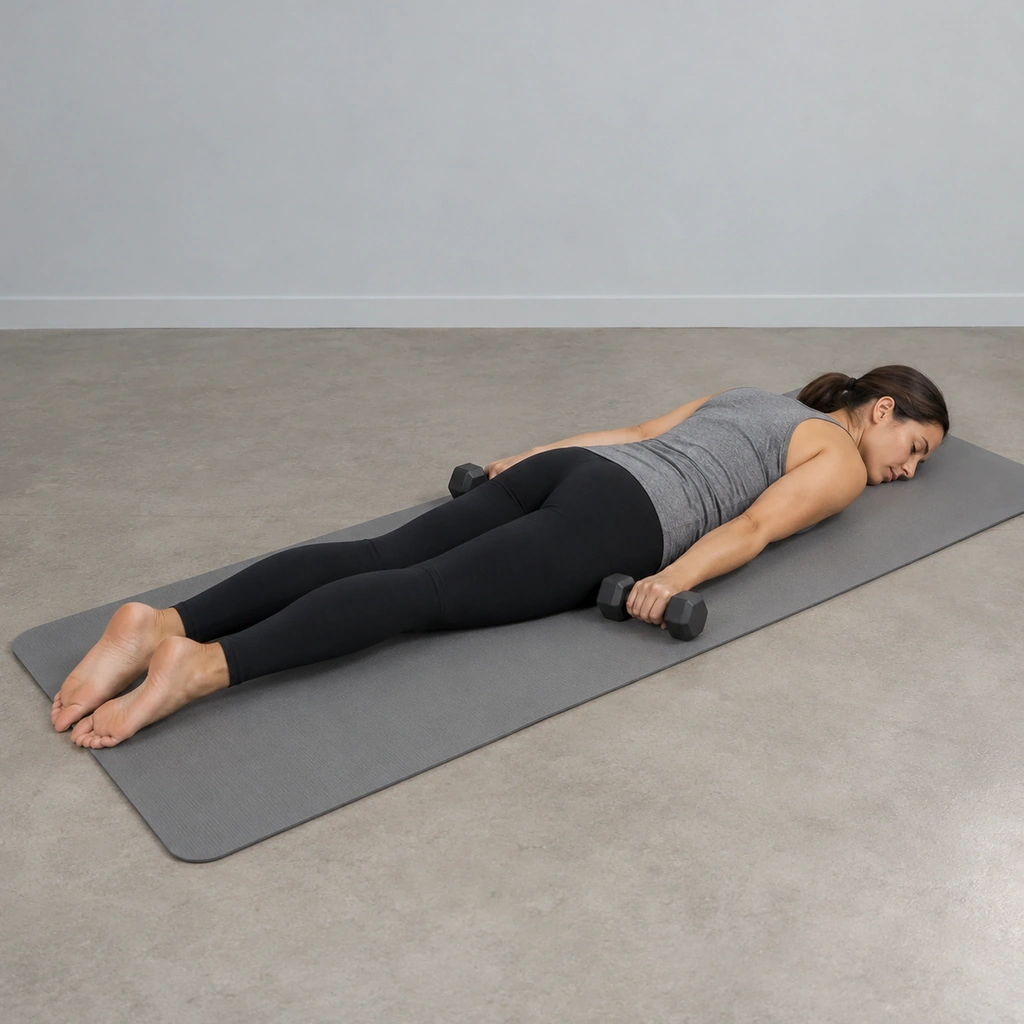
Step 1 of 3
Lie face down with both arms resting at your sides, holding a dumbbell in each hand, elbows straight.
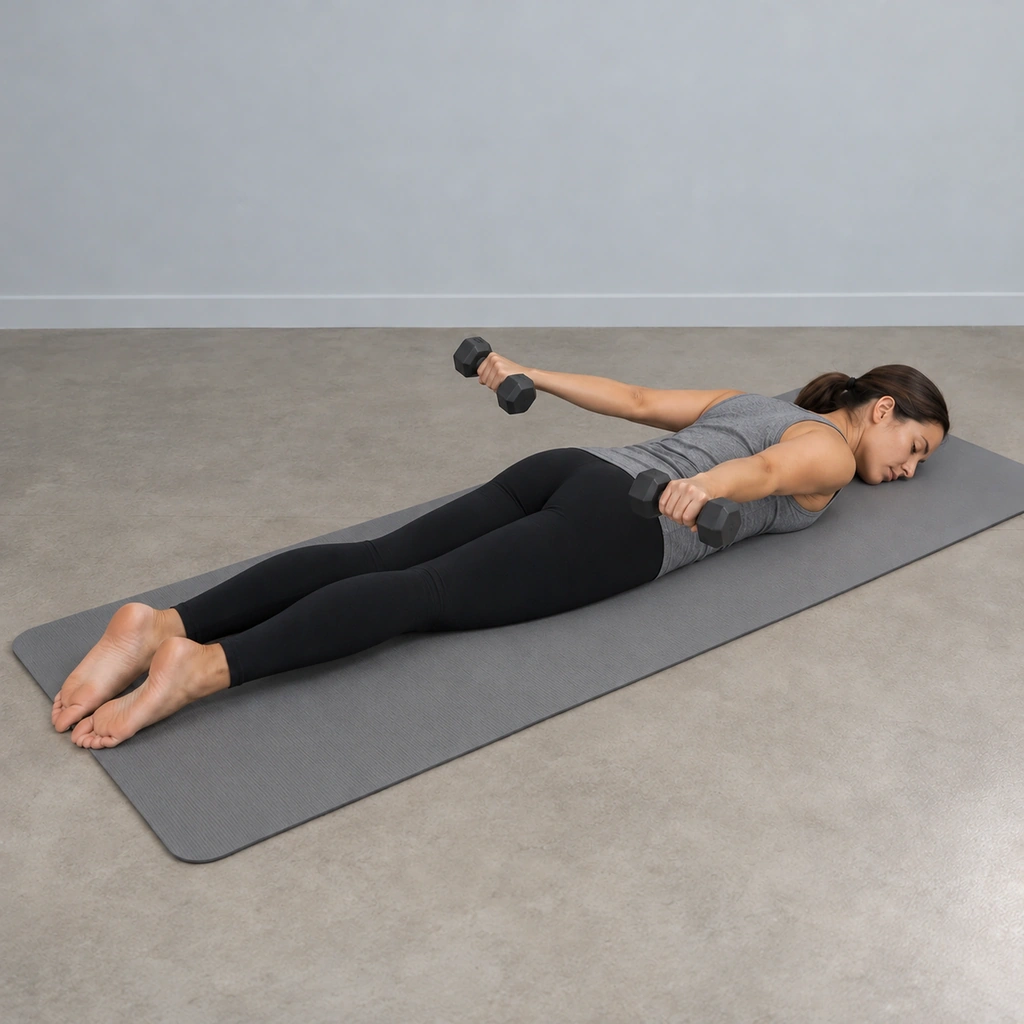
Step 2 of 3
Keeping your elbows straight, raise both arms backward and up toward the ceiling as far as you can, squeezing your shoulder blades together without arching your back.
Step 3 of 3
Lie face down with both arms resting at your sides, holding a dumbbell in each hand, elbows straight.
Breathing
- Breathe naturally throughout both the starting position and the backward lift.
Safety Information
Keep both elbows fully straight throughout the entire backward lift; bending the elbows shifts effort away from the intended shoulder-extension muscles. Warning: do not let the low back arch upward during the lift; keep the torso and pelvis supported without increasing the back arch. If shoulder or upper-back pain occurs while lifting, or the low back arches to gain range, stop and ask a physical therapist or physician before continuing, because this exercise may be prescribed for an existing shoulder condition. Stop if the exercise causes pain or you become unwell. Seek appropriate professional advice about symptoms or suitability.
Get your free personalized program at clapmove.com/register
Printed from clapmove.com. ClapMove is not a replacement for professional medical advice — always consult a healthcare provider before starting any exercise program.