ClapMove · clapmove.com
Exercise handout — move better, feel better.
Plate-Loaded Lateral Raise
You sit in a lateral raise machine with your elbows against the pads close to your body. You push the pads out and up to the side, then lower them.
Stop if
Choose an easier exercise if pain reaches 6 out of 10 or becomes sharp. Stop and rest if pain reaches 8 out of 10.
This is the general ClapMove rule. This exercise has no extra stop rule of its own.
- Pain 6 out of 10 or more: choose an easier exercise.
- Pain 8 out of 10 or more: stop and rest.
Equipment needed
- Works at the gym
machines
Gym
- gym machine (No safe home substitute has been reviewed yet.)
Dosage
3
Sets
8
Reps / Time
60 sec
Rest
controlled
Tempo
Step-by-Step Guide
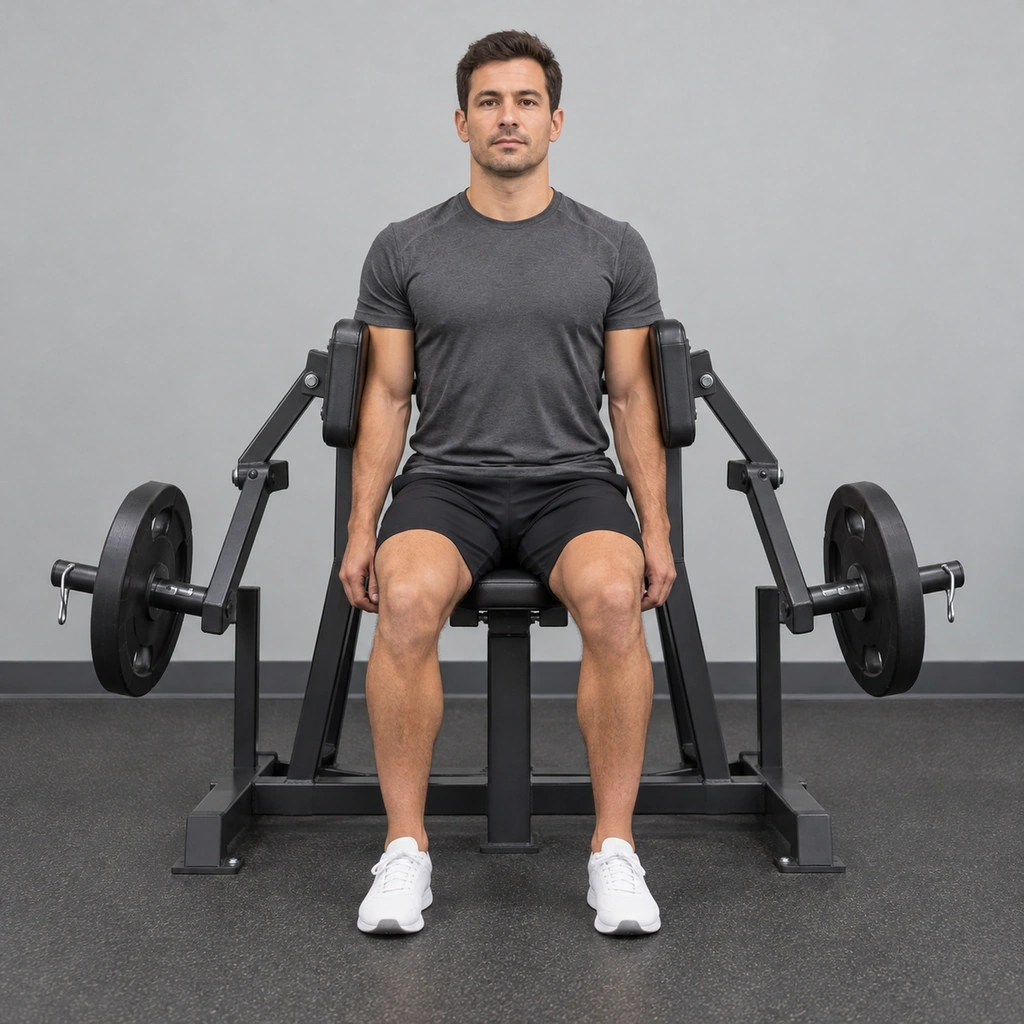
Step 1 of 3
Sit on the machine with both elbows resting against the elbow pads, upper arms held close against your torso.
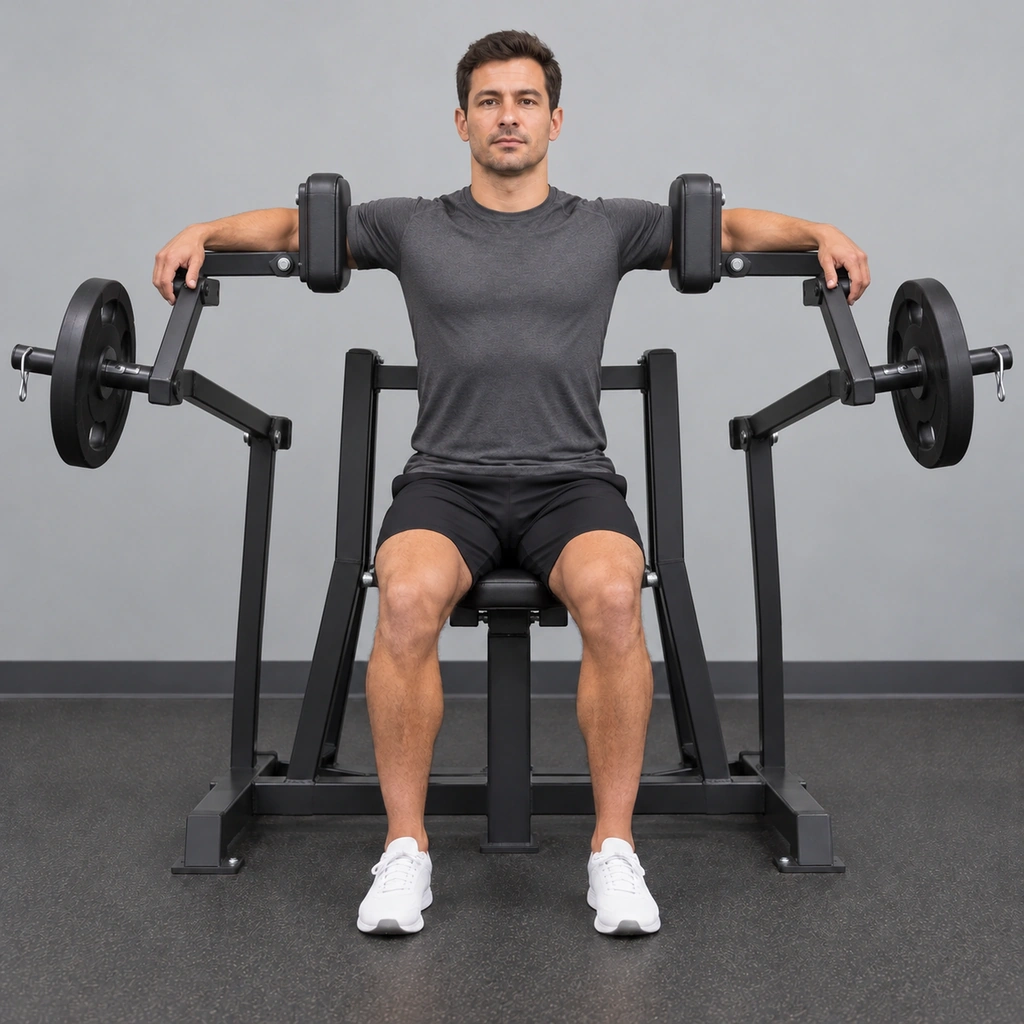
Step 2 of 3
With a controlled motion, push the elbow pads out until your arms are fully extended out to the sides.
Step 3 of 3
Sit on the machine with both elbows resting against the elbow pads, upper arms held close against your torso.
Breathing
- Breathe naturally throughout both the starting and extended positions.
Safety Information
Adjust the seat to allow for proper body positioning before loading the machine, rather than beginning from a seat height that puts the elbows out of line with the pads. Push the elbow pads out and return them with a controlled motion throughout, rather than using a fast or jerky swinging motion to carry the arms out. Stop and lower the elbow pads with control if you feel pain, pinching, or numbness in the shoulder or neck at any point during the raise. Stop if the exercise causes pain or you become unwell. Seek appropriate professional advice about symptoms or suitability.
Get your free personalized program at clapmove.com/register
Printed from clapmove.com. ClapMove is not a replacement for professional medical advice — always consult a healthcare provider before starting any exercise program.