ClapMove · clapmove.com
Exercise handout — move better, feel better.
Reformer Rowing
You kneel upright on a reformer carriage facing the headrest with your knees against the shoulder blocks and one hand behind your head. With the other hand you pull a strap back, then return. You repeat on the other side.
Stop if
Choose an easier exercise if pain reaches 6 out of 10 or becomes sharp. Stop and rest if pain reaches 8 out of 10.
This is the general ClapMove rule. This exercise has no extra stop rule of its own.
- Pain 6 out of 10 or more: choose an easier exercise.
- Pain 8 out of 10 or more: stop and rest.
Equipment needed
No equipment needed
Dosage
3
Sets
10
Reps / Time
45 sec
Rest
controlled
Tempo
Step-by-Step Guide
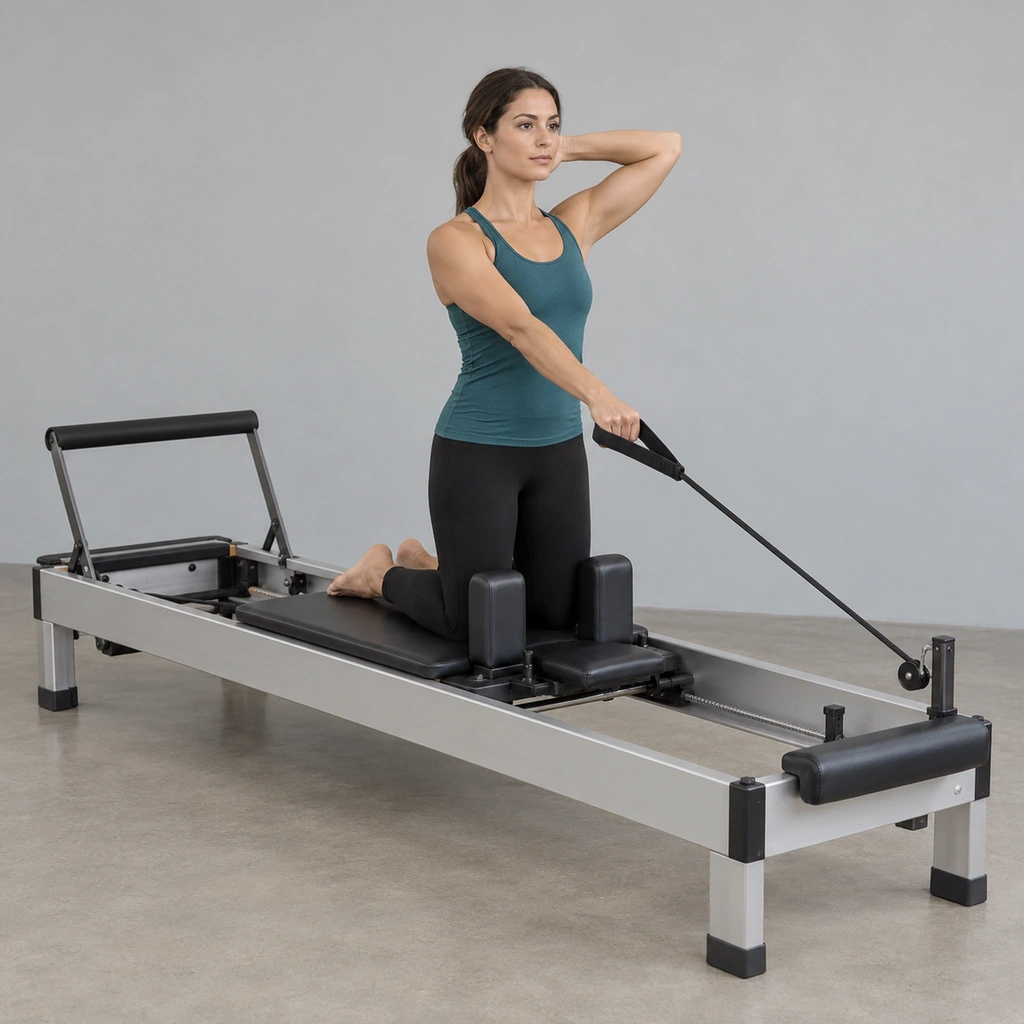
Step 1 of 3
Kneel upright with your knees against the shoulder blocks, one hand behind your head, the other gripping the strap with your arm extended diagonally across your torso.
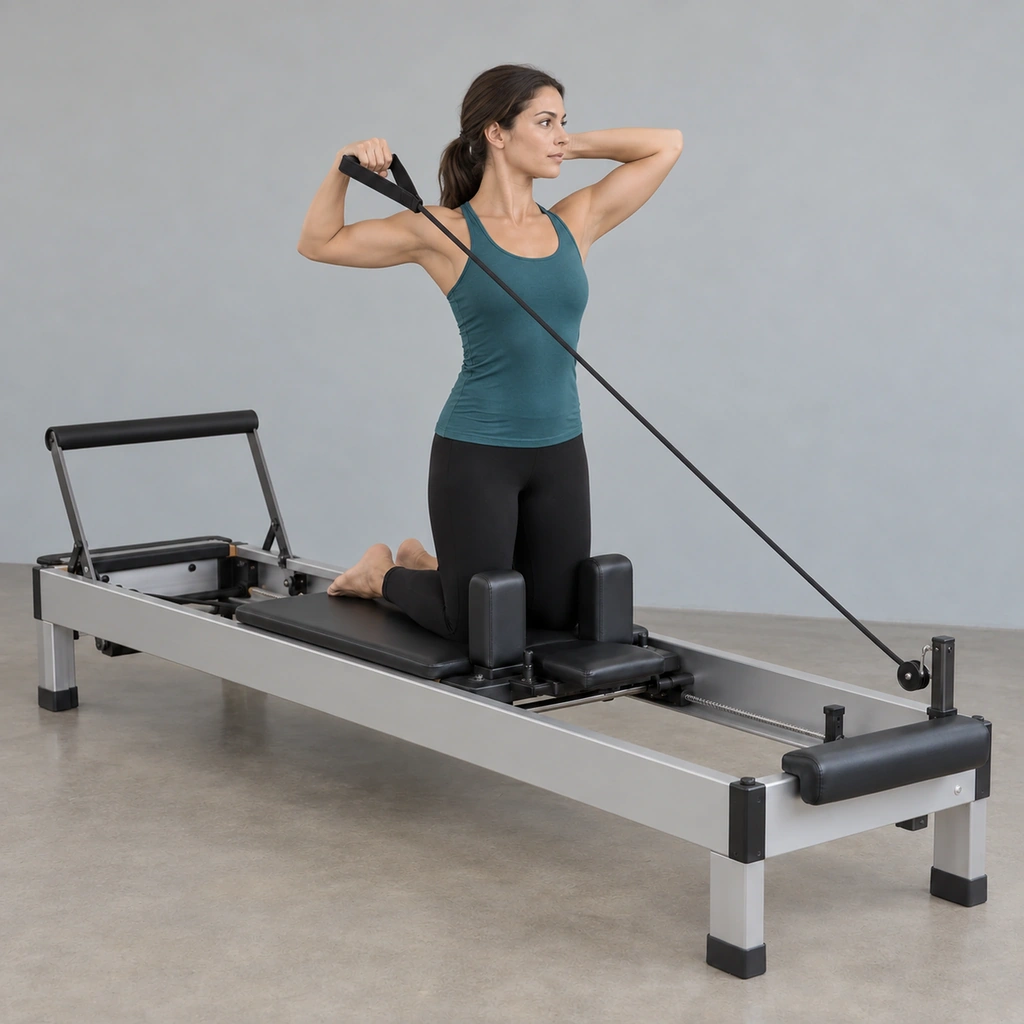
Step 2 of 3
Exhale, lift your shoulder up and back, externally rotate it, flex your elbow to draw it level with your shoulder, and rotate your torso from the ribcage.
Step 3 of 3
Kneel upright with your knees against the shoulder blocks, one hand behind your head, the other gripping the strap with your arm extended diagonally across your torso.
What you should feel
Feeling the co-contraction of the abdominal muscles and back extensors creating a stable torso, and feeling the rib cage rotating to create the turn in the torso.
Breathing
- Exhale to lift the shoulder up and back, externally rotate it, flex the elbow, and rotate the torso; inhale to control the return to the starting position.
Safety Information
Move from kneeling to sitting on a Pilates box, or sit with the legs crossed or extended, if kneeling on the carriage is painful or you have been told to avoid kneeling. This exercise may be unsuitable if turning your shoulder outward is painful for you or you have been told to avoid it. If you have a tight chest or limited shoulder range of motion, ease into the diagonal reach and rotation gradually and consider stretching the chest first, because tight pectoral muscles and limited shoulder range are factors that can make this exercise difficult. Stop if the exercise causes pain or you become unwell. Seek appropriate professional advice about symptoms or suitability.
Get your free personalized program at clapmove.com/register
Printed from clapmove.com. ClapMove is not a replacement for professional medical advice — always consult a healthcare provider before starting any exercise program.