ClapMove · clapmove.com
Exercise handout — move better, feel better.
Reformer Side Splits
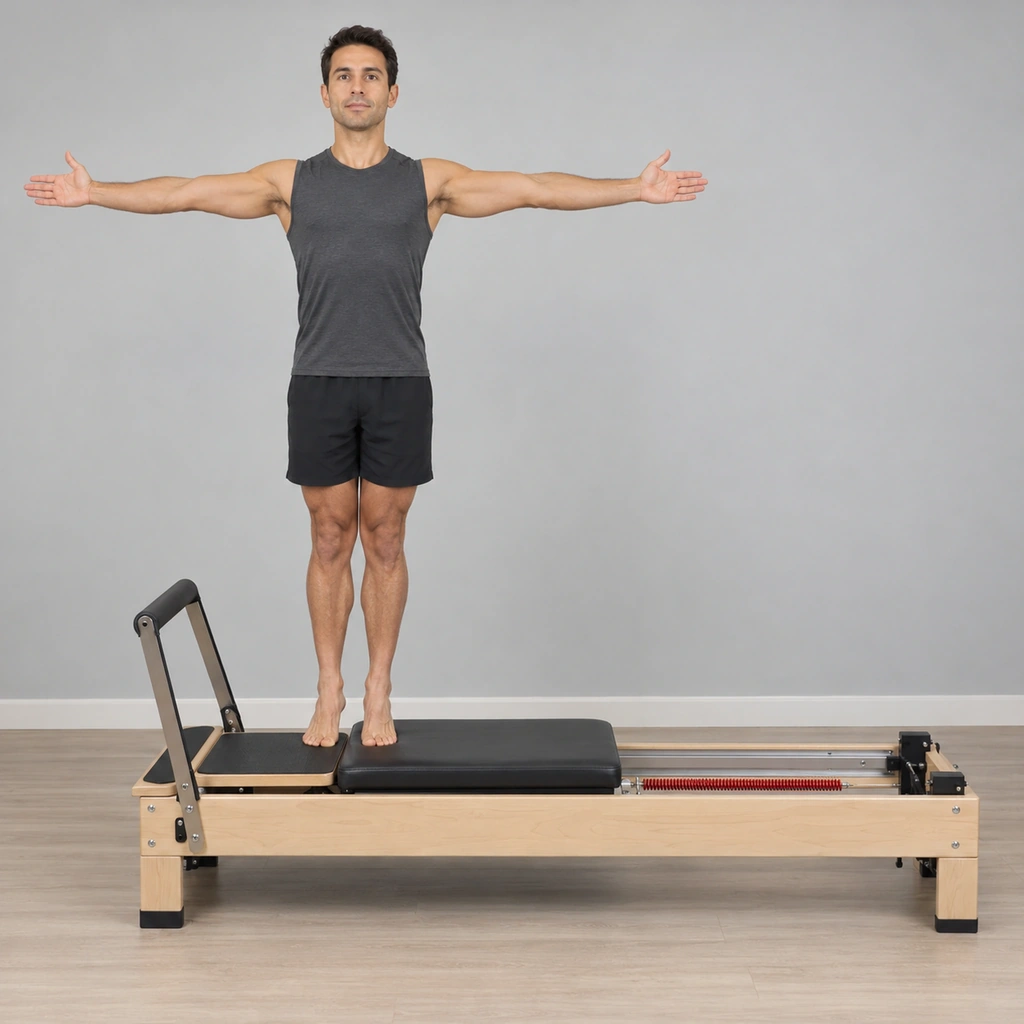
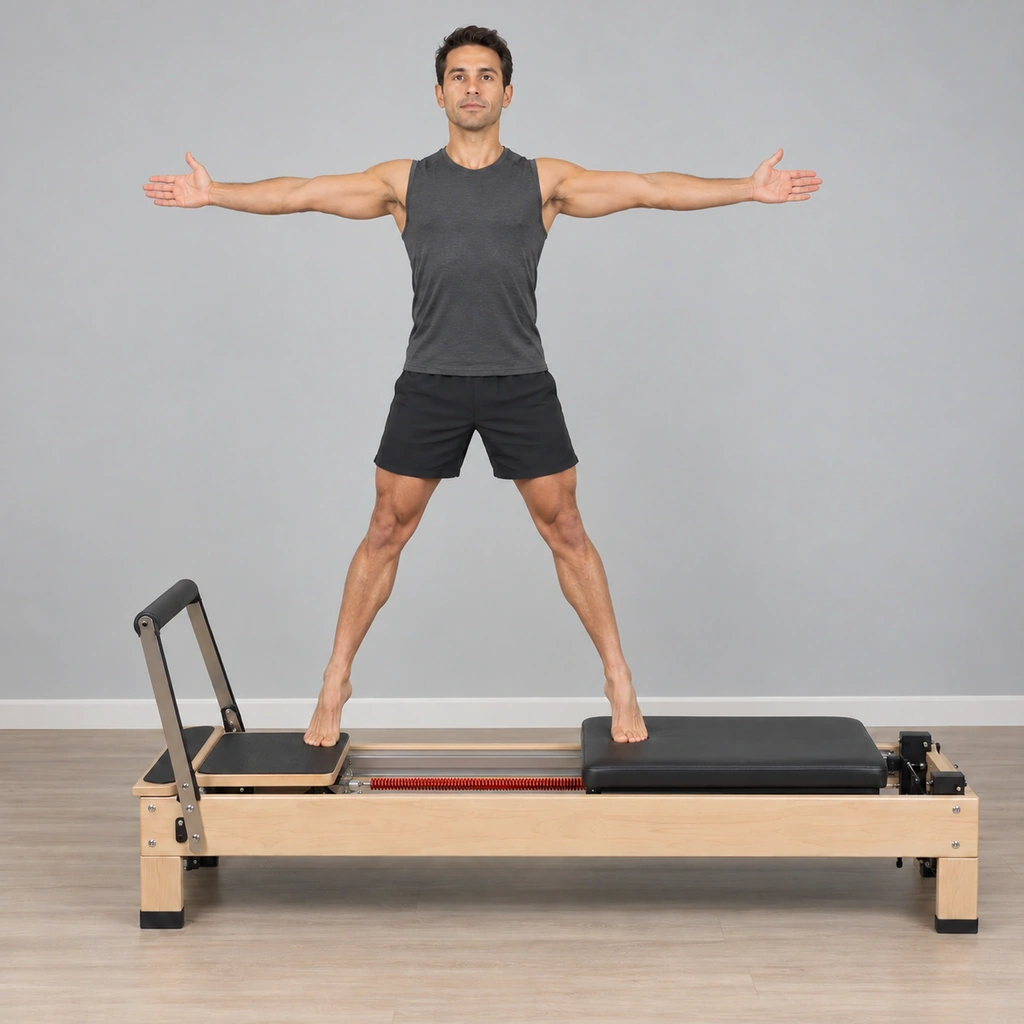
You stand tall facing the foot bar of a reformer with one foot on the fixed plate and the other on the moving carriage. You press the carriage out to the side, feeling the outer hip, then bring it back.
Stop if
Choose an easier exercise if pain reaches 6 out of 10 or becomes sharp. Stop and rest if pain reaches 8 out of 10.
This is the general ClapMove rule. This exercise has no extra stop rule of its own.
- Pain 6 out of 10 or more: choose an easier exercise.
- Pain 8 out of 10 or more: stop and rest.
Equipment needed
No equipment needed
Dosage
3
Sets
8
Reps / Time
60 sec
Rest
controlled
Tempo
Step-by-Step Guide
Set up
- Pause at the end of the range of motion and again before the next repetition.
Step 1 of 3
Stand facing the foot bar with one foot on the fixed foot plate and the other on the carriage, both feet at the edges of the platforms with your arches lifted, and hold your arms out to a T-position.
Step 2 of 3
Exhale and abduct your hips, opening your legs and letting the carriage move out, then pause at the end of your range of motion.
Step 3 of 3
Stand facing the foot bar with one foot on the fixed foot plate and the other on the carriage, both feet at the edges of the platforms with your arches lifted, and hold your arms out to a T-position.
What you should feel
An outer-hip/gluteal working sensation. Press from the outer hips or gluteals and try to feel the resistance on the return phase also.
Breathing
- Exhale to abduct the hips, opening the legs and allowing the carriage to move out; inhale to adduct the hips, bringing the legs and carriage back together.
Safety Information
If you have balance difficulty, or feel nervous standing on a moving platform, hold a support pole in one hand for balance rather than performing this exercise unsupported, because standing balance on the moving carriage is the primary difficulty of this exercise. If you have a hip, knee, or ankle issue, or cannot move through a pain-free range of motion, ask a physical therapist or physician before attempting this exercise, because it is potentially unsuitable for those conditions. Keep steady tension on the springs throughout and stop opening the legs at the first sign of the carriage losing control or approaching its end stop, because a carriage that crashes into the stopper is a sign of moving beyond a controlled range of motion. Stop if the exercise causes pain or you become unwell. Seek appropriate professional advice about symptoms or suitability.
Get your free personalized program at clapmove.com/register
Printed from clapmove.com. ClapMove is not a replacement for professional medical advice — always consult a healthcare provider before starting any exercise program.