ClapMove · clapmove.com
Exercise handout — move better, feel better.
Standing Two Arm Press With a Pilates Ring
You stand holding a Pilates ring by its two padded handles in front of your chest. You squeeze your hands together to compress the ring, then let it open. You repeat this rhythmically.
Stop if
Choose an easier exercise if pain reaches 6 out of 10 or becomes sharp. Stop and rest if pain reaches 8 out of 10.
This is the general ClapMove rule. This exercise has no extra stop rule of its own.
- Pain 6 out of 10 or more: choose an easier exercise.
- Pain 8 out of 10 or more: stop and rest.
Equipment needed
- Works at home
- Works at the gym
Home Options
- pilates ring
Dosage
3
Sets
10
Reps / Time
45 sec
Rest
controlled
Tempo
Step-by-Step Guide
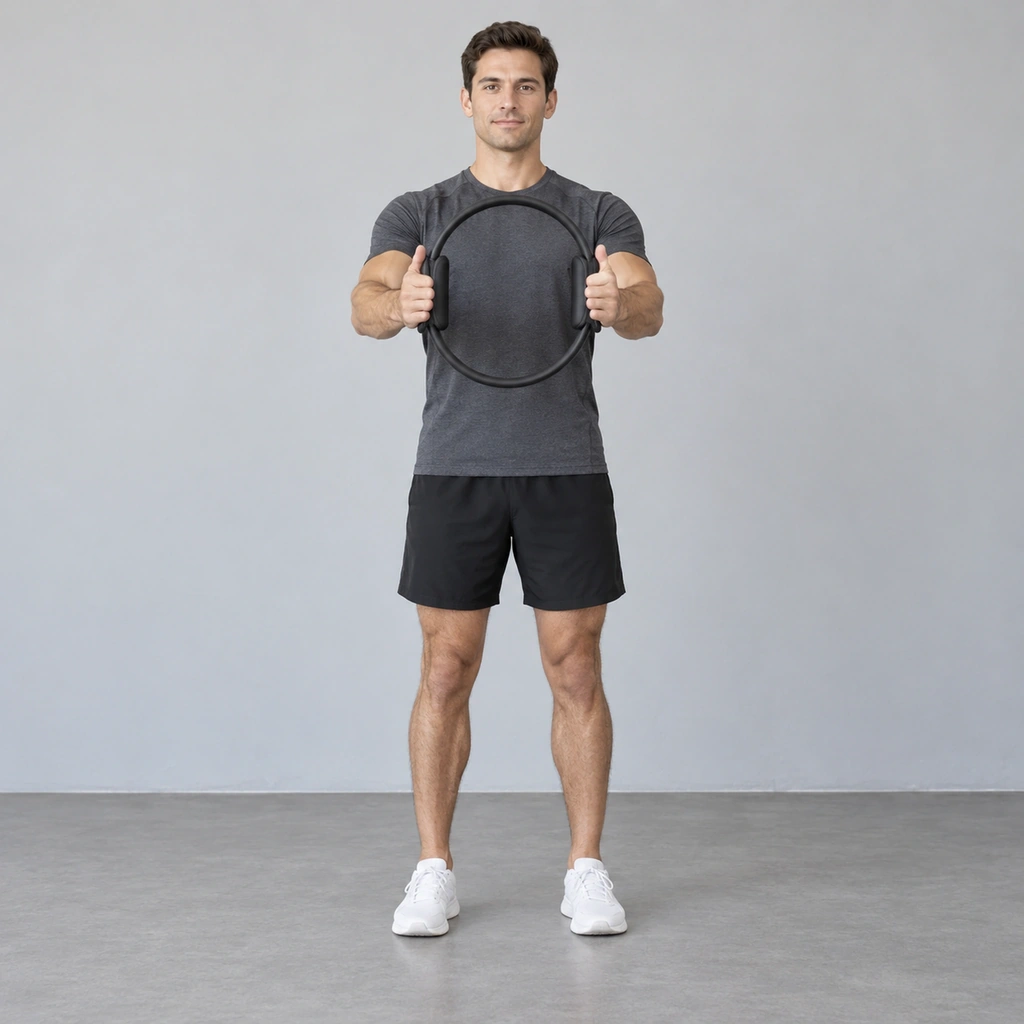
Step 1 of 3
Stand tall and hold the ring in front of your chest, hands on the outside of the handles, elbows only slightly bent.
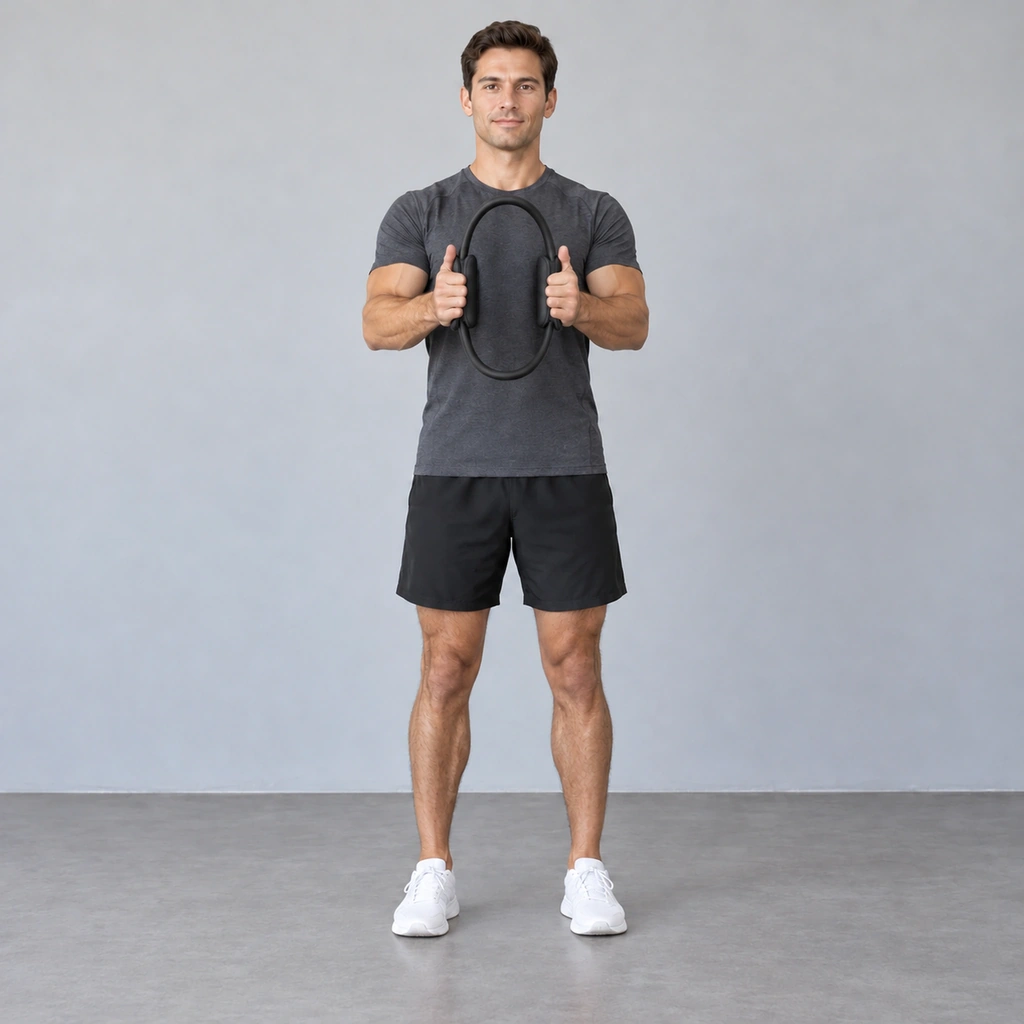
Step 2 of 3
Exhale, bend your elbows slightly further, and squeeze the ring between your hands; then inhale and release.
Step 3 of 3
Stand tall and hold the ring in front of your chest, hands on the outside of the handles, elbows only slightly bent.
Breathing
- Exhale as you bend the elbows and squeeze the ring between the hands; inhale as you release the ring back out.
Safety Information
Use gentle, controlled pressure when squeezing the ring -- neck, shoulder, arm and wrist injuries are reasons to ease off or avoid this exercise if it is not comfortable. If you have a neck, shoulder, arm, or wrist injury, ask a physical therapist or physician before adding a spring-loaded ring to a chest-pressing exercise. Stop and release the ring immediately if you feel a sharp pinch or pain in the shoulders, wrists, elbows, or neck at any point in the squeeze. Stop if the exercise causes pain or you become unwell. Seek appropriate professional advice about symptoms or suitability.
Get your free personalized program at clapmove.com/register
Printed from clapmove.com. ClapMove is not a replacement for professional medical advice — always consult a healthcare provider before starting any exercise program.