ClapMove · clapmove.com
Exercise handout — move better, feel better.
Medicine Ball Halo
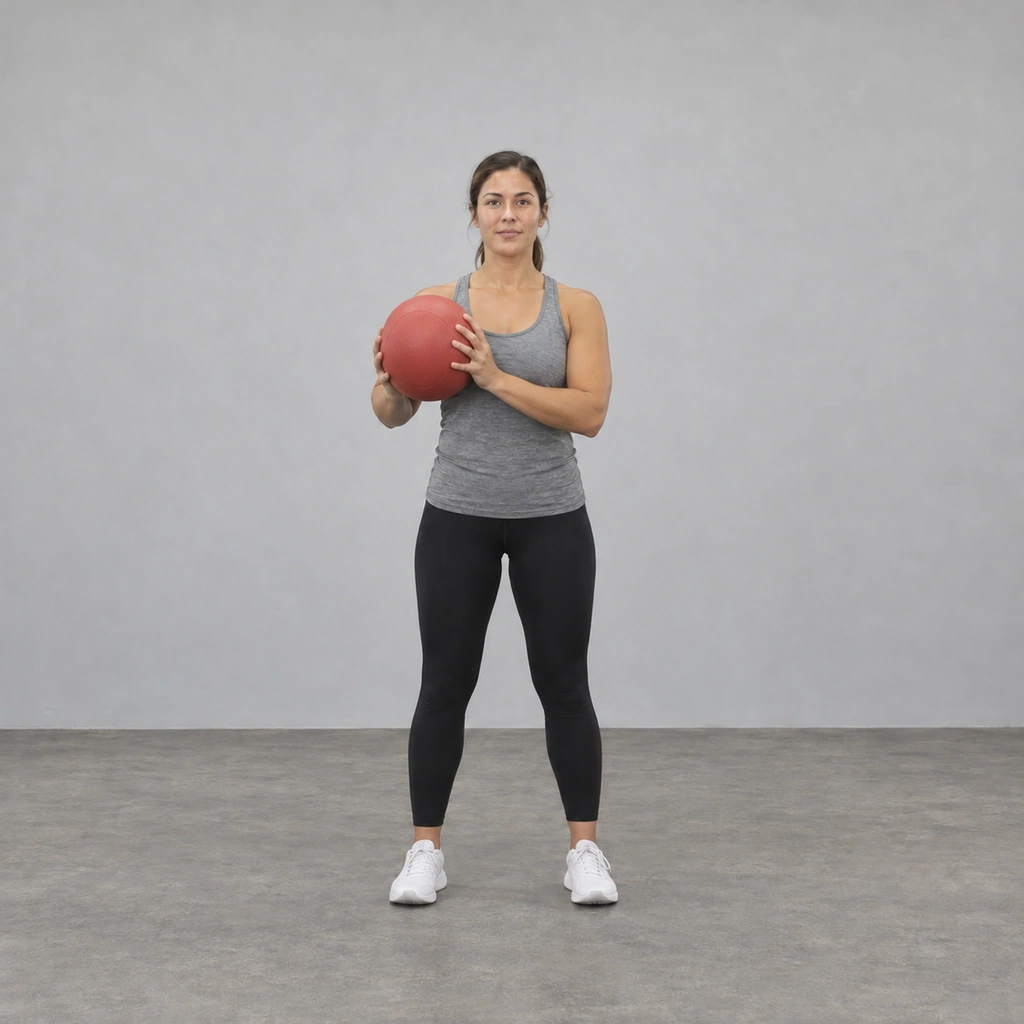
You stand with your feet shoulder-width apart holding a medicine ball at chest height. You carry the ball up and around your head with your elbows close, then return it to your chest.
Stop if
Choose an easier exercise if pain reaches 6 out of 10 or becomes sharp. Stop and rest if pain reaches 8 out of 10.
This is the general ClapMove rule. This exercise has no extra stop rule of its own.
- Pain 6 out of 10 or more: choose an easier exercise.
- Pain 8 out of 10 or more: stop and rest.
Equipment needed
- Works at home
- Works at the gym
medicine_ball
Home Options
- medicine ball
Dosage
3
Sets
8
Reps / Time
60 sec
Rest
controlled
Tempo
Step-by-Step Guide
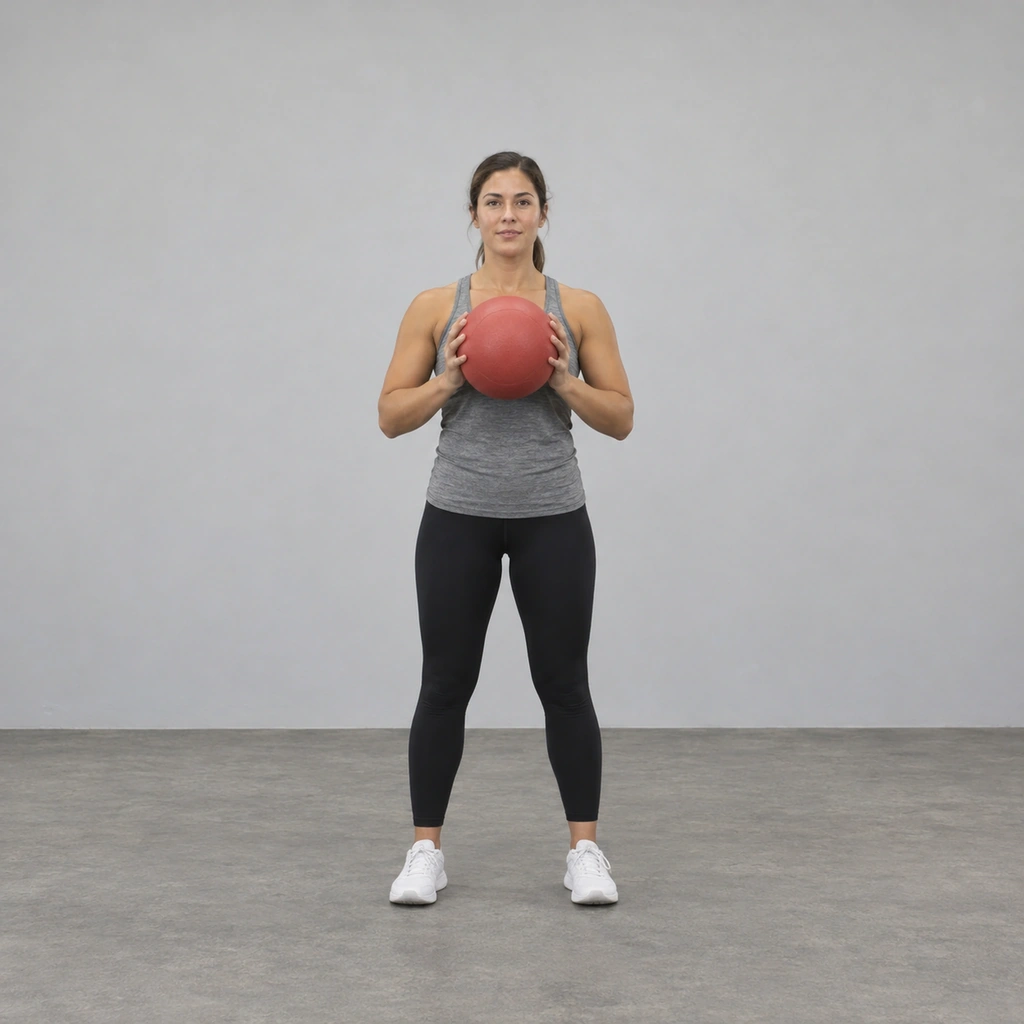
Step 1 of 6
Stand with the ball in both hands at centered chest height.
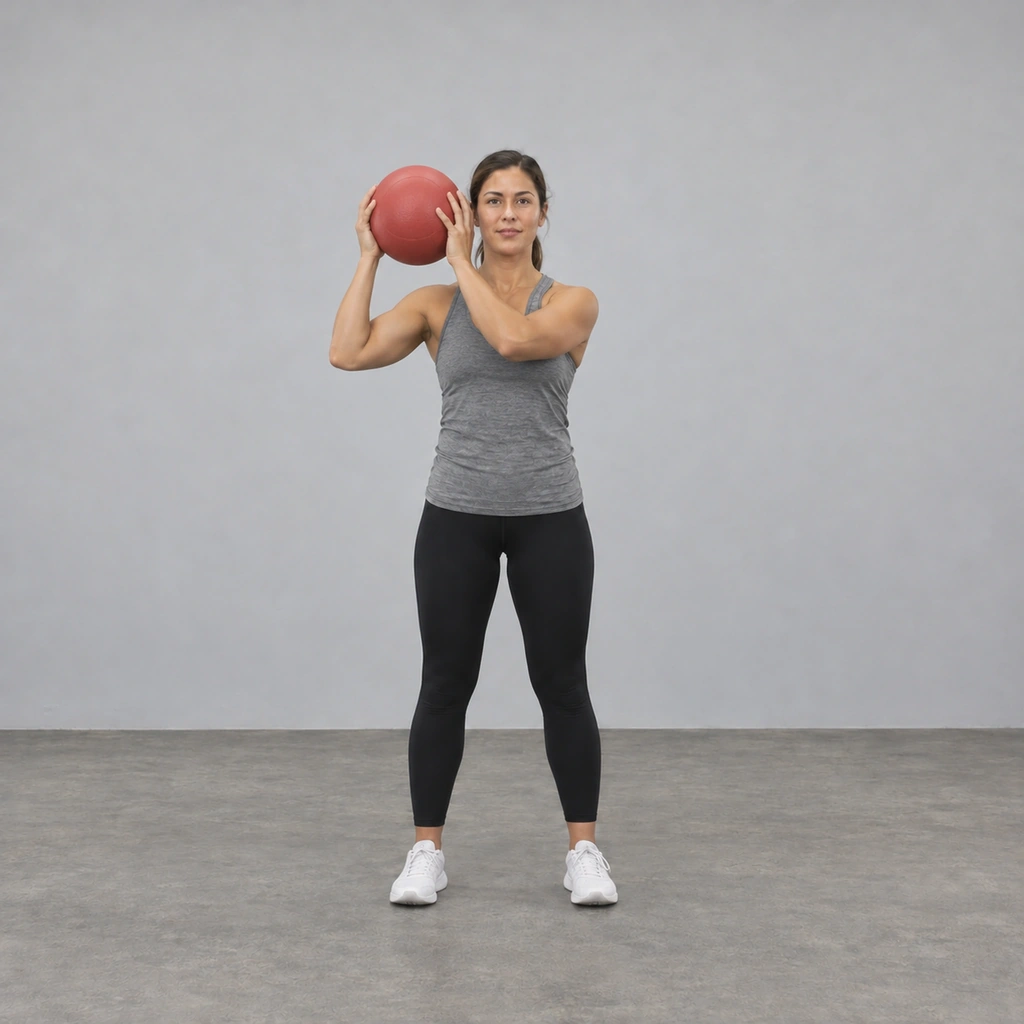
Step 2 of 6
Carry the ball up beside the right side of your head with both hands and bent elbows.
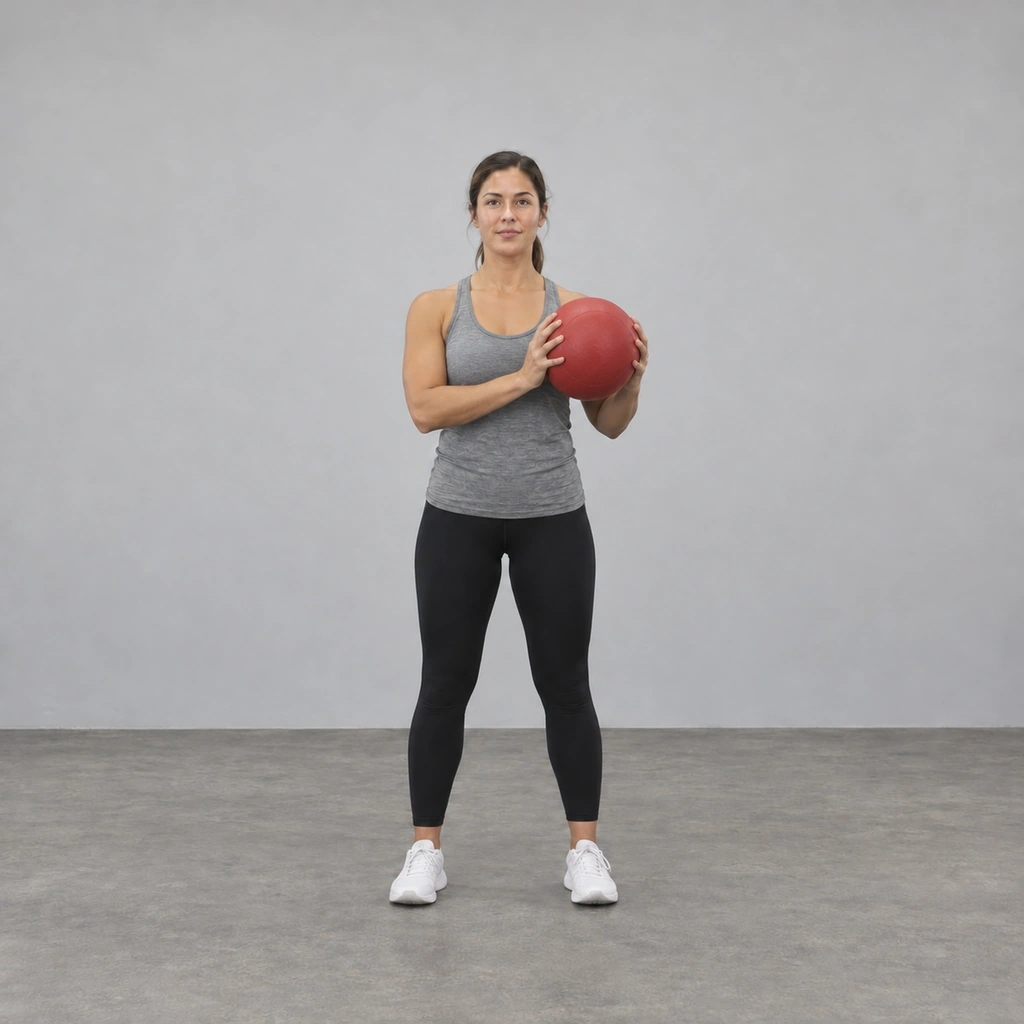
Step 3 of 6
Complete the right-to-left halo and lower the ball to chest height on your left side.
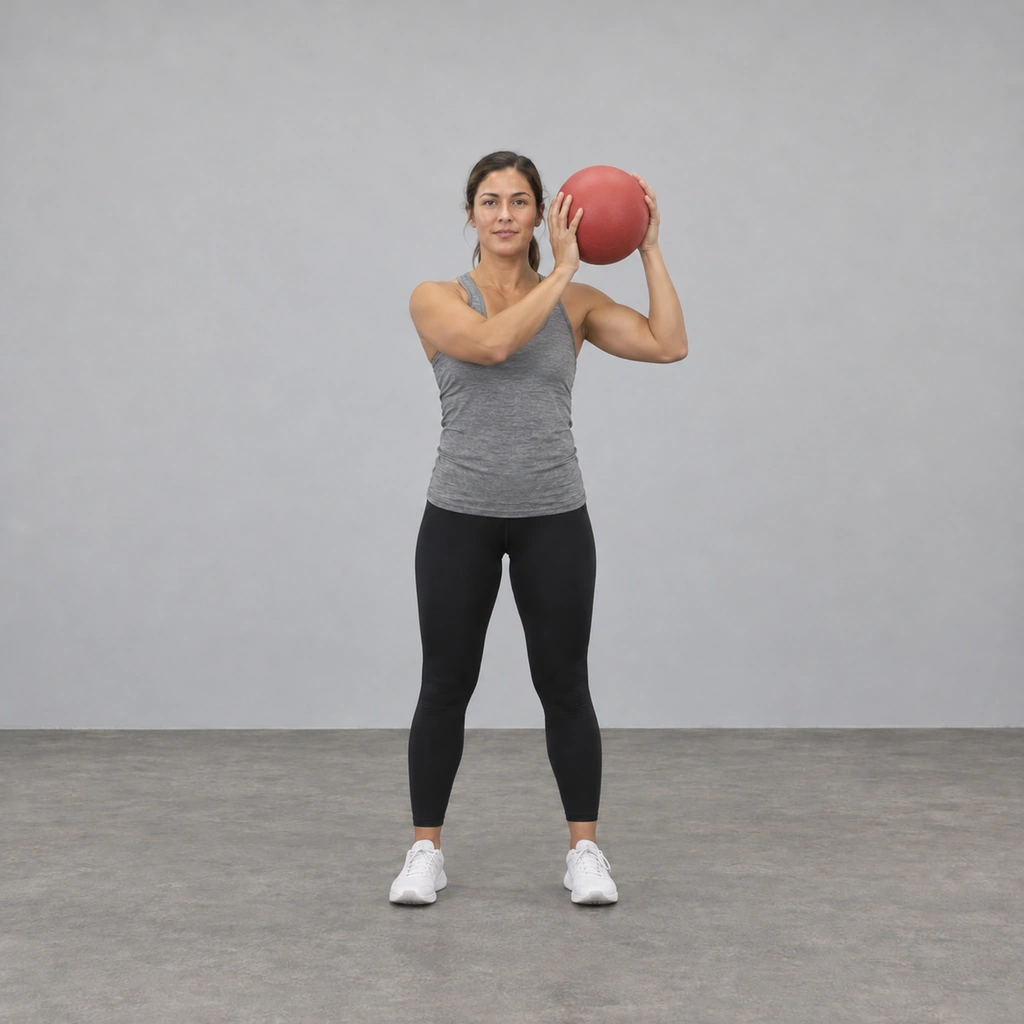
Step 4 of 6
Reverse direction; carry the ball up beside the left side of your head with both hands and bent elbows.
Step 5 of 6
Complete the left-to-right halo and lower the ball to chest height on your right side.
Step 6 of 6
Stand with the ball in both hands at centered chest height.
Safety Information
Keep your elbows close to your body throughout the movement -- never let them swing wide away from your sides. If you have a shoulder injury, neck injury, or balance impairment, ask a physical therapist or physician before attempting this exercise, because it carries a weighted object in a circular path close to the head. Stop and lower the medicine ball to chest level with control immediately if you feel a pinch, sharp pain, or loss of balance at any point in the circling motion. Stop if the exercise causes pain or you become unwell. Seek appropriate professional advice about symptoms or suitability.
Get your free personalized program at clapmove.com/register
Printed from clapmove.com. ClapMove is not a replacement for professional medical advice — always consult a healthcare provider before starting any exercise program.