ClapMove · clapmove.com
Exercise handout — move better, feel better.
Dumbbell Scapular Circle
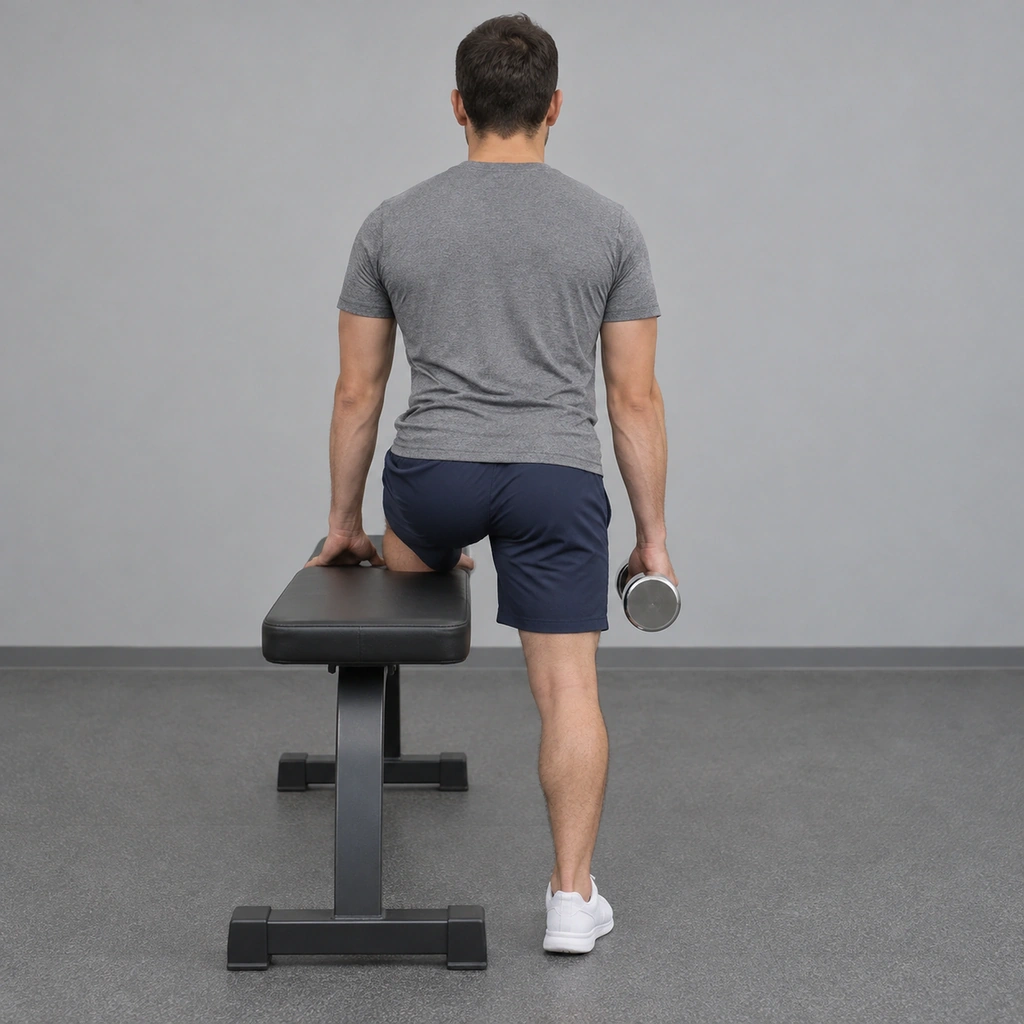
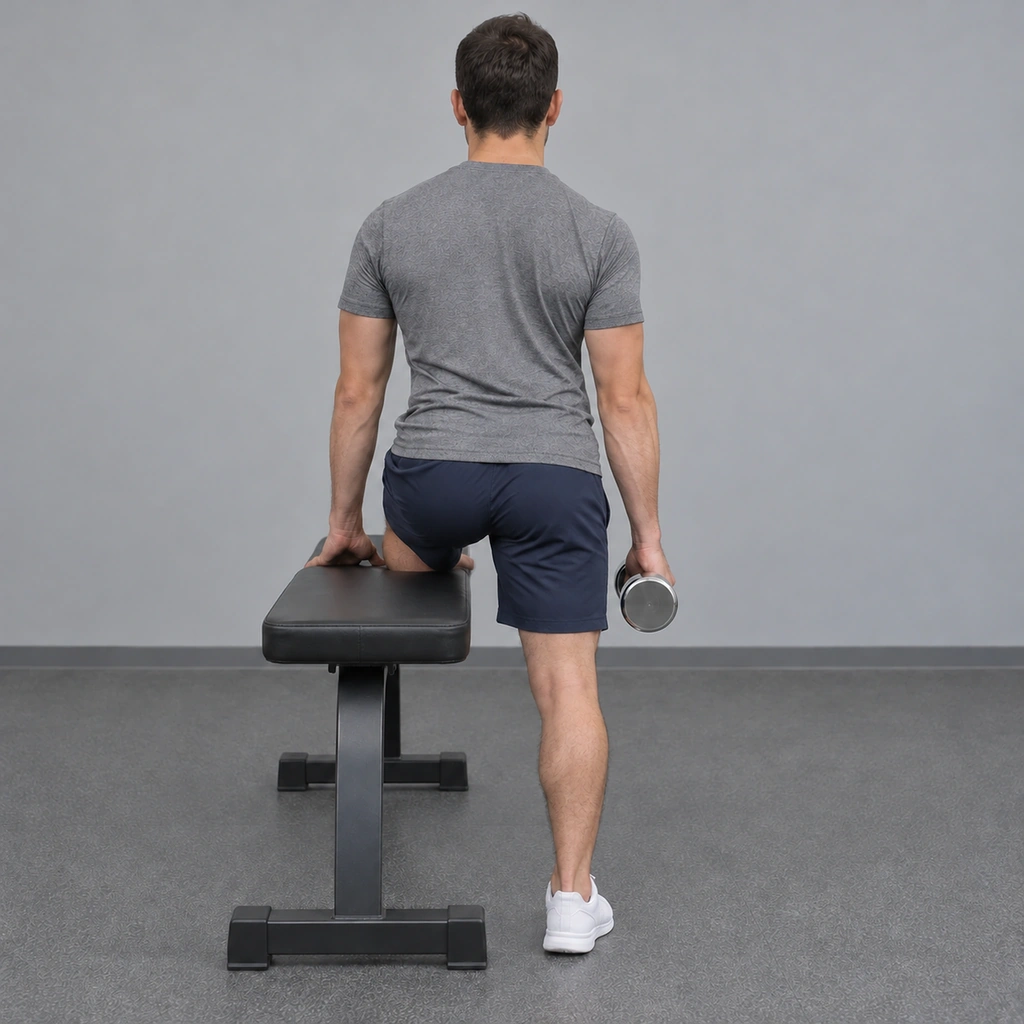
You kneel with one knee and hand on a bench and your other foot on the floor, holding a dumbbell with a straight arm. You move the shoulder blade in a smooth circle, then repeat on the other side.
Stop if
Choose an easier exercise if pain reaches 6 out of 10 or becomes sharp. Stop and rest if pain reaches 8 out of 10.
This is the general ClapMove rule. This exercise has no extra stop rule of its own.
- Pain 6 out of 10 or more: choose an easier exercise.
- Pain 8 out of 10 or more: stop and rest.
Equipment needed
- Works at home
- Works at the gym
bench, dumbbells
Home Options
- dumbbells + weight bench
Dosage
3
Sets
8
Reps / Time
60 sec
Rest
controlled
Tempo
Step-by-Step Guide
Step 1 of 3
Kneel on the bench with your left knee and left hand supported, your right foot planted on the floor. Let your right arm hang straight down with the elbow locked, holding a dumbbell. Rest your right scapula in a neutral position before beginning the circular motion.
Step 2 of 3
Keeping your elbow straight and your back still, move your right scapula through a circular path, drawing it back and down into retraction and depression before continuing the circle.
Step 3 of 3
Kneel on the bench with your left knee and left hand supported, your right foot planted on the floor. Let your right arm hang straight down with the elbow locked, holding a dumbbell. Rest your right scapula in a neutral position before beginning the circular motion.
Safety Information
If you have a history of shoulder impingement, a rotator cuff injury, or scapular winging/dyskinesis, ask a physical therapist or physician before attempting this exercise, since these are related conditions. Keep the movement isolated to the scapula and stop if you feel the motion shifting into your back or shoulder joint instead -- limiting how much movement comes from the back and the shoulder. Stop and lower the dumbbell with control immediately if you feel a sharp pain, pinch, or loss of grip at any point in the circular motion. Stop if the exercise causes pain or you become unwell. Seek appropriate professional advice about symptoms or suitability.
Get your free personalized program at clapmove.com/register
Printed from clapmove.com. ClapMove is not a replacement for professional medical advice — always consult a healthcare provider before starting any exercise program.