ClapMove · clapmove.com
Exercise handout — move better, feel better.
Medicine Ball Diagonal Chop, Straddle-Stance Squat-and-Rotate
You stand with a wide stance holding a medicine ball at your waist. You sweep the ball up over one shoulder, then drive it down and across your body while squatting and rotating.
Stop if
Choose an easier exercise if pain reaches 6 out of 10 or becomes sharp. Stop and rest if pain reaches 8 out of 10.
This is the general ClapMove rule. This exercise has no extra stop rule of its own.
- Pain 6 out of 10 or more: choose an easier exercise.
- Pain 8 out of 10 or more: stop and rest.
Equipment needed
- Works at home
- Works at the gym
medicine_ball
Home Options
- medicine ball
Dosage
3
Sets
8
Reps / Time
60 sec
Rest
controlled
Tempo
Step-by-Step Guide
Set up
- Keep the ball gripped in both hands throughout; never throw or release it.
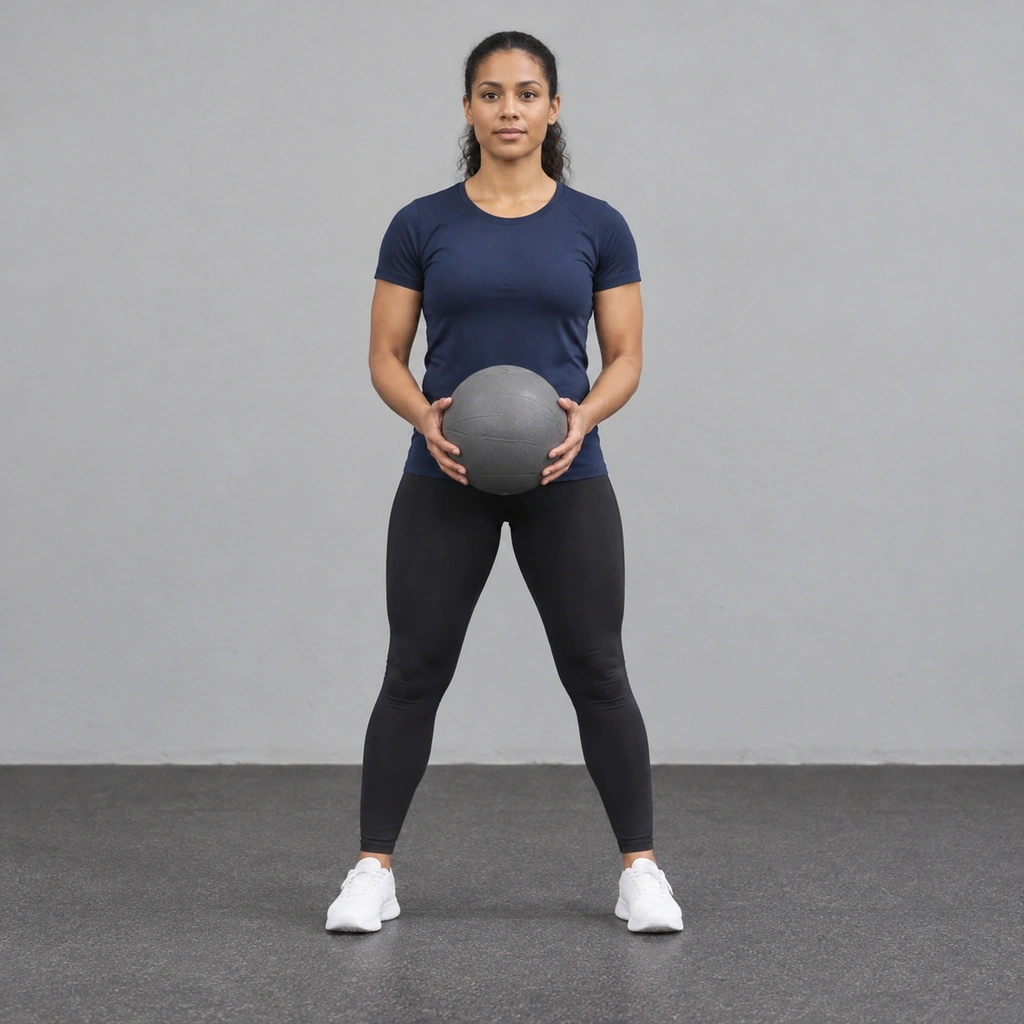
Step 1 of 4
Stand in a straddle stance with your feet shoulder-width apart, holding a medicine ball with both hands in front of your waist.
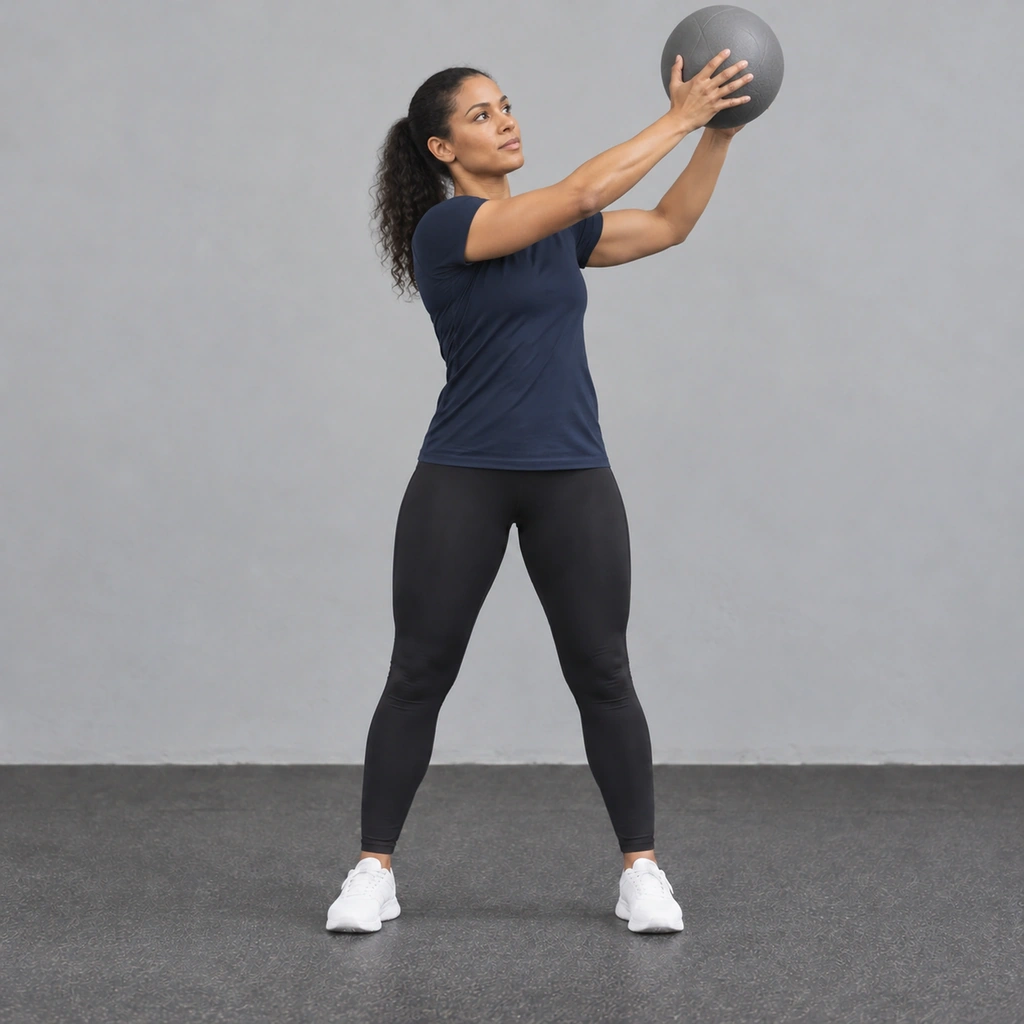
Step 2 of 4
From the starting position, move the ball high above your left shoulder, rotating your torso to the left.
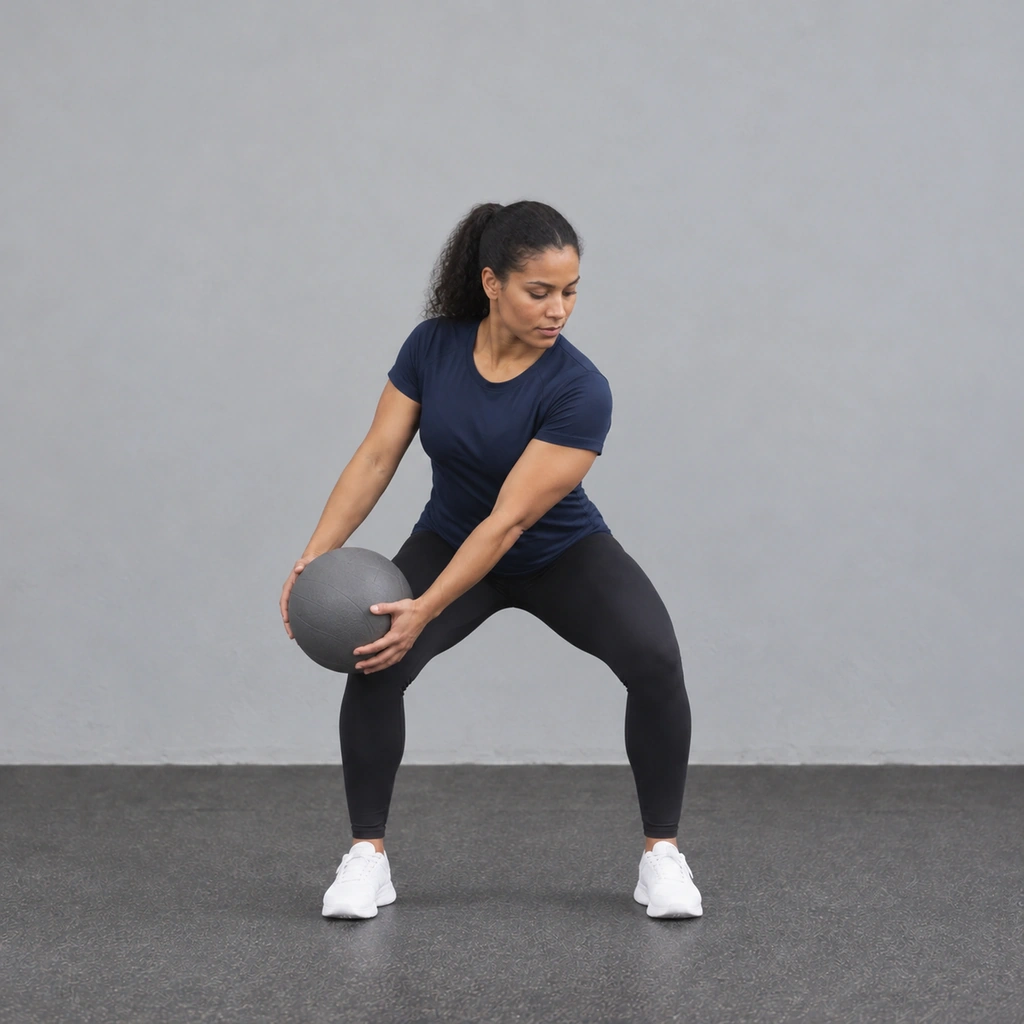
Step 3 of 4
Move the ball down and to the right, squatting so the ball reaches a point beside your right knee.
Step 4 of 4
Stand in a straddle stance with your feet shoulder-width apart, holding a medicine ball with both hands in front of your waist.
Safety Information
Keep the medicine ball close to your body and your trunk braced throughout the diagonal sweep and the squat -- losing control of a weighted object during a combined rotation-and-squat increases the risk of a twisting strain. If you have a low-back injury, knee injury, or balance impairment, ask a physical therapist or physician before attempting this exercise, because it combines a loaded, rotational trunk movement with a squat. Stop and return the ball to the starting position at your waist with control immediately if you feel a pinch, sharp pain, or loss of balance at any point in the diagonal sweep or the squat. Stop if the exercise causes pain or you become unwell. Seek appropriate professional advice about symptoms or suitability.
Get your free personalized program at clapmove.com/register
Printed from clapmove.com. ClapMove is not a replacement for professional medical advice — always consult a healthcare provider before starting any exercise program.