ClapMove · clapmove.com
Exercise handout — move better, feel better.
Redcord Suspended Waist-Sling Side Crunch
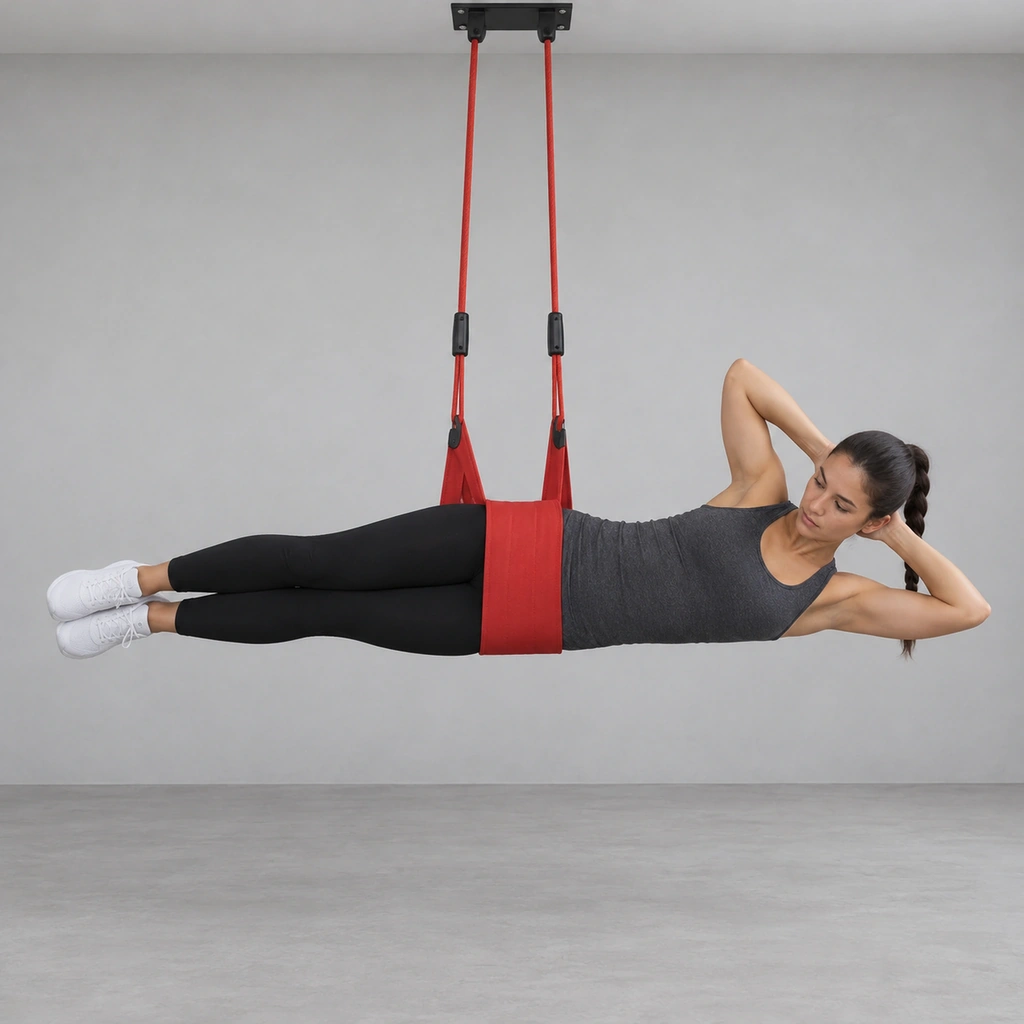
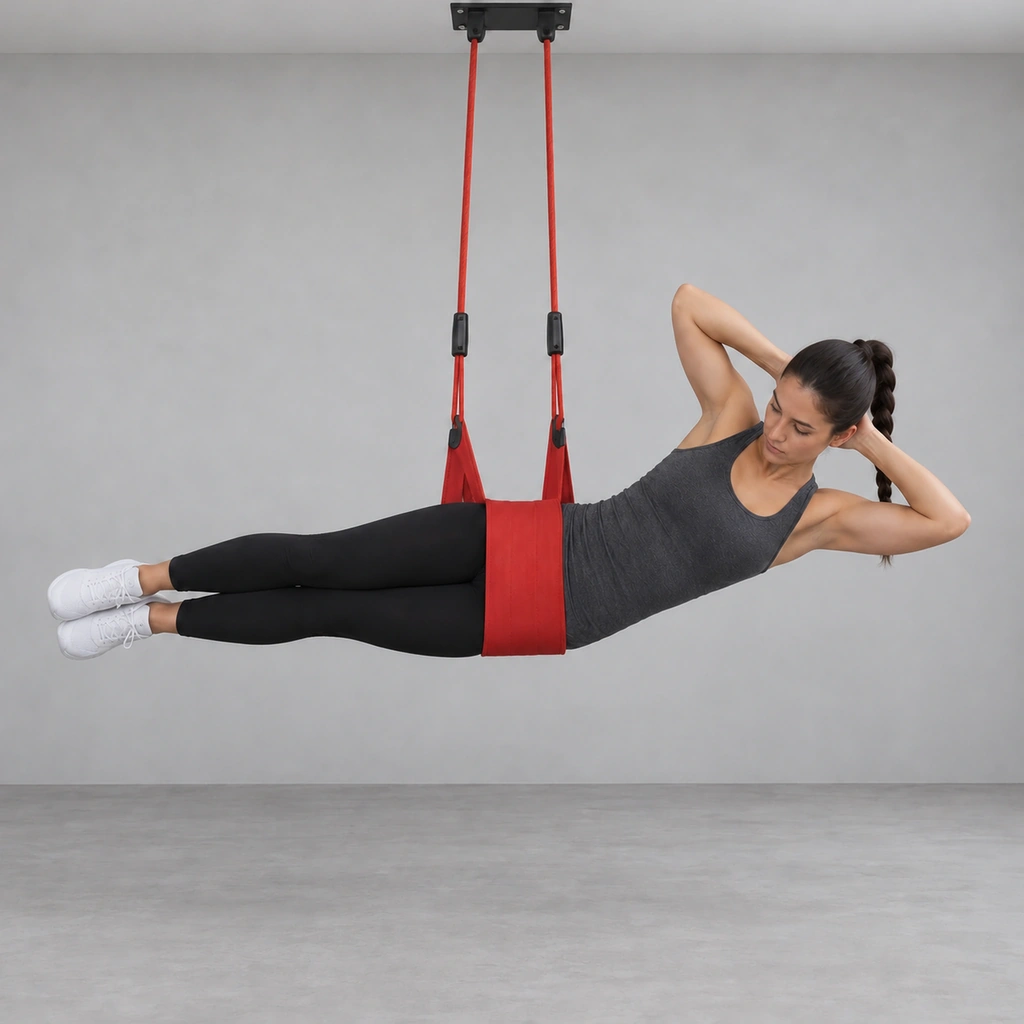
You lie on your side with a sling around your waist, hung from ropes on a ceiling mount, and your hands behind your neck. You bend your trunk sideways to lift, then lower with control.
Stop if
Choose an easier exercise if pain reaches 6 out of 10 or becomes sharp. Stop and rest if pain reaches 8 out of 10.
This is the general ClapMove rule. This exercise has no extra stop rule of its own.
- Pain 6 out of 10 or more: choose an easier exercise.
- Pain 8 out of 10 or more: stop and rest.
Equipment needed
- Works at home
- Works at the gym
none
Home Options
- bodyweight
Dosage
3
Sets
8
Reps / Time
60 sec
Rest
controlled
Tempo
Step-by-Step Guide
Set up
- Attach the sling around your waist and settle into the fully suspended side-lying position before you start.
Step 1 of 3
Lie on your right side with a sling around your waist and your hands clasped behind your neck, elbows spread out. Let your whole body hang straight, with nothing touching the floor.
Step 2 of 3
Bend at your waist to lift your upper body sideways up toward the ropes, keeping your hands clasped behind your neck and your legs still.
Step 3 of 3
Lie on your right side with a sling around your waist and your hands clasped behind your neck, elbows spread out. Let your whole body hang straight, with nothing touching the floor.
Safety Information
Warning: keep both ropes and the sling clear of your neck and throat at every point in the movement; placing the ropes around the neck may cause strangulation, and the hands-behind-the-neck position keeps your hands and the ropes close to that area throughout. If you have a low-back, spinal, or abdominal-wall condition, ask a physical therapist or physician before attempting this exercise, because it repeatedly bends your fully suspended body sideways at the waist against your own body weight with no floor support at any point. Stop and lower yourself back down to the starting position with control immediately if you feel pain in your low back or waist. Stop if the exercise causes pain or you become unwell. Seek appropriate professional advice about symptoms or suitability.
Get your free personalized program at clapmove.com/register
Printed from clapmove.com. ClapMove is not a replacement for professional medical advice — always consult a healthcare provider before starting any exercise program.