ClapMove · clapmove.com
Exercise handout — move better, feel better.
Pilates Reformer Thigh Stretch
You kneel upright on a reformer carriage with your knees against the shoulder blocks, holding a strap handle in each hand. You lean back slowly against the springs, then return upright.
Stop if
Choose an easier exercise if pain reaches 6 out of 10 or becomes sharp. Stop and rest if pain reaches 8 out of 10.
This is the general ClapMove rule. This exercise has no extra stop rule of its own.
- Pain 6 out of 10 or more: choose an easier exercise.
- Pain 8 out of 10 or more: stop and rest.
Equipment needed
No equipment needed
Dosage
1
Sets
30 sec
Reps / Time
15 sec
Rest
controlled
Tempo
Step-by-Step Guide
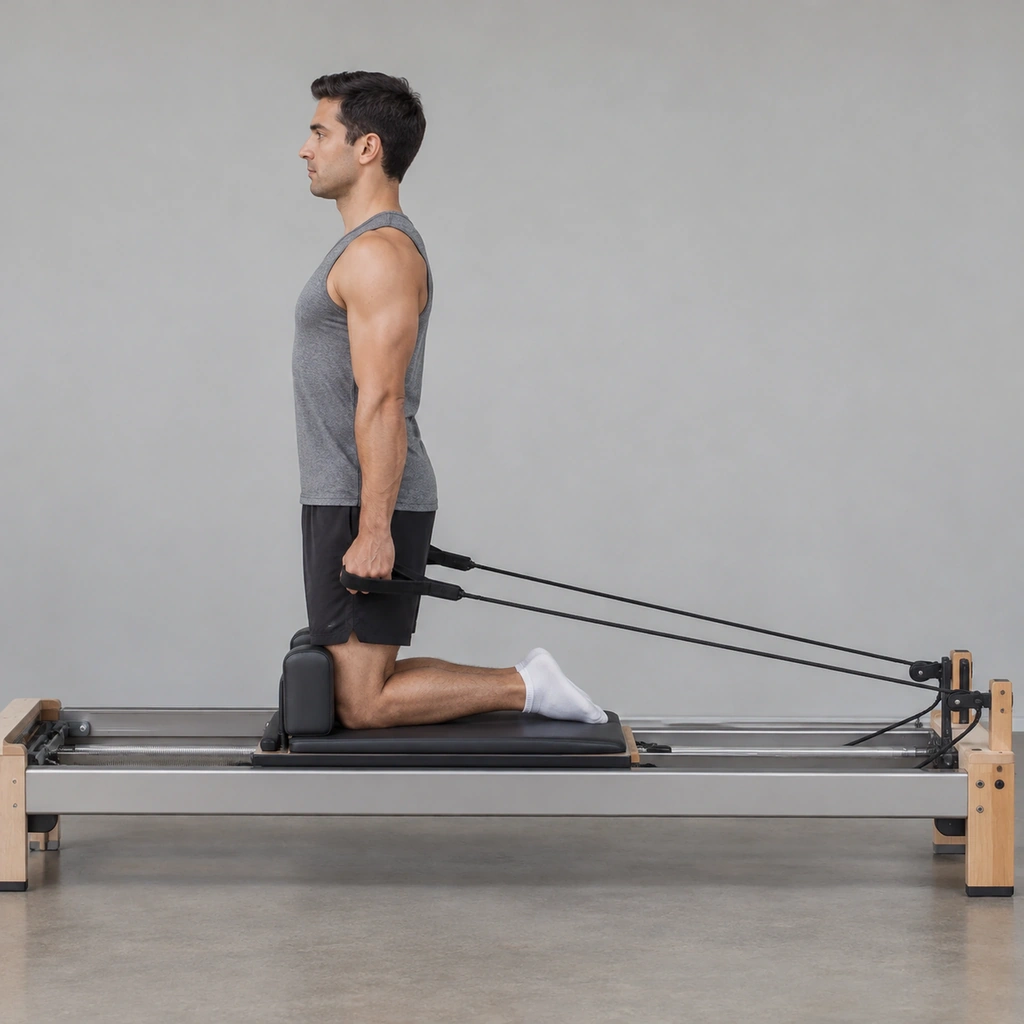
Step 1 of 3
Kneel on the carriage with both knees against the shoulder blocks, holding a strap handle in each hand. Engage your core and keep your spine tall.
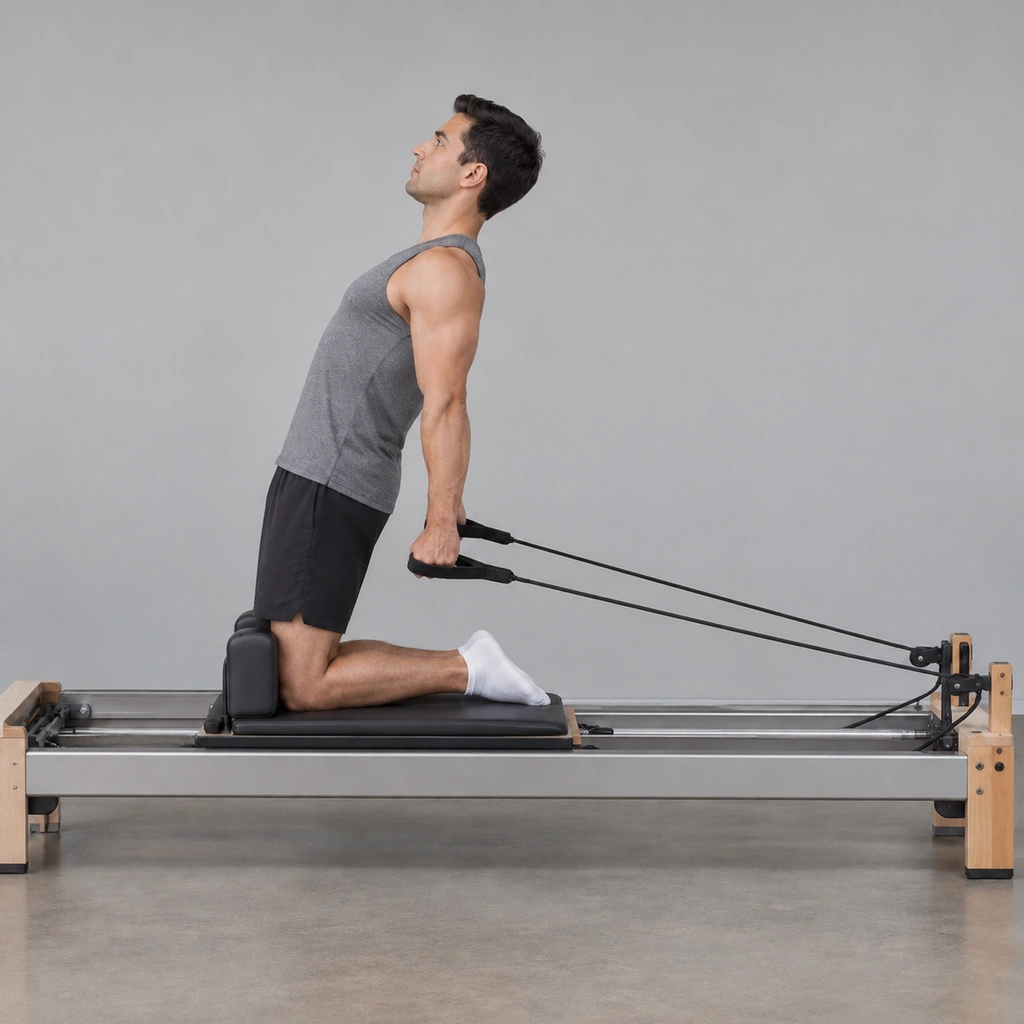
Step 2 of 3
Lean your torso and pelvis back, hinging at the knees, keeping your body straight from head to knees. Look toward the back edge of the reformer.
Step 3 of 3
Kneel on the carriage with both knees against the shoulder blocks, holding a strap handle in each hand. Engage your core and keep your spine tall.
Breathing
- Inhale while leaning your torso and pelvis back, hinging at the knees; exhale while lifting the straps slightly and returning to the upright position with control.
Safety Information
If you have knee problems, ask a physical therapist or a Clinical Pilates instructor before attempting this exercise, because this is a contraindication. Keep both hands gripping a strap handle throughout the whole hinge -- releasing a handle while your torso is leaned back removes your balance support suddenly. Move slowly and stop leaning back at the first sign of pinching at the front of either hip or strain in the low back; do not force the hinge deeper than feels controlled. Stop if the exercise causes pain or you become unwell. Seek appropriate professional advice about symptoms or suitability.
Get your free personalized program at clapmove.com/register
Printed from clapmove.com. ClapMove is not a replacement for professional medical advice — always consult a healthcare provider before starting any exercise program.