ClapMove · clapmove.com
Exercise handout — move better, feel better.
Standing Knee Curl With an Ankle Cuff Weight
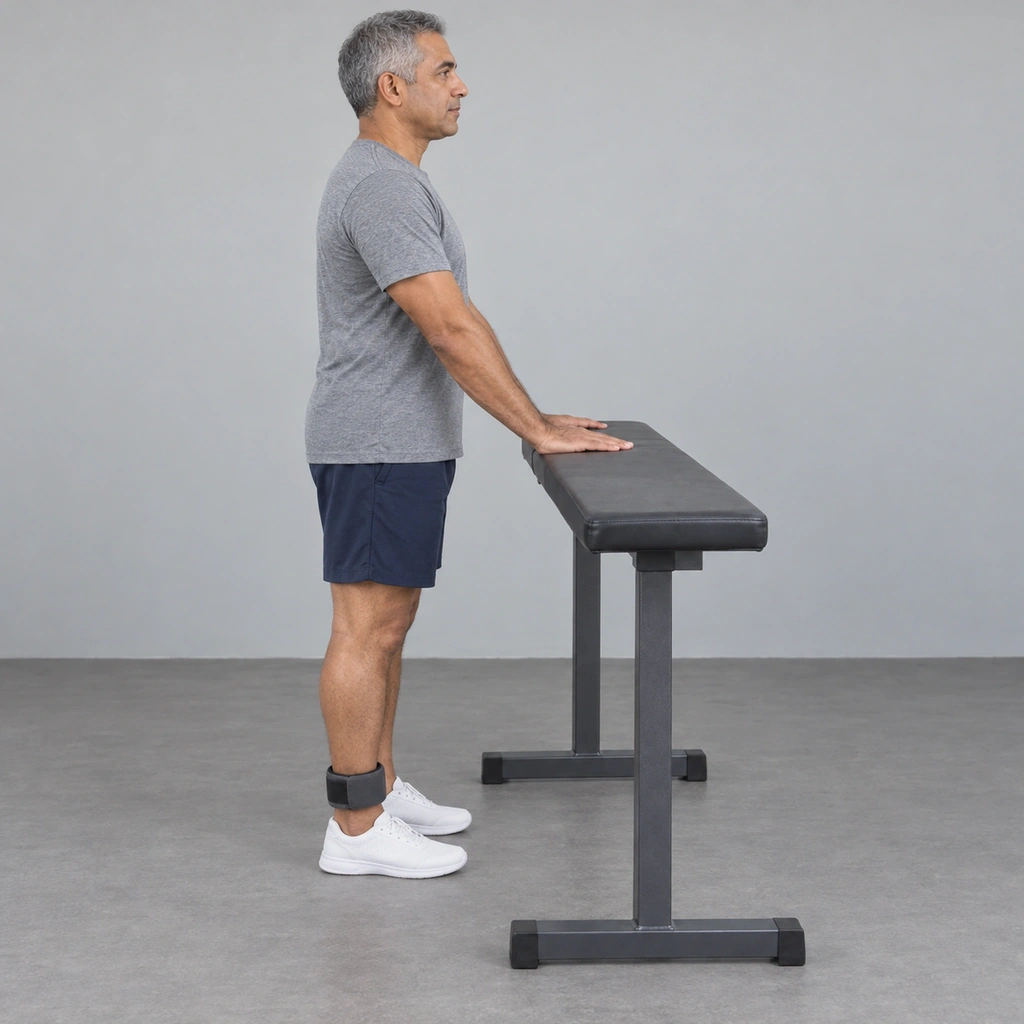
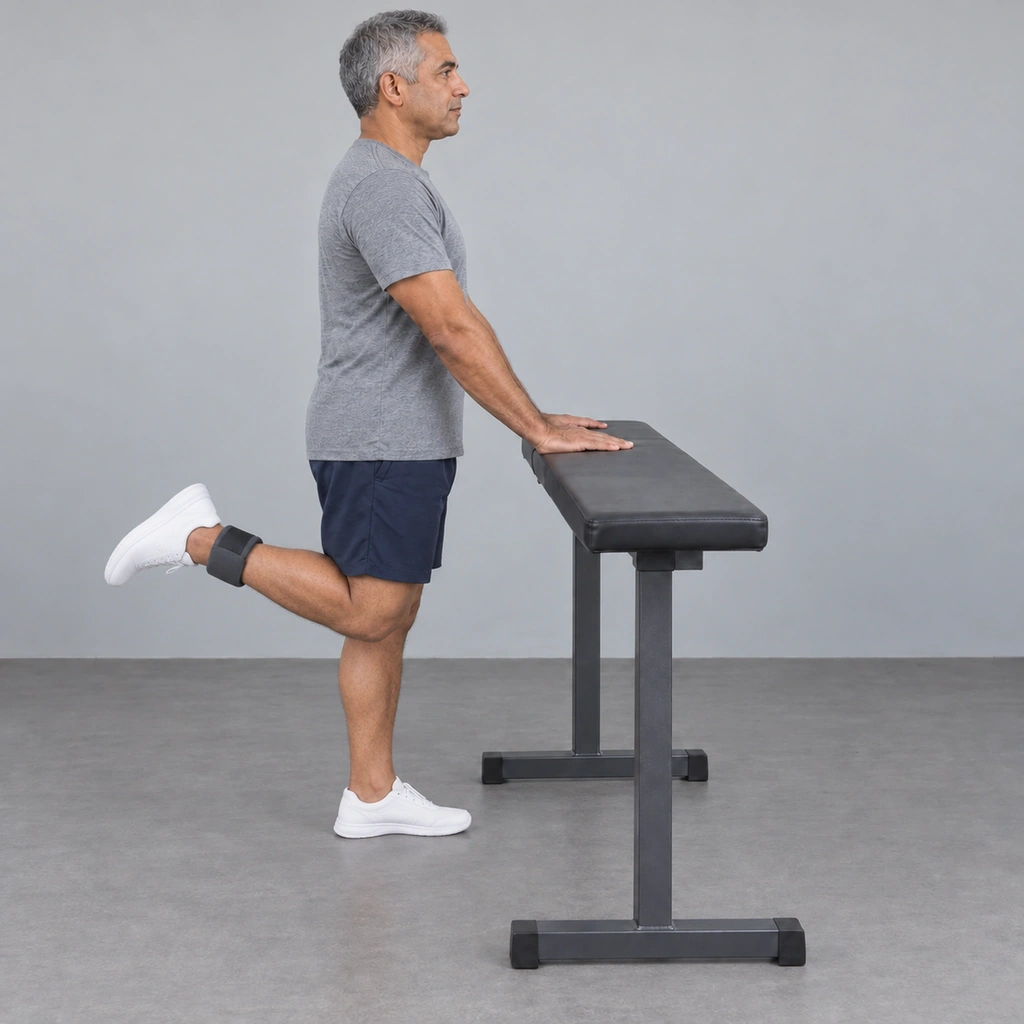
You stand facing a bench with both hands resting on it, and a weighted cuff on one ankle. You bend that knee to bring your heel toward your buttock, then lower. You repeat on the other side.
Stop if
Stop exercising and contact the doctor.
- Also stop if you notice
- Dizziness, chest pain, shortness of breath, or muscle pain that does not cease, which are reasons to stop and contact the doctor.
- Pain 6 out of 10 or more: choose an easier exercise.
- Pain 8 out of 10 or more: stop and rest.
Equipment needed
- Works at home
- Works at the gym
bench
Home Options
- strap or belt + weight bench
Dosage
3
Sets
10
Reps / Time
45 sec
Rest
controlled
Tempo
Step-by-Step Guide
Set up
- Strap the ankle cuff weight around the lower leg of the working side, just above the ankle bone. Stand up tall facing the bench with both hands resting on it.
- Use the bench only as a hand support for balance; the resistance comes from the cuff alone.
Step 1 of 3
With the cuff strapped on your ankle, stand up tall facing the bench with both hands resting on it and both feet flat on the floor.
Step 2 of 3
Bend the right knee, bringing your foot up behind you toward your bottom, while both hands stay on the bench and you stay tall.
Step 3 of 3
With the cuff strapped on your ankle, stand up tall facing the bench with both hands resting on it and both feet flat on the floor.
What you should feel
Ankle cuff weights provide resistance to the knee flexors.
Breathing
- Breathe in before the lift, out while lifting and in again while lowering, and never hold the breath.
Safety Information
Stop exercising and contact the doctor if dizziness, chest pain or shortness of breath occurs while exercising, or if muscle pain does not cease. People with rheumatoid arthritis, osteoarthritis or other painful conditions should work in a pain-free range. The weight is set for each person, starting light enough for good quality repetitions with minimal substitution by other muscle groups. Stop if the exercise causes pain or you become unwell. Seek appropriate professional advice about symptoms or suitability.
Get your free personalized program at clapmove.com/register
Printed from clapmove.com. ClapMove is not a replacement for professional medical advice — always consult a healthcare provider before starting any exercise program.