ClapMove · clapmove.com
Exercise handout — move better, feel better.
Dumbbell V-Up
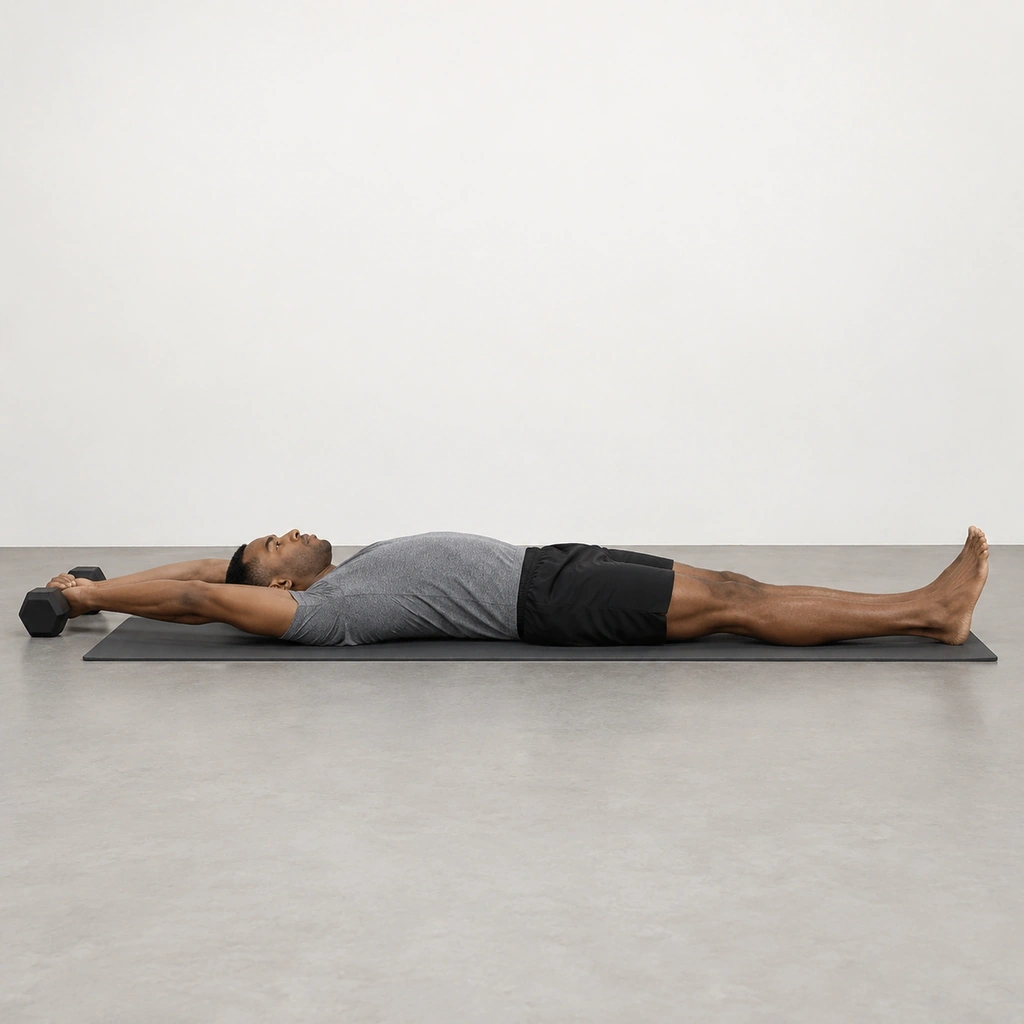
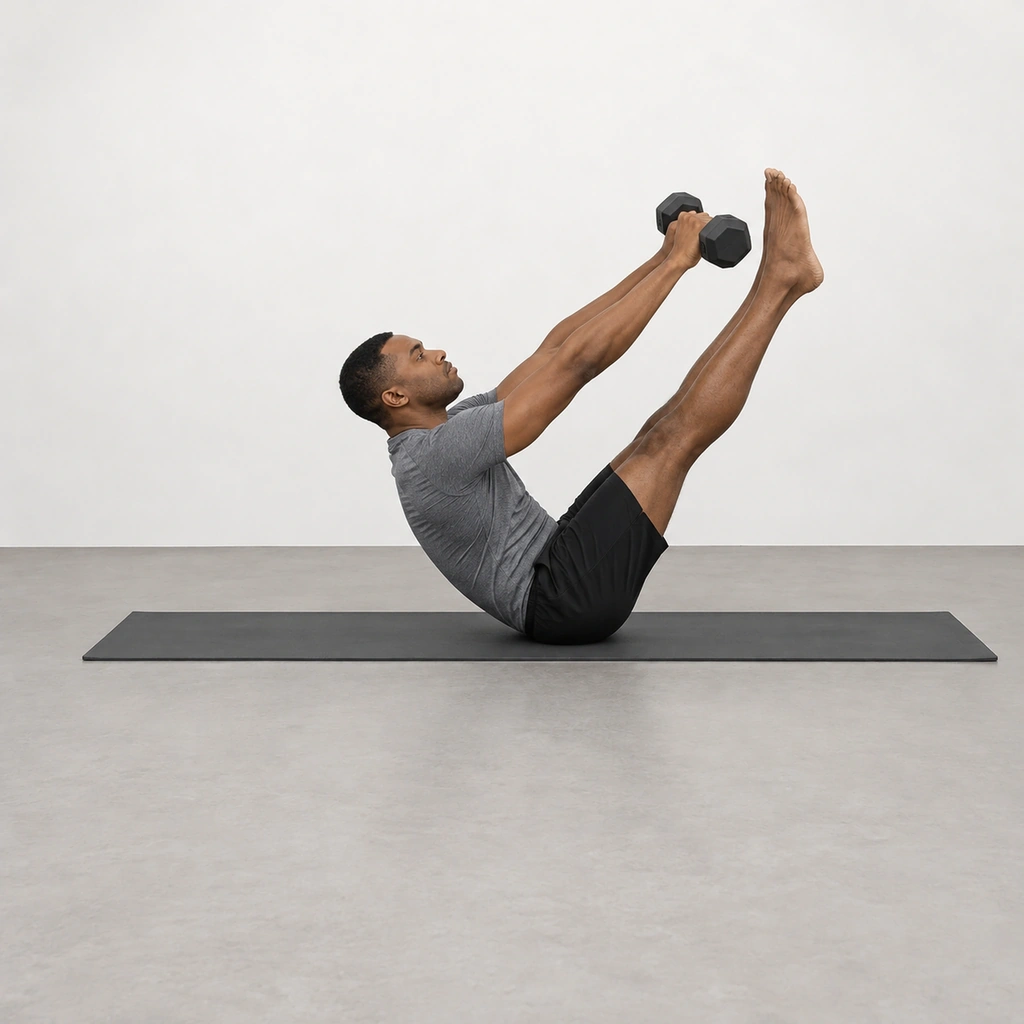
You lie flat on your back, arms overhead gripping one dumbbell, legs straight. You lift your straight legs and trunk together toward each other, then lower back down.
Stop if
Choose an easier exercise if pain reaches 6 out of 10 or becomes sharp. Stop and rest if pain reaches 8 out of 10.
This is the general ClapMove rule. This exercise has no extra stop rule of its own.
- Pain 6 out of 10 or more: choose an easier exercise.
- Pain 8 out of 10 or more: stop and rest.
Equipment needed
- Works at home
- Works at the gym
dumbbells
Home Options
- dumbbells
Dosage
3
Sets
8
Reps / Time
60 sec
Rest
controlled
Tempo
Step-by-Step Guide
Set up
- This is the two-legs-together, both-hands-on-one-dumbbell version.
Step 1 of 3
Lie flat on your back with your legs straight and your arms extended overhead, holding one dumbbell in both hands.
Step 2 of 3
Lift your straight legs and your trunk together into a V, reaching the dumbbell toward your toes.
Step 3 of 3
Lie flat on your back with your legs straight and your arms extended overhead, holding one dumbbell in both hands.
Safety Information
Keep both arms straight and the dumbbell controlled throughout; do not let it drop toward the face or swing loosely. Keep both knees straight and lift the legs and the trunk together; do not lift only the legs or only the trunk, and do not throw the arms and dumbbell forward to get up. Stop if you feel pain in the neck, back, shoulders or hips, or if you cannot lower the legs and trunk back to the mat under control, and ask a clinician if you have a back, neck, shoulder or hip condition. Stop if the exercise causes pain or you become unwell. Seek appropriate professional advice about symptoms or suitability.
Get your free personalized program at clapmove.com/register
Printed from clapmove.com. ClapMove is not a replacement for professional medical advice — always consult a healthcare provider before starting any exercise program.