ClapMove · clapmove.com
Exercise handout — move better, feel better.
Medicine Ball Squat, Ball Held at the Chest
You stand with feet a little wider than your shoulders, holding a medicine ball against your chest with elbows tucked. You sit your hips back and down into a squat, then stand up.
Stop if
Stop if joint pain occurs, and ask a clinician or a qualified coach.
- Also stop if you notice
- Joint pain, as distinct from muscle fatigue, is a reason to stop.
- Pain 6 out of 10 or more: choose an easier exercise.
- Pain 8 out of 10 or more: stop and rest.
Equipment needed
- Works at home
- Works at the gym
medicine_ball
Home Options
- medicine ball
Dosage
3
Sets
8
Reps / Time
60 sec
Rest
controlled
Tempo
Step-by-Step Guide
Set up
- Stand on a flat, firm floor with the feet just wider than shoulder-width, hold one medicine ball against the chest in both hands with the elbows tucked in, and lift the chest.
- Keep the ball at chest height; never press it overhead, throw it or swing it.
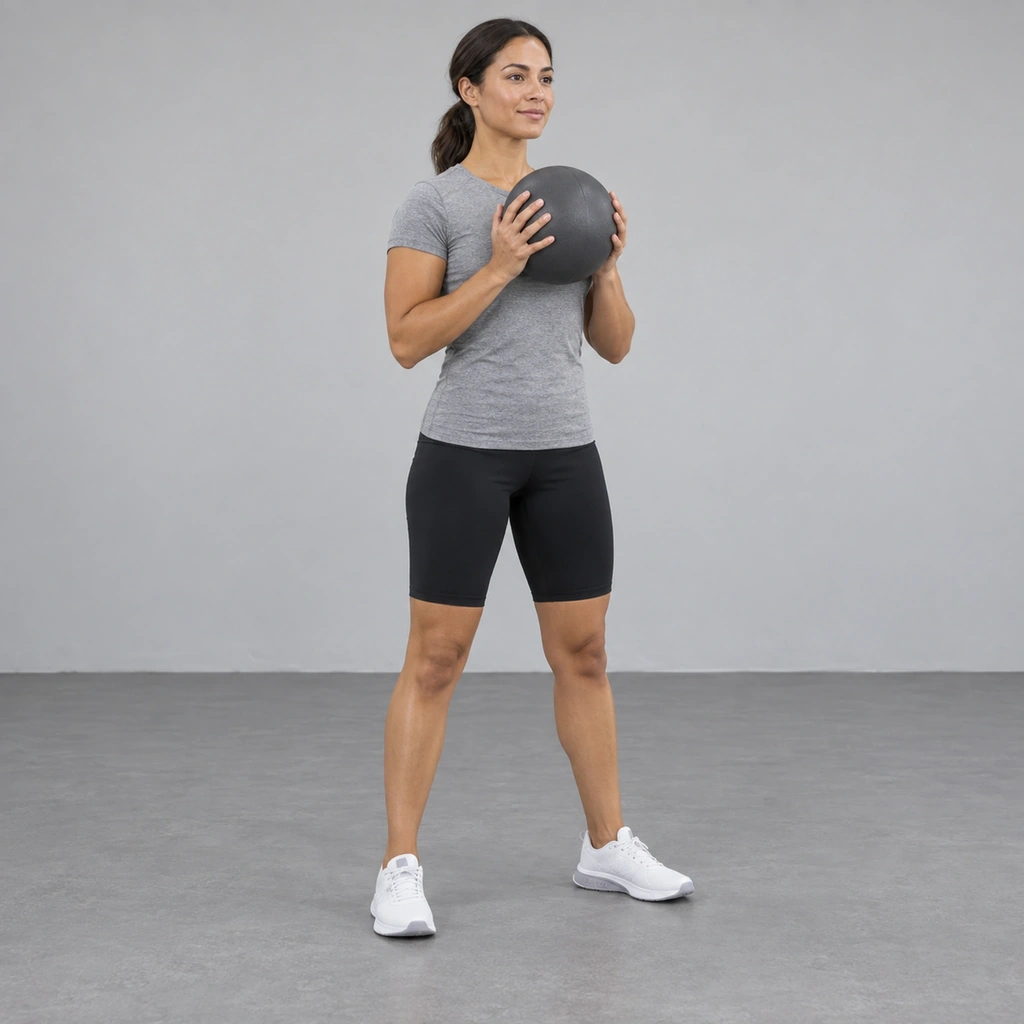
Step 1 of 3
Stand tall with your feet just wider than your shoulders and hold the ball at chest height with your elbows tucked in.
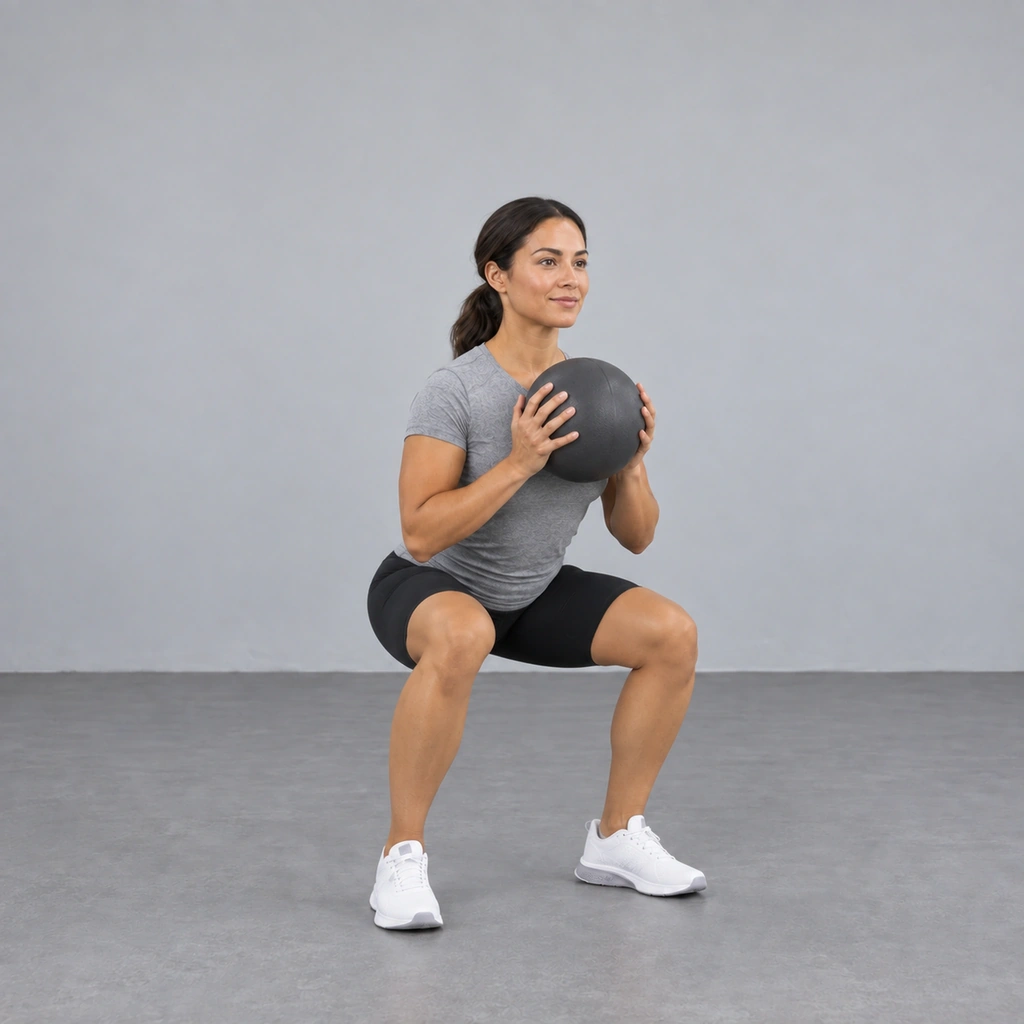
Step 2 of 3
Send your hips back and bend your knees down until your thighs are about parallel to the floor, keeping your chest lifted and the ball at your chest.
Step 3 of 3
Stand tall with your feet just wider than your shoulders and hold the ball at chest height with your elbows tucked in.
What you should feel
The squat works the glutes, quads, hamstrings and core and the ball adds resistance.
Breathing
- An inhale pairs with lowering and an exhale with rising.
Safety Information
Start light, warm up, and stop if joint pain (as distinct from muscle fatigue) occurs. Hold one ball at the chest on a flat non-slip floor with no box, bench or rack. If a knee, hip, ankle or back problem is present, or if the squat causes pain, stop and ask a clinician or a qualified coach before using this exercise. Stop if the exercise causes pain or you become unwell. Seek appropriate professional advice about symptoms or suitability.
Get your free personalized program at clapmove.com/register
Printed from clapmove.com. ClapMove is not a replacement for professional medical advice — always consult a healthcare provider before starting any exercise program.