ClapMove · clapmove.com
Exercise handout — move better, feel better.
Indian Club Arm Cast
You stand with feet hip-width apart, holding a light wooden Indian club in each hand. You keep one elbow still and swing that hand's club in a controlled cast, then return.
Stop if
Choose an easier exercise if pain reaches 6 out of 10 or becomes sharp. Stop and rest if pain reaches 8 out of 10.
This is the general ClapMove rule. This exercise has no extra stop rule of its own.
- Pain 6 out of 10 or more: choose an easier exercise.
- Pain 8 out of 10 or more: stop and rest.
Equipment needed
No equipment needed
Dosage
2
Sets
10
Reps / Time
30 sec
Rest
controlled
Tempo
Step-by-Step Guide
Set up
- Use a pair of light Indian clubs.
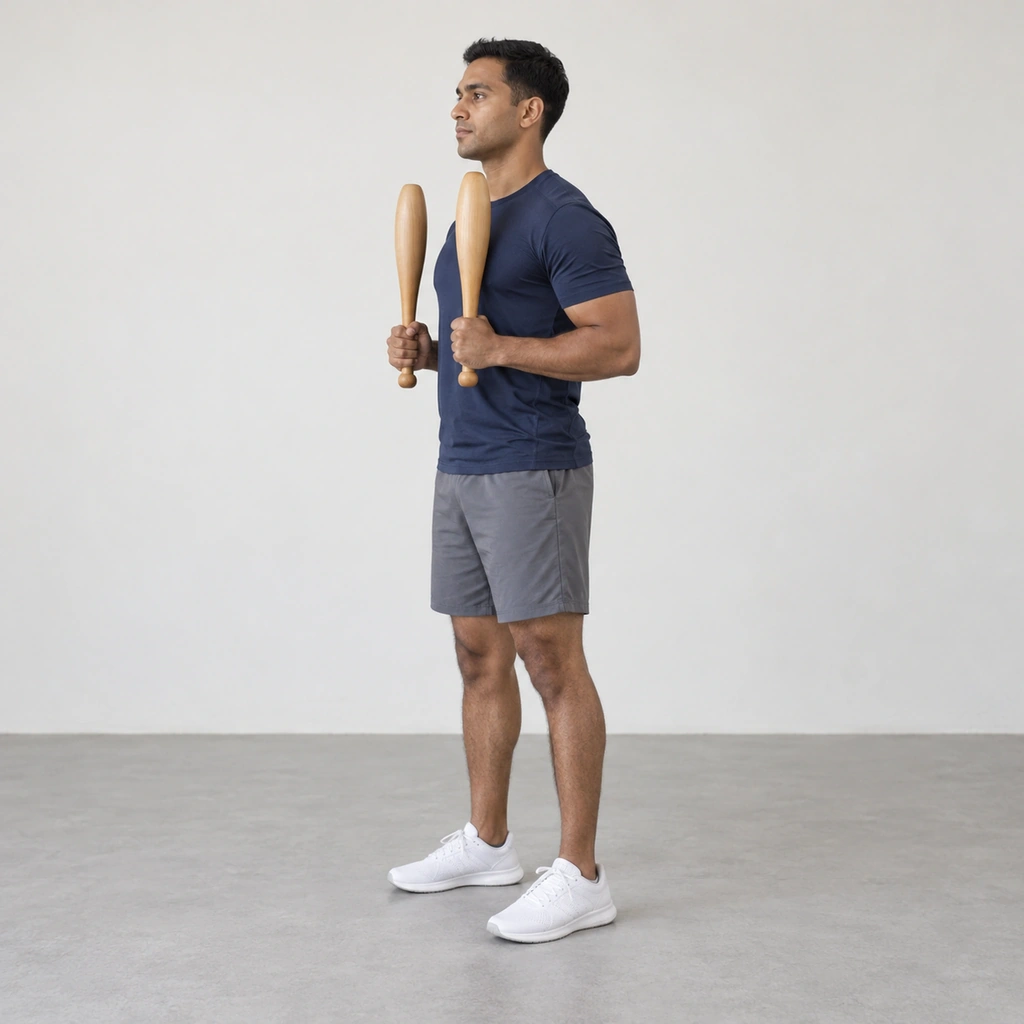
Step 1 of 3
Stand tall with your feet about hip-width apart, holding a club in each hand in the front position.
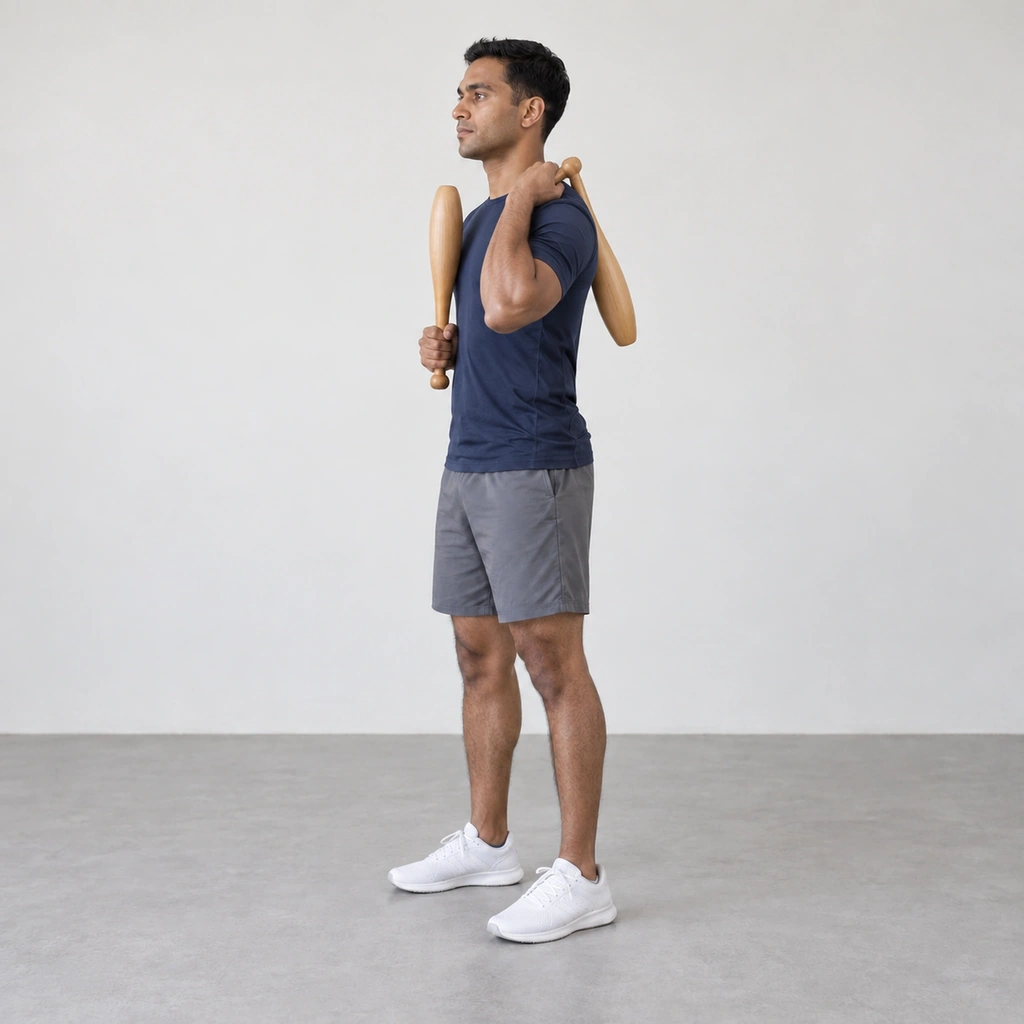
Step 2 of 3
Keeping your right elbow fixed, bring your right club over your right shoulder and behind your back with its top pointing down.
Step 3 of 3
Stand tall with your feet about hip-width apart, holding a club in each hand in the front position.
Safety Information
Use clubs light enough to keep the movement small and smooth and to keep the back from arching, because the work is about movement, not muscle. If you have a shoulder, elbow, wrist or neck problem, ask a physical therapist or physician before attempting this exercise, because the club is carried back over the shoulder by a fixed elbow. Stand on a firm, non-slip floor with clear space around you, keep the club clear of your head, neck and back, and stop if you feel a pinch, sharp pain or lose control of the club. Stop if the exercise causes pain or you become unwell. Seek appropriate professional advice about symptoms or suitability.
Get your free personalized program at clapmove.com/register
Printed from clapmove.com. ClapMove is not a replacement for professional medical advice — always consult a healthcare provider before starting any exercise program.