ClapMove · clapmove.com
Exercise handout — move better, feel better.
Kettlebell Bent-Over Reverse Fly
You hold a kettlebell in each hand, bend your knees slightly, and hinge at the hips so your torso leans forward. You raise both arms out to the sides, then lower them.
Stop if
Choose an easier exercise if pain reaches 6 out of 10 or becomes sharp. Stop and rest if pain reaches 8 out of 10.
This is the general ClapMove rule. This exercise has no extra stop rule of its own.
- Pain 6 out of 10 or more: choose an easier exercise.
- Pain 8 out of 10 or more: stop and rest.
Equipment needed
- Works at home
- Works at the gym
kettlebells
Home Options
- kettlebell
Dosage
3
Sets
8
Reps / Time
60 sec
Rest
controlled
Tempo
Step-by-Step Guide
Set up
- Stand tall with the feet about hip-width apart and a kettlebell in each hand at arm's length with a light grip, then bend the knees slightly and hinge at the hips until the torso is almost parallel to the ground, letting both slightly bent arms hang.
- Keep the movement under control.
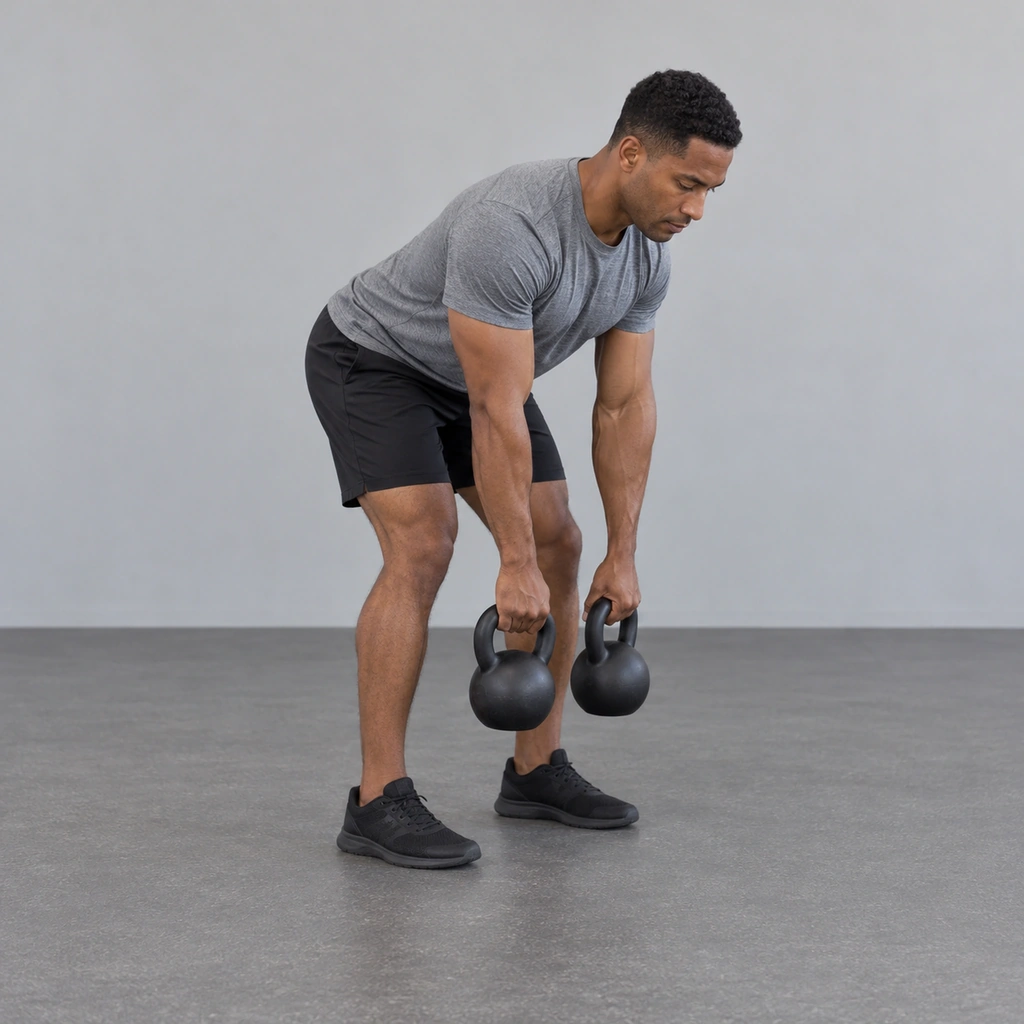
Step 1 of 3
Bend your knees slightly and hinge at the hips, torso almost parallel to the floor, with a kettlebell hanging from each slightly bent arm.
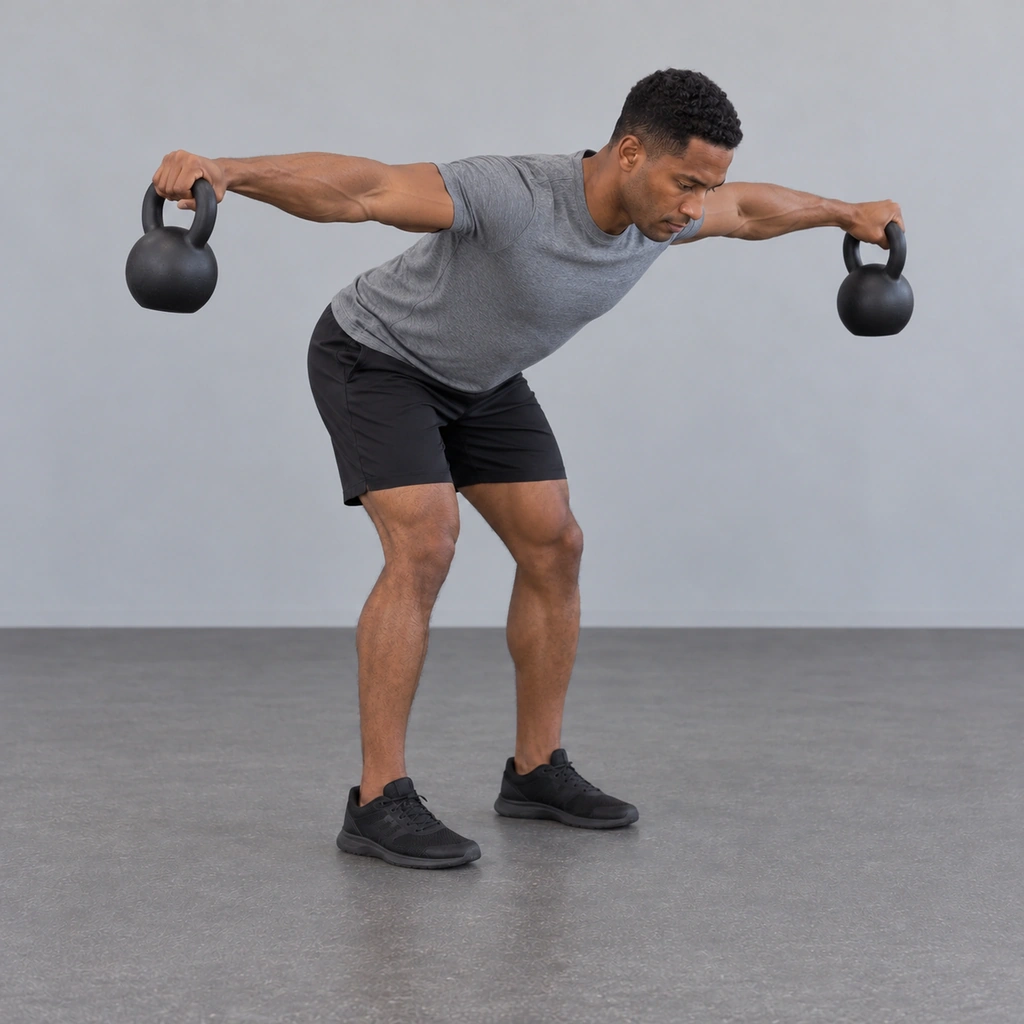
Step 2 of 3
Raise both arms out to your sides in a wide arc until they are level with your shoulders, the kettlebells still in your hands.
Step 3 of 3
Bend your knees slightly and hinge at the hips, torso almost parallel to the floor, with a kettlebell hanging from each slightly bent arm.
Safety Information
Keep the back straight and the core braced while hinged forward, because the torso stays inclined under load for the whole movement. If you have a shoulder, back, hip or neck condition, or are new to loaded arm raises, ask a physiotherapist or physician before using kettlebells. Stop and lower the kettlebells under control if you feel sharp pain, pinching or numbness in the shoulders, back or arms. Stop if the exercise causes pain or you become unwell. Seek appropriate professional advice about symptoms or suitability.
Get your free personalized program at clapmove.com/register
Printed from clapmove.com. ClapMove is not a replacement for professional medical advice — always consult a healthcare provider before starting any exercise program.