ClapMove · clapmove.com
Exercise handout — move better, feel better.
Mini-Trampoline Straight Jump - the Basic Two-Foot Elastic-Bed Bounce
You stand in the centre of a mini-trampoline with your legs slightly bent. The bed throws you upward and you bounce continuously on both flat feet.
Stop if
Choose an easier exercise if pain reaches 6 out of 10 or becomes sharp. Stop and rest if pain reaches 8 out of 10.
This is the general ClapMove rule. This exercise has no extra stop rule of its own.
- Pain 6 out of 10 or more: choose an easier exercise.
- Pain 8 out of 10 or more: stop and rest.
Equipment needed
- Works at home
- Works at the gym
Home Options
- mini-trampoline
Dosage
4
Sets
20 sec
Reps / Time
90 sec
Rest
controlled
Tempo
Step-by-Step Guide
Set up
- Perform barefoot and hold nothing; the mini-trampoline - an elastic canvas on a sprung frame - stands flat and stable on an open floor with a cushioned landing mat flush against one frame edge and clear space around.
Step 1 of 5
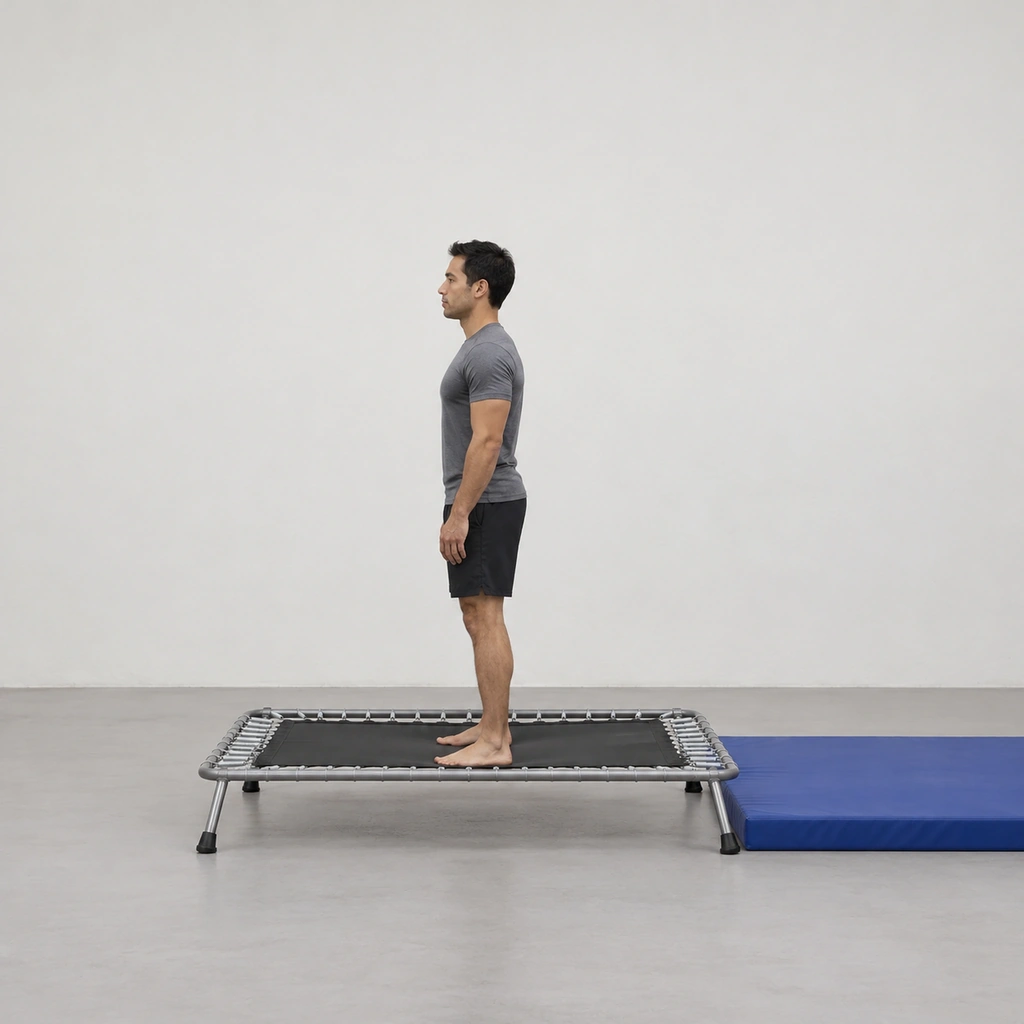
Stand tall and centred on the trampoline canvas with both feet flat about shoulder-width apart, your knees softly bent, your arms relaxed by your sides and your eyes forward - the canvas lying nearly flat under your standing weight.
Step 2 of 5
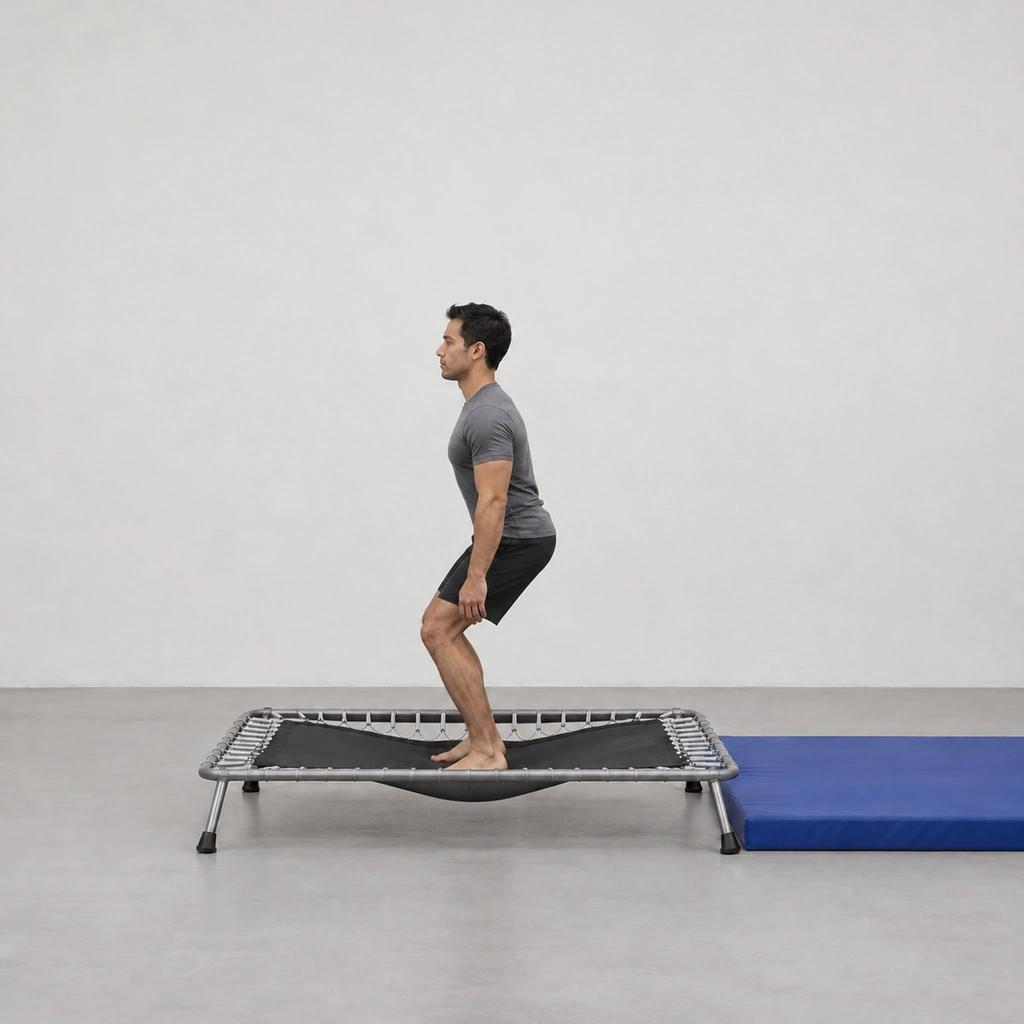
Sink into a soft crouch and let the canvas dish deep under both your feet - feet flat shoulder-width, torso upright, head up, arms low by your sides; the bed loaded and about to return you.
Step 3 of 5
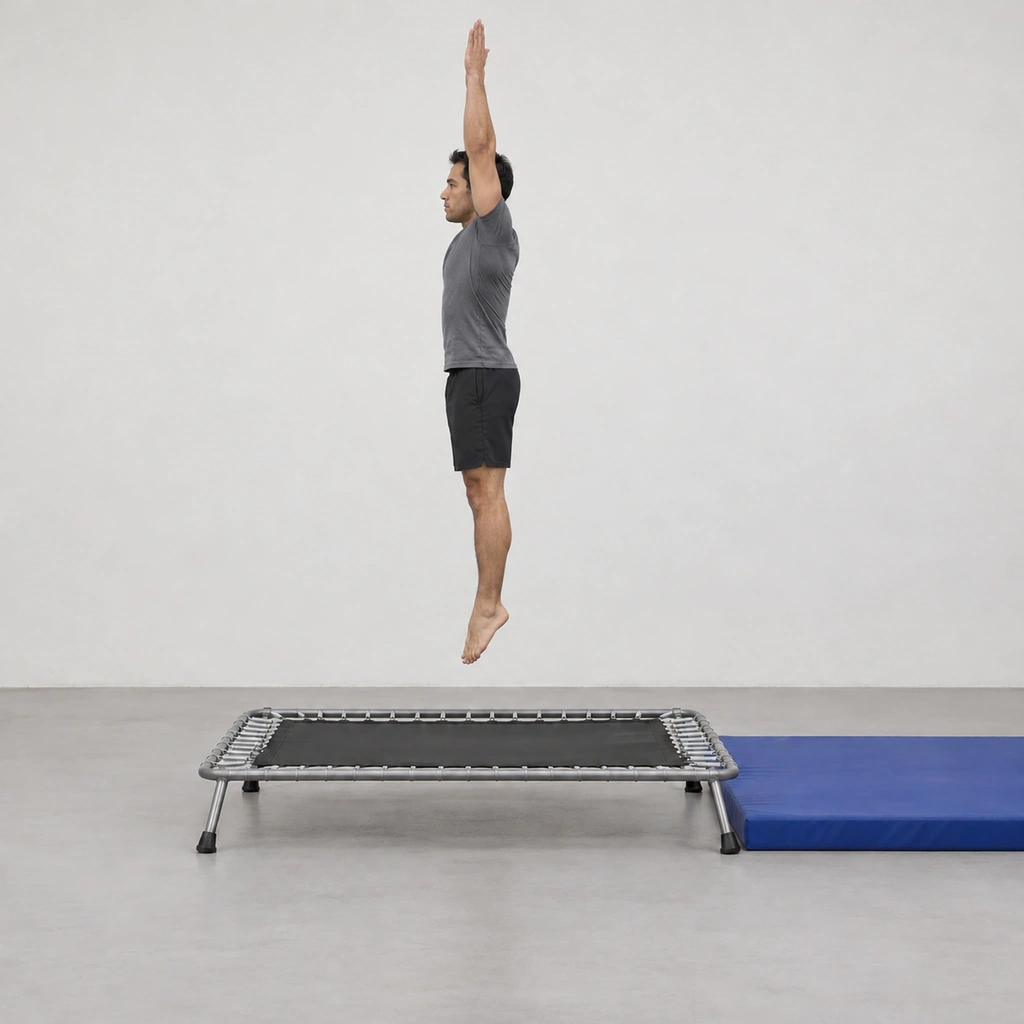
As the canvas comes back up, extend your legs completely and reach both arms straight up so you rise into a fully extended straight-body flight above the centre of the bed.
Step 4 of 5
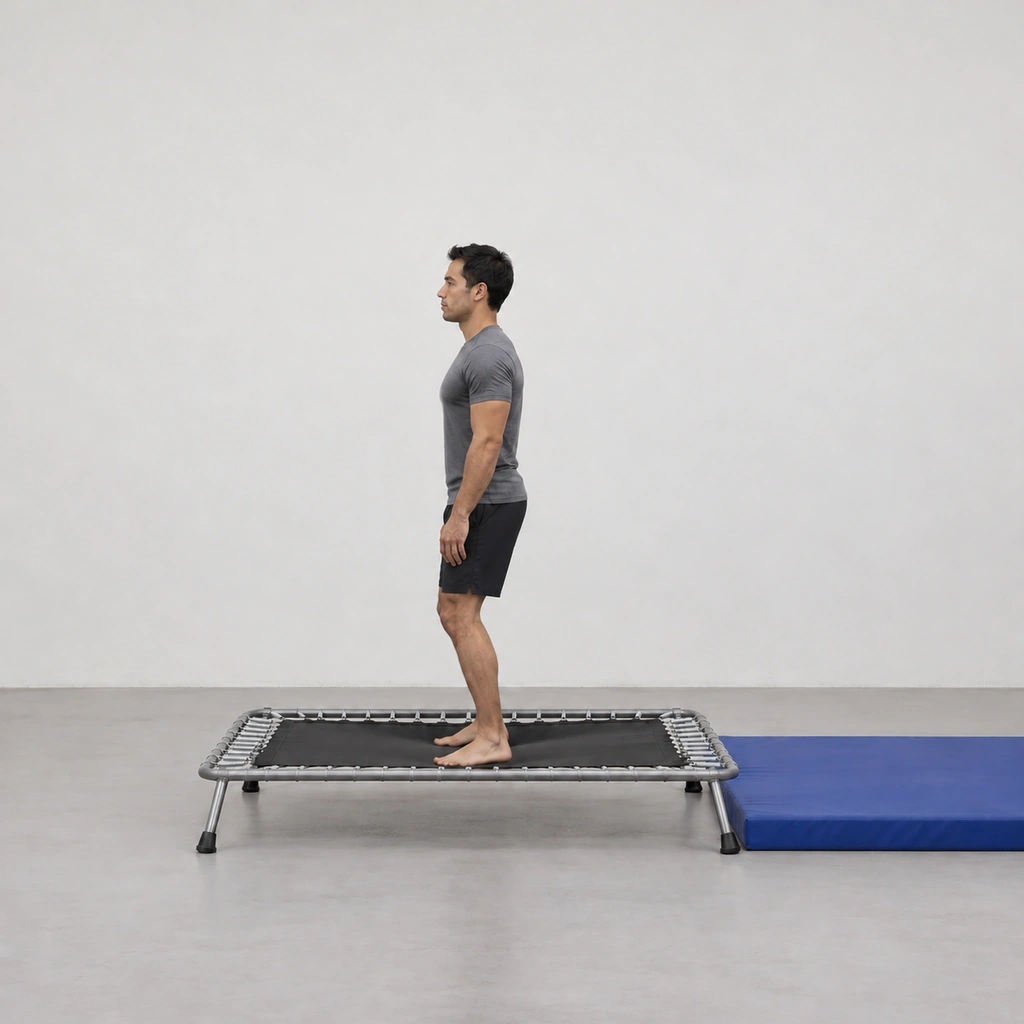
From the top of the flight, lower your arms for the descent and land on both feet at once at the centre of the bed - legs shoulder-width apart, knees slightly flexed, arms by your sides - letting the canvas begin to take and compress under you.
Step 5 of 5
Stand tall and centred on the trampoline canvas with both feet flat about shoulder-width apart, your knees softly bent, your arms relaxed by your sides and your eyes forward - the canvas lying nearly flat under your standing weight.
Safety Information
Practise under qualified supervision with an appropriate landing mat set flush against the mini-trampoline so there is no gap between the mat and the apparatus. Warning: the mini-trampoline can be dangerous if misused because bounce heights of two to three metres can easily be reached. Control the bounce height and cushion every landing - keep the legs shoulder-width apart and slightly flex the knees to avoid injury, and avoid landing with the feet off centre on the canvas, so stay centred on the bed. Anyone with a foot, ankle, knee, hip, back or balance problem, or any reason repeated two-foot bouncing could be unsafe, should ask a physical therapist or physician before attempting this exercise, and stop at pain, dizziness or loss of control. Stop if the exercise causes pain or you become unwell. Seek appropriate professional advice about symptoms or suitability.
Get your free personalized program at clapmove.com/register
Printed from clapmove.com. ClapMove is not a replacement for professional medical advice — always consult a healthcare provider before starting any exercise program.