ClapMove · clapmove.com
Exercise handout — move better, feel better.
Jump Rope Jogging Step
A jump rope skill done in place. For each turn of the rope, one foot lifts a few centimetres off the floor, so your feet alternate in a light jog.
Stop if
Choose an easier exercise if pain reaches 6 out of 10 or becomes sharp. Stop and rest if pain reaches 8 out of 10.
This is the general ClapMove rule. This exercise has no extra stop rule of its own.
- Pain 6 out of 10 or more: choose an easier exercise.
- Pain 8 out of 10 or more: stop and rest.
Equipment needed
- Works at home
- Works at the gym
Home Options
- jump rope
Dosage
3
Sets
30 sec
Reps / Time
60 sec
Rest
controlled
Tempo
Step-by-Step Guide
Set up
- Stand tall with the feet close together, a handle in each hand held in front of the body and the rope resting on the backs of the ankles; lift the right foot a few centimetres clear in a small jog lift while the rope's low arc sweeps beneath it and the left foot takes the contact; then mirror it - lift the left foot over the planted right foot - the alternating lifts then continuing one foot per rope turn.
- Perform solo on a flat, dry, clear floor; one single skipping rope sized by the rule (on its centre under both feet, the handles reach just below your shoulders).
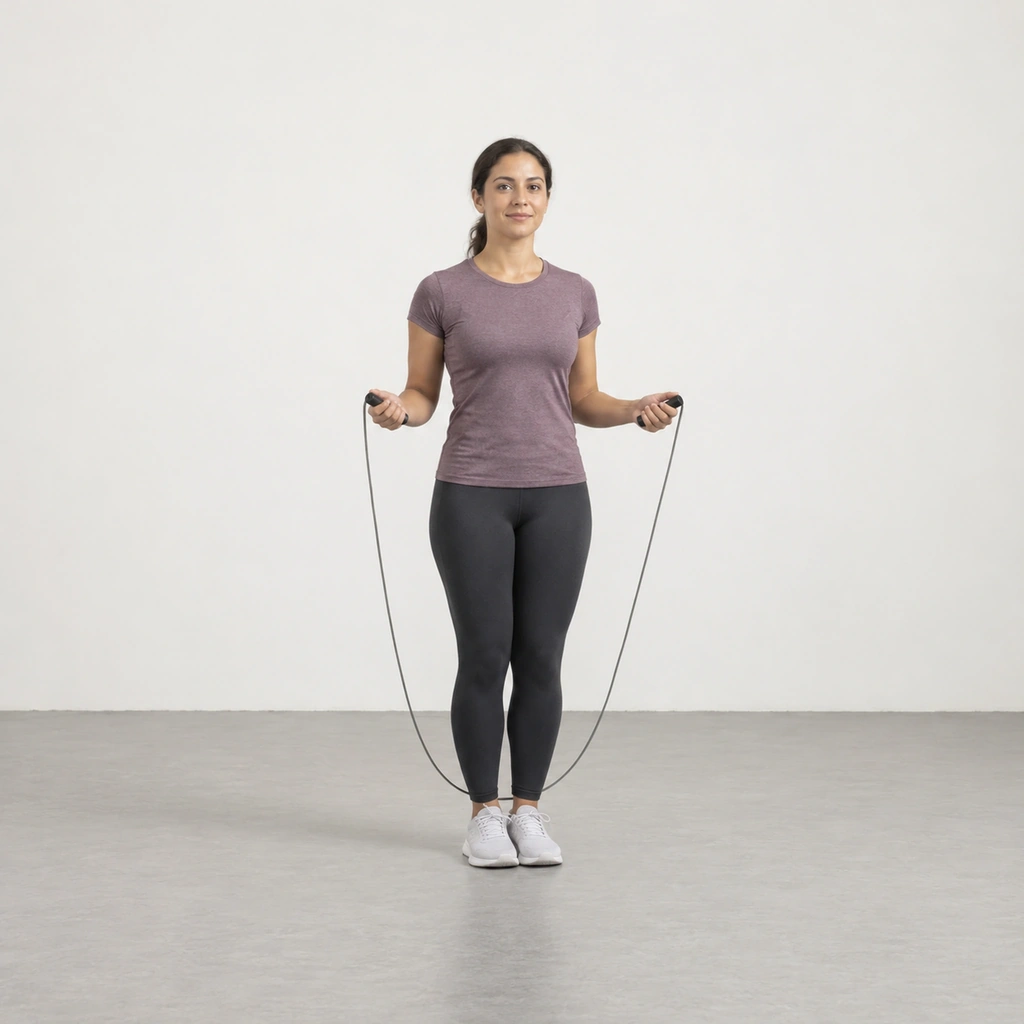
Step 1 of 4
Stand tall with your feet close together and knees soft, a handle in each hand held in front of your body and the rope resting on the backs of your ankles - elbows in, eyes ahead.
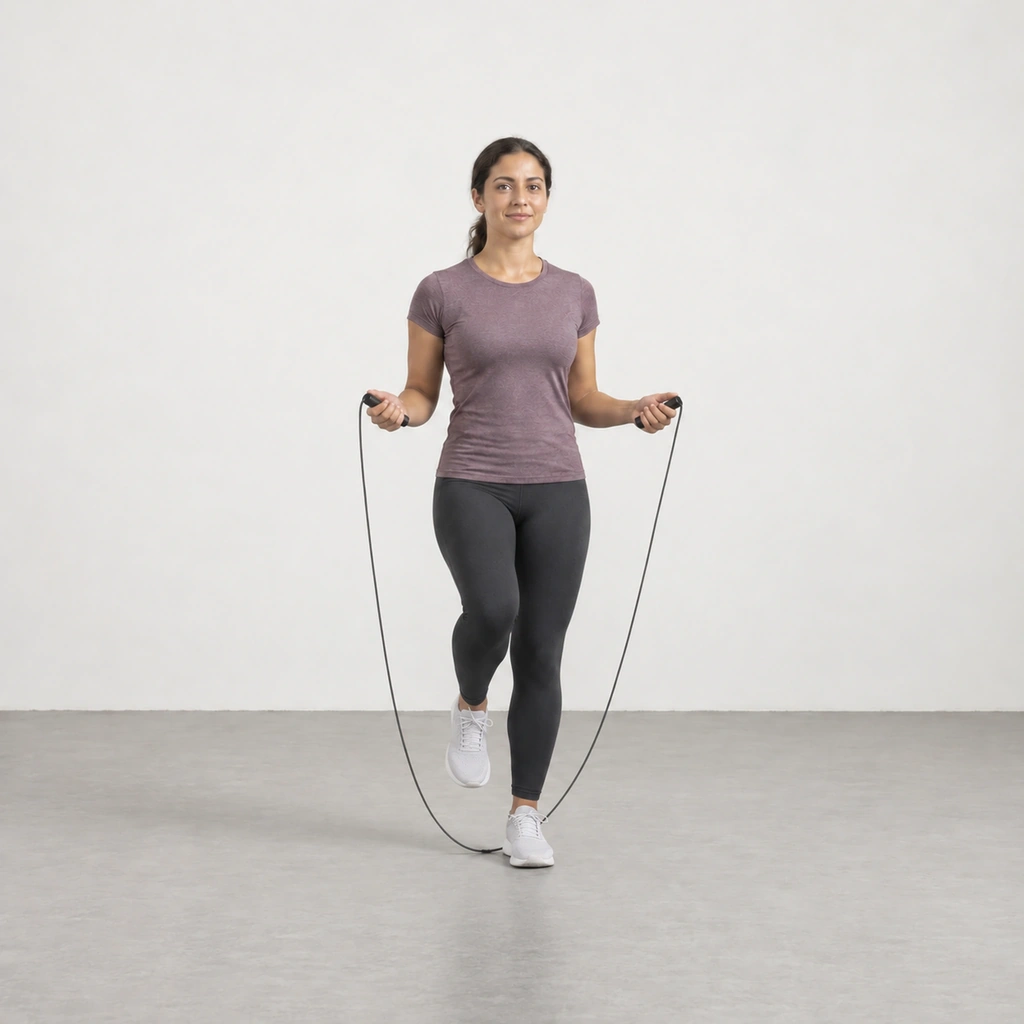
Step 2 of 4
Turn the rope overhead with your wrists and, as it falls toward your toes, lift your right foot just clear so the rope sweeps under it while your left foot takes the contact - one foot at a time for each rope turn.
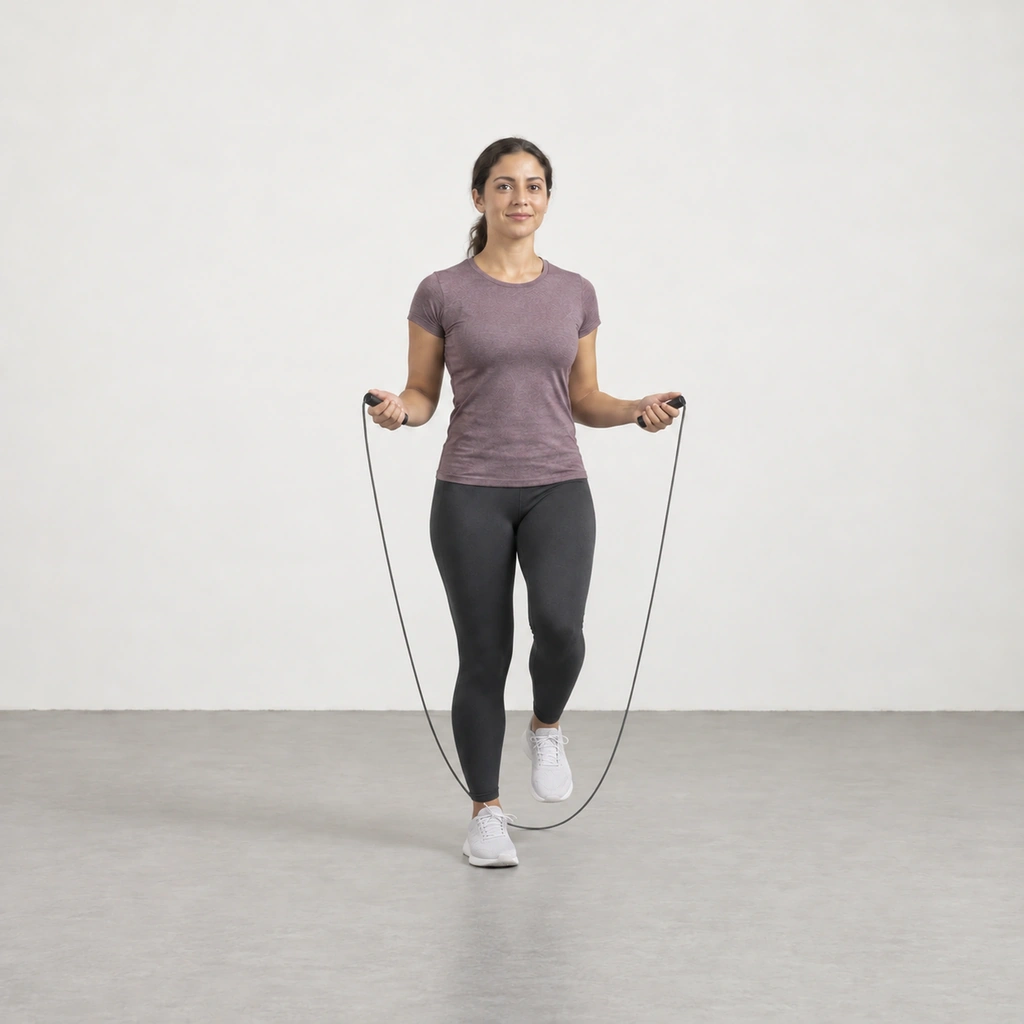
Step 3 of 4
Keep the rope circling with your wrists and, as it comes around again, lift your left foot just clear so the rope sweeps under it while your right foot takes the contact - alternate feet, one foot for each turn.
Step 4 of 4
Stand tall with your feet close together and knees soft, a handle in each hand held in front of your body and the rope resting on the backs of your ankles - elbows in, eyes ahead.
Safety Information
Size the rope before turning - stand with both feet on the centre of the rope and bring the handles up toward your shoulders; they should sit just below the shoulders - and clear the floor space around you before you start. Practise the alternating one-foot lift without the rope first, keep the arms down low at the sides and begin slowly; the timing rules are to wait until the rope is near the feet before lifting and that the rope must touch the ground before each lift. Anyone with a foot, ankle, knee, hip, back or balance problem, or anyone for whom repeated small jumps could be unsafe, should ask a physical therapist or physician before attempting this exercise, and stop at pain, dizziness or loss of control. Stop if the exercise causes pain or you become unwell. Seek appropriate professional advice about symptoms or suitability.
Get your free personalized program at clapmove.com/register
Printed from clapmove.com. ClapMove is not a replacement for professional medical advice — always consult a healthcare provider before starting any exercise program.