ClapMove · clapmove.com
Exercise handout — move better, feel better.
Reformer Pelvic Bridge With Extension
A held bridge on a Pilates reformer. You lie on your back with feet on the footbar, lift your hips, then extend your knees to slide the carriage out while the bridge stays steady.
Stop if
Choose an easier exercise if pain reaches 6 out of 10 or becomes sharp. Stop and rest if pain reaches 8 out of 10.
This is the general ClapMove rule. This exercise has no extra stop rule of its own.
- Pain 6 out of 10 or more: choose an easier exercise.
- Pain 8 out of 10 or more: stop and rest.
Equipment needed
No equipment needed
Dosage
3
Sets
10
Reps / Time
45 sec
Rest
controlled
Tempo
Step-by-Step Guide
Set up
- Start in the lifted bridge.
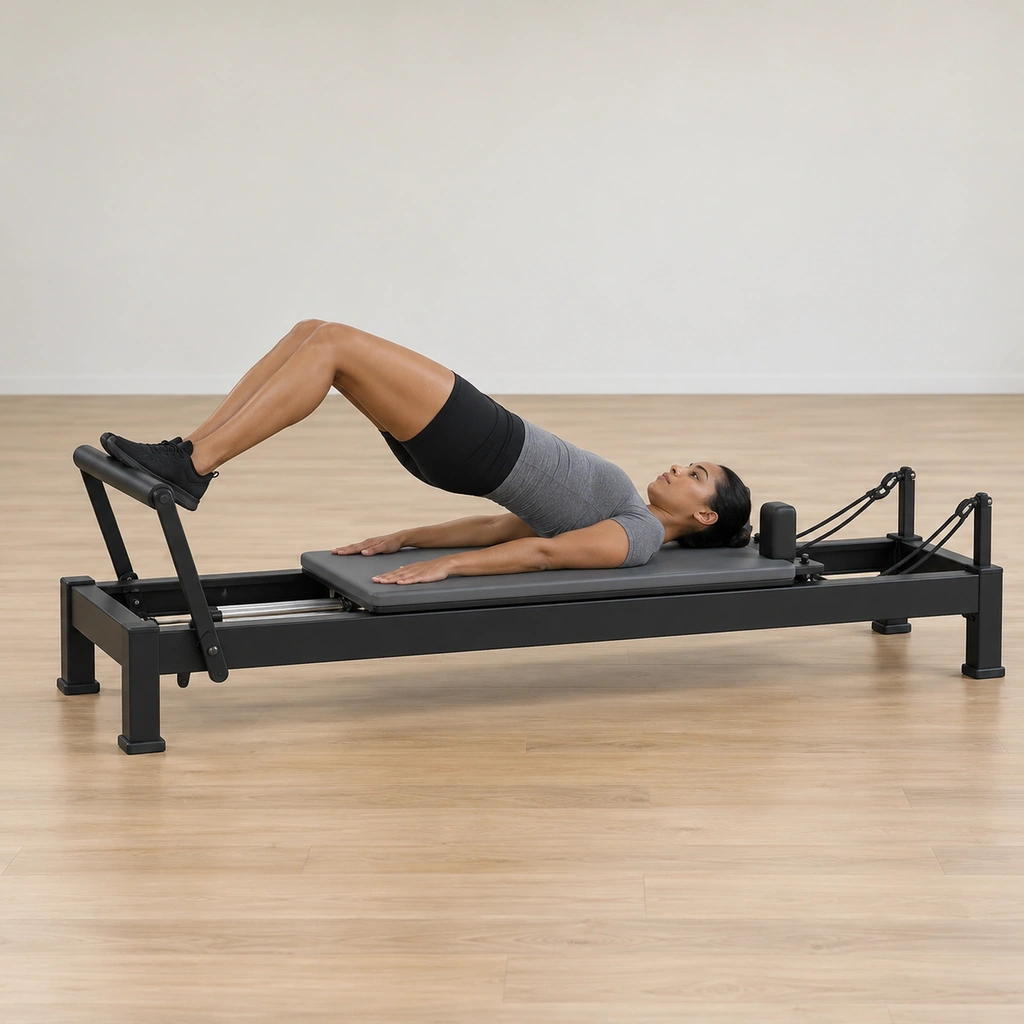
Step 1 of 5
Lie on your back on the carriage with your feet on the footbar, then lift your hips into the bottom-lift pelvic bridge position, knees bent and the carriage held home.
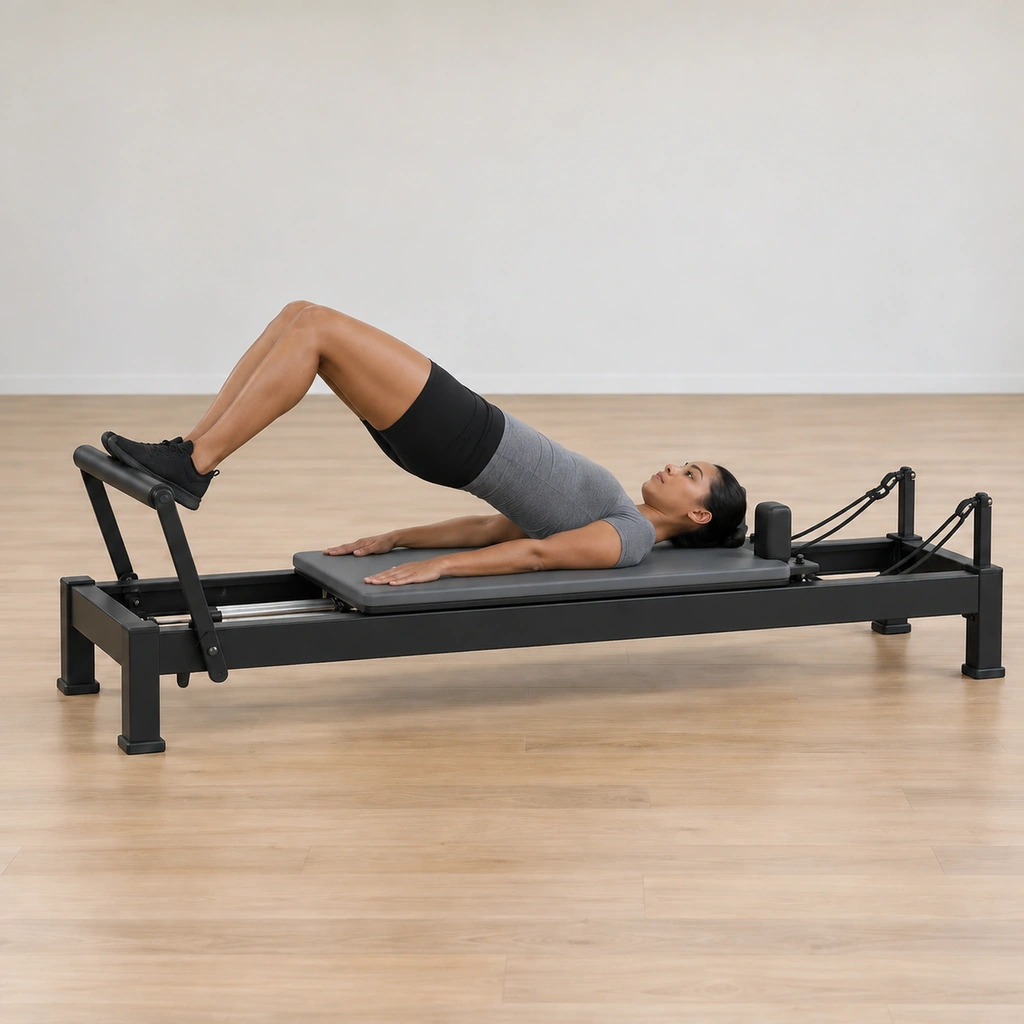
Step 2 of 5
Inhale to prepare, holding the lifted bridge steady with the knees bent and the carriage still.
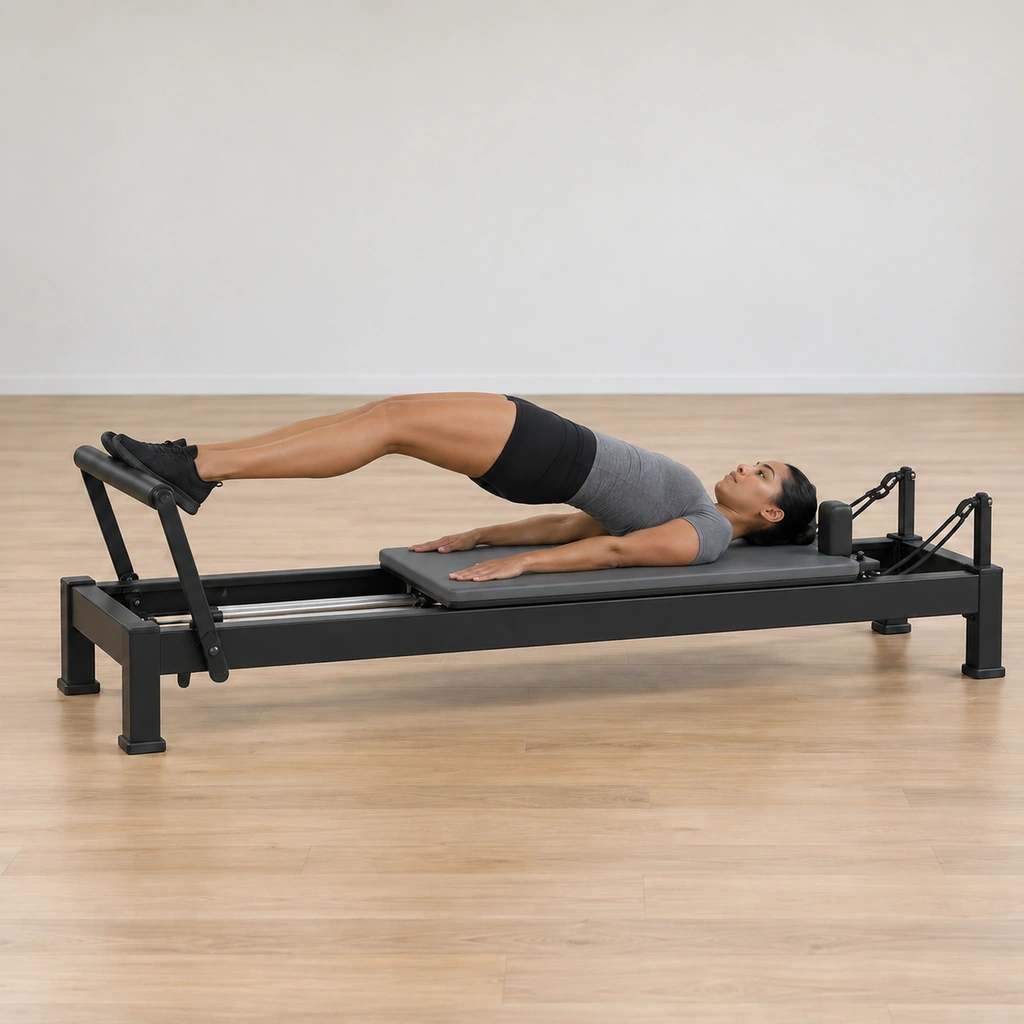
Step 3 of 5
Exhale and extend your knees so the carriage slides outwards under you, your hips staying lifted in the bridge.
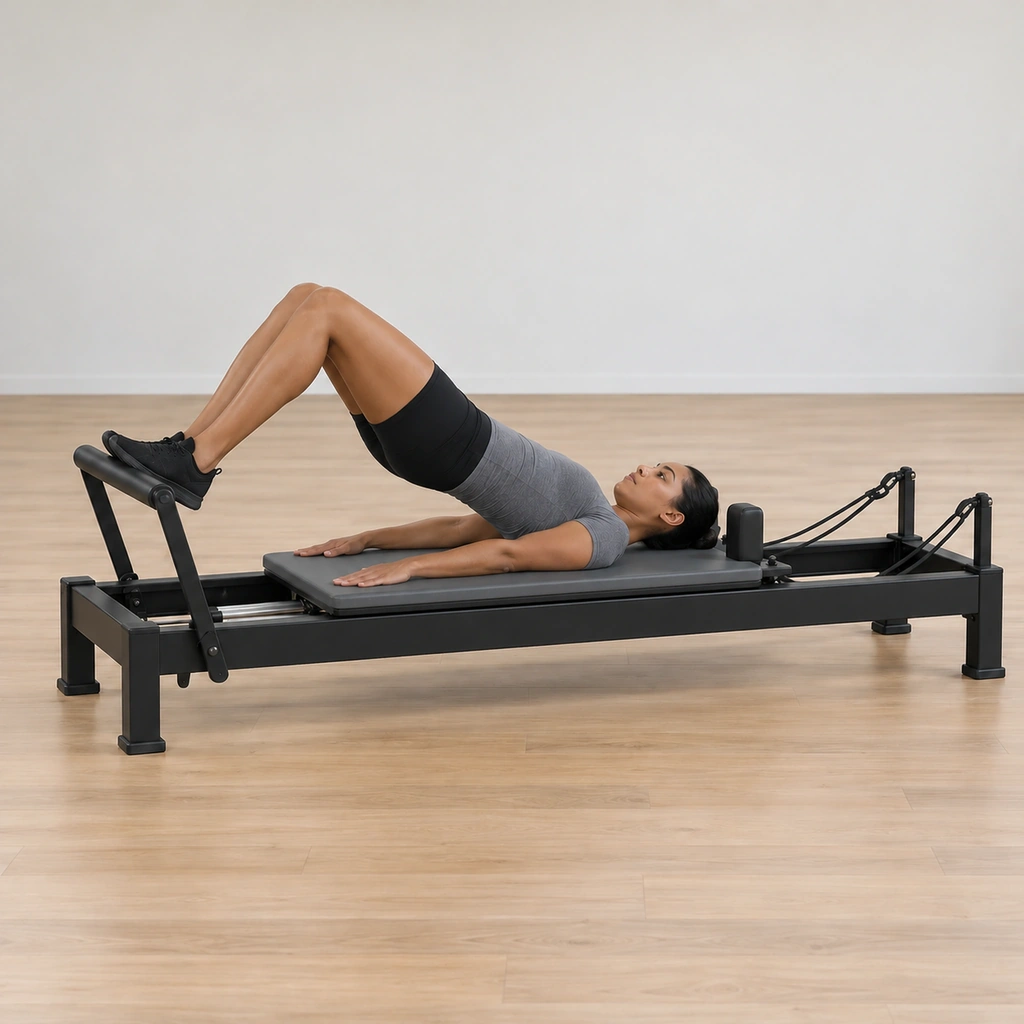
Step 4 of 5
Inhale and bend your knees to let the carriage return to the start, keeping the hips lifted in the bridge.
Step 5 of 5
Lie on your back on the carriage with your feet on the footbar, then lift your hips into the bottom-lift pelvic bridge position, knees bent and the carriage held home.
Breathing
- Inhale to prepare; exhale to extend the knees pushing the carriage outwards; inhale to bend the knees to return.
Safety Information
The headrest must be down, the spine must not hyperextend, and a lighter spring increases hamstring involvement with less lower-back support. Anyone with a shoulder, elbow, wrist, hip, back or balance problem should ask a physical therapist or physician before attempting this exercise and stop at pain or dizziness. Stop if the exercise causes pain or you become unwell. Seek appropriate professional advice about symptoms or suitability.
Get your free personalized program at clapmove.com/register
Printed from clapmove.com. ClapMove is not a replacement for professional medical advice — always consult a healthcare provider before starting any exercise program.