ClapMove · clapmove.com
Exercise handout — move better, feel better.
Roll Over on the Pilates Spine Corrector
A roll over on a Pilates spine corrector. You lie on your back with your head touching the corrector and hands on its handles, then lift your long legs up and over while keeping your gaze up.
Stop if
Choose an easier exercise if pain reaches 6 out of 10 or becomes sharp. Stop and rest if pain reaches 8 out of 10.
This is the general ClapMove rule. This exercise has no extra stop rule of its own.
- Pain 6 out of 10 or more: choose an easier exercise.
- Pain 8 out of 10 or more: stop and rest.
Equipment needed
No equipment needed
Dosage
3
Sets
8
Reps / Time
60 sec
Rest
controlled
Tempo
Step-by-Step Guide
Set up
- Lie supine with the head touching the corrector, reach the hands around and overhead to hold the handles, widen the back, hug the legs long and together.
- Keep space behind the neck - do not pull the corrector into the head.
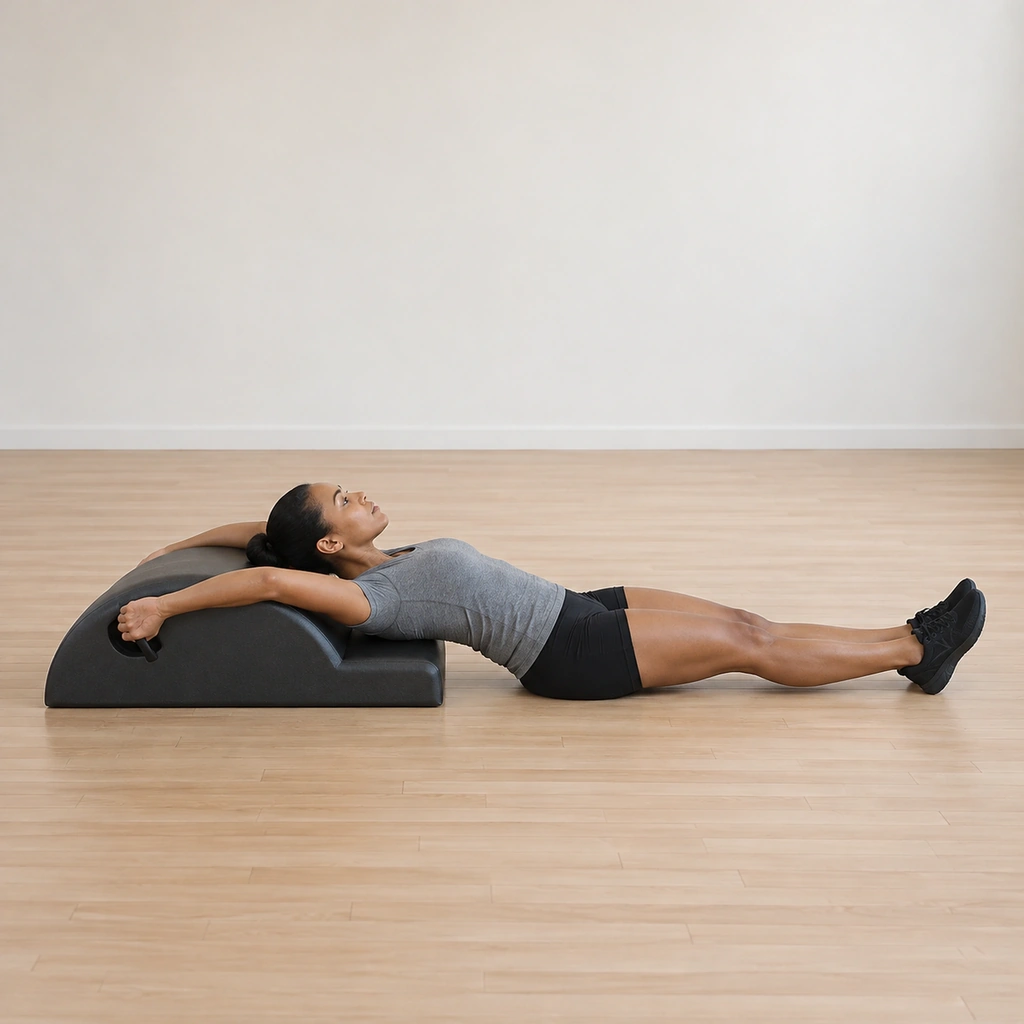
Step 1 of 5
Lie on your back with your head touching the corrector, reach your hands around and overhead to hold the handles, widen your back and hug your legs long together.
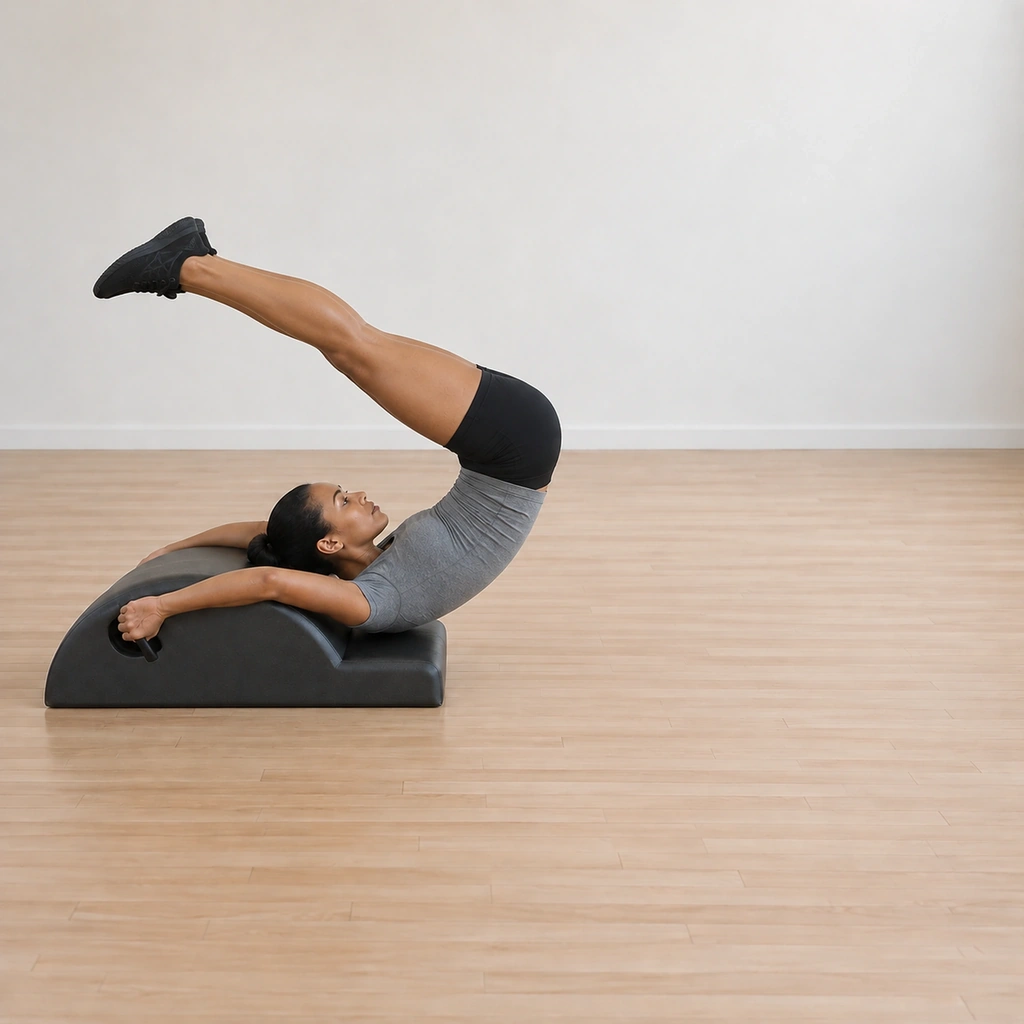
Step 2 of 5
Hug your legs long together, heels squeezed and toes apart, and lift your legs up and over the spine corrector, gaze straight up.
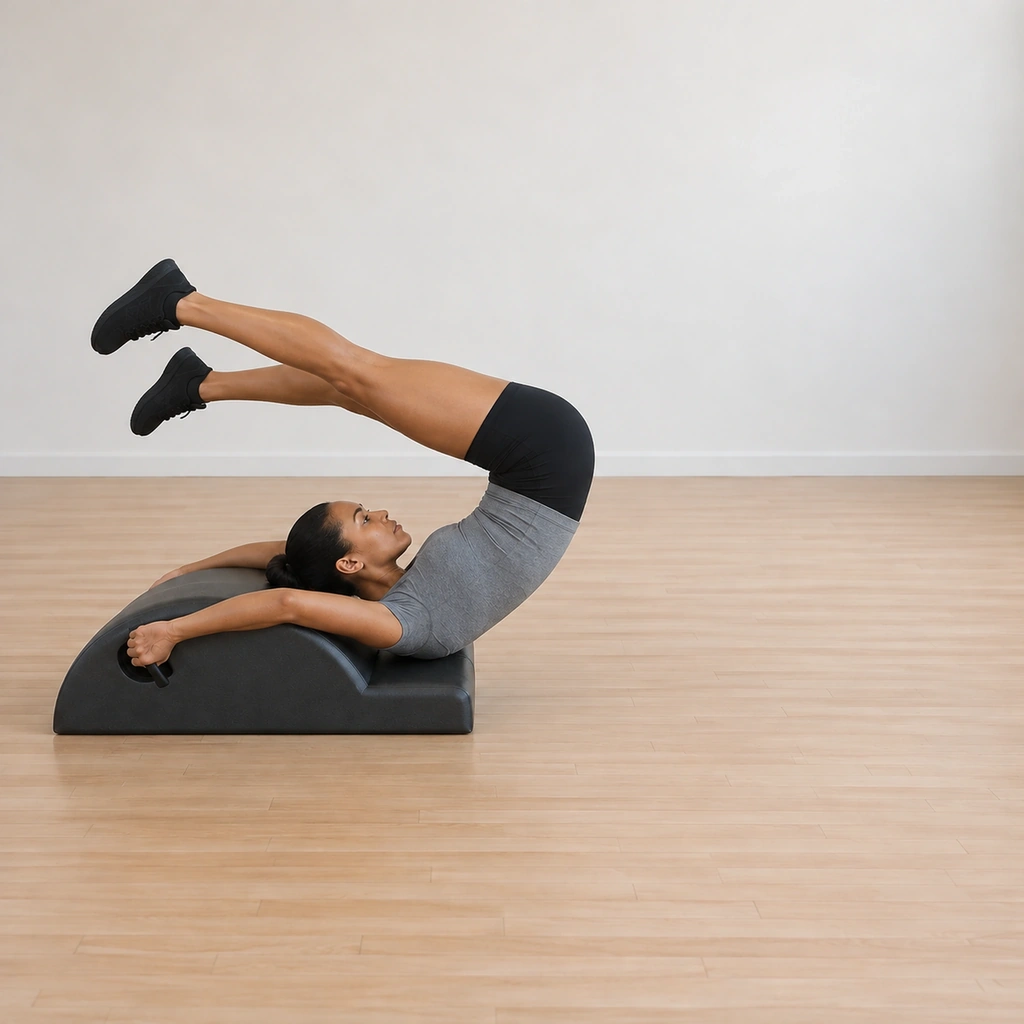
Step 3 of 5
Maintain the gaze up as you flex your ankles and open your legs a shoulders-distance apart.
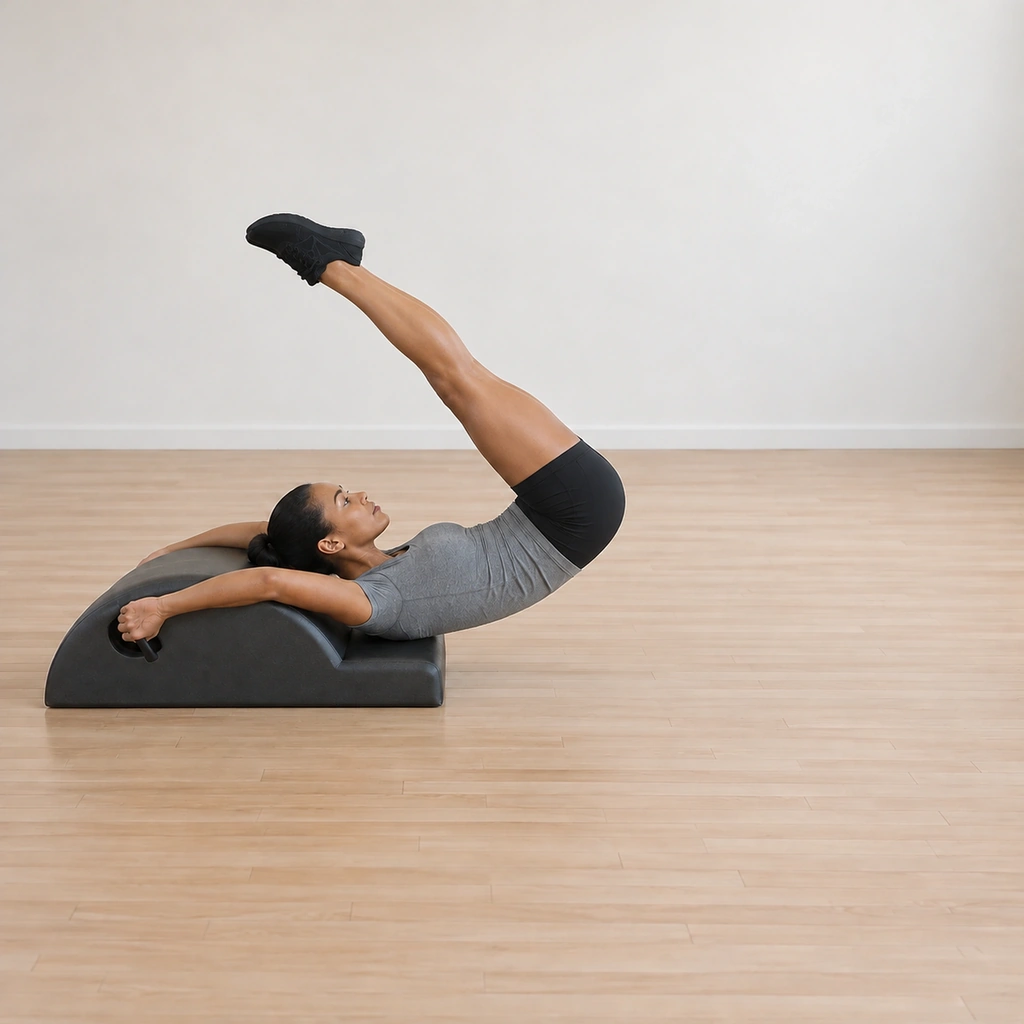
Step 4 of 5
Point your toes as you roll your spine back to the mat and reach your legs away as they circle together; repeat then reverse.
Step 5 of 5
Lie on your back with your head touching the corrector, reach your hands around and overhead to hold the handles, widen your back and hug your legs long together.
Safety Information
Lie supine with the head touching the corrector and the hands reaching around and overhead to hold its handles, widening the back rather than arming, the legs hugging long and together; lift the legs up and over, flex the ankles and open them shoulders-distance, point the toes as the spine rolls back to the mat and circle the legs together, then reverse. The corrector is used to widen the back, not pulled into the head - avoid the bicep-curl fault. Anyone with a shoulder, elbow, wrist, hip, back or balance problem should ask a physical therapist or physician before attempting this exercise and stop at pain or dizziness. Stop if the exercise causes pain or you become unwell. Seek appropriate professional advice about symptoms or suitability.
Get your free personalized program at clapmove.com/register
Printed from clapmove.com. ClapMove is not a replacement for professional medical advice — always consult a healthcare provider before starting any exercise program.