ClapMove · clapmove.com
Exercise handout — move better, feel better.
Diagonal Woodchopper on a Swiss Ball
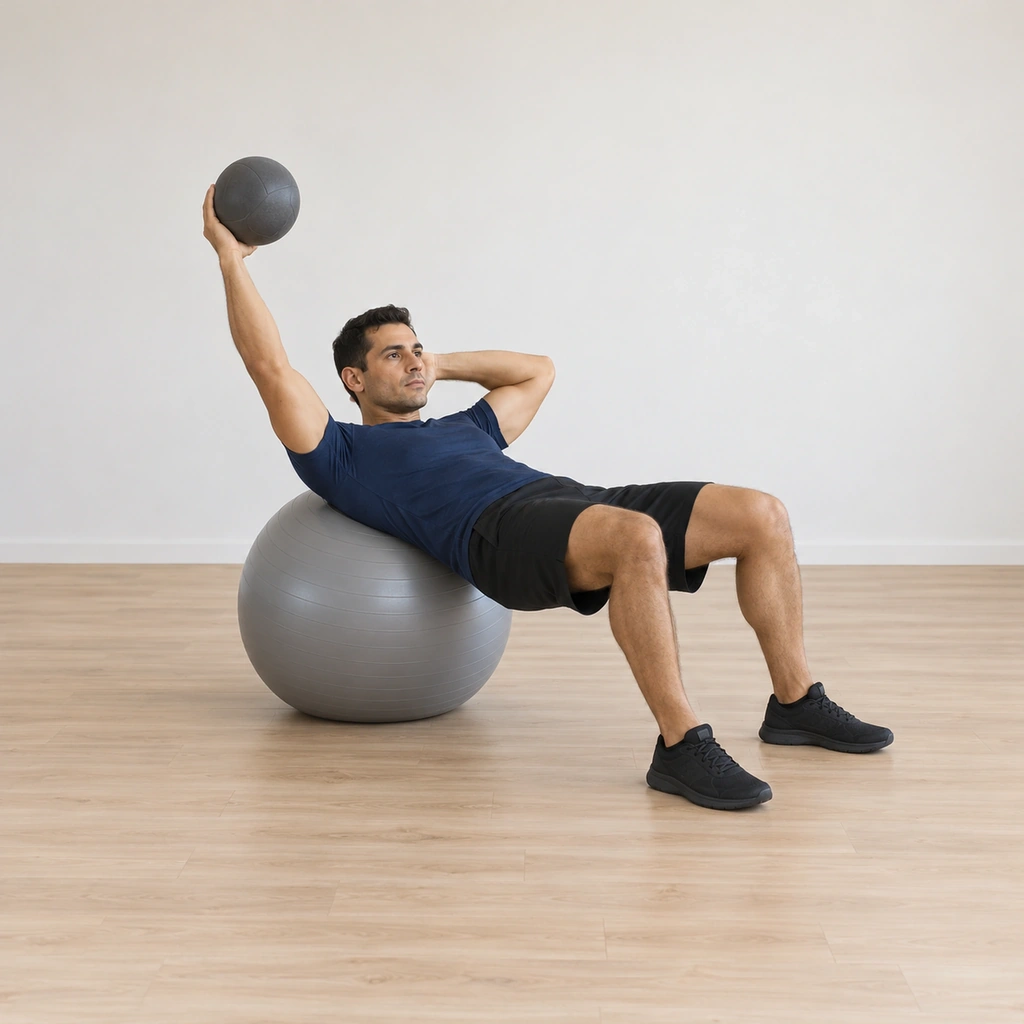
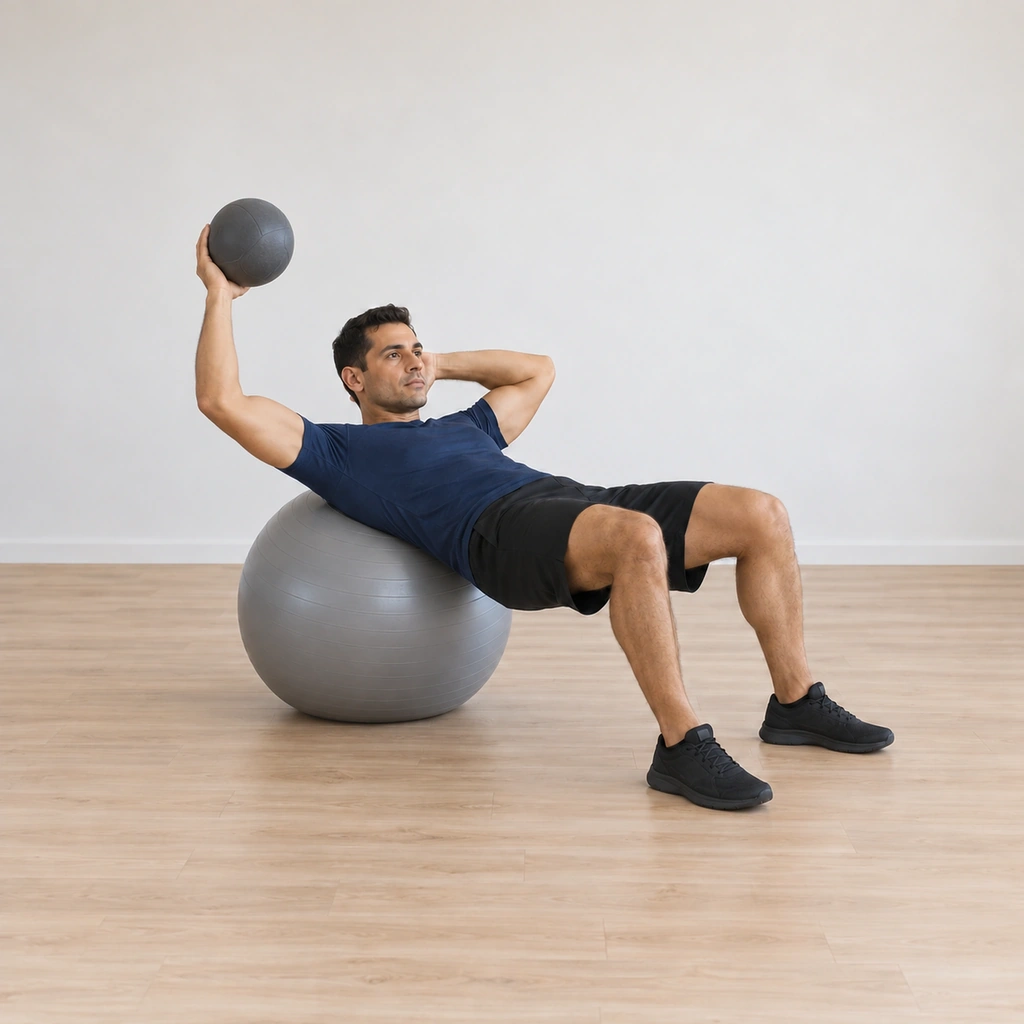
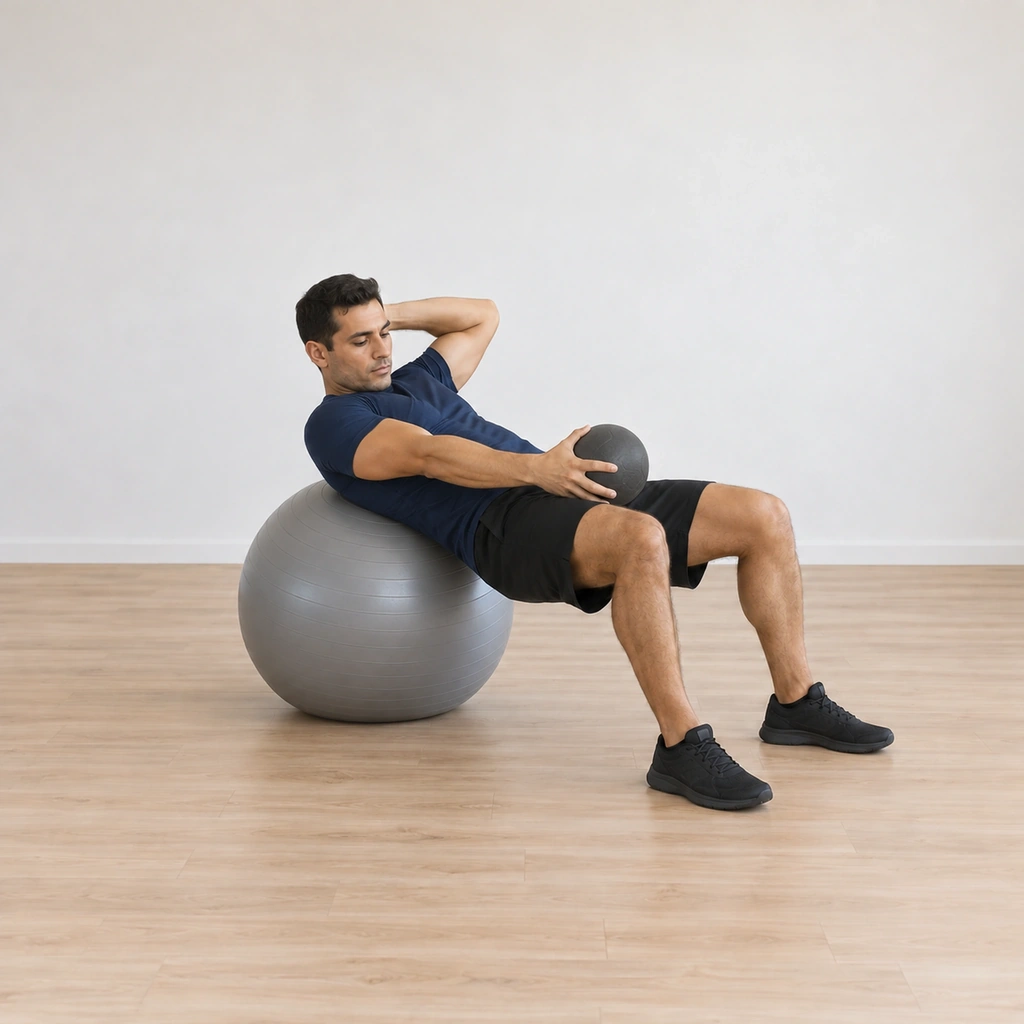
You roll down on a stability ball until your upper back rests on it, with your feet flat, knees at ninety degrees and hips raised. You hold a medicine ball above one shoulder and support your head with the other hand, then rotate your torso diagonally.
Stop if
Choose an easier exercise if pain reaches 6 out of 10 or becomes sharp. Stop and rest if pain reaches 8 out of 10.
This is the general ClapMove rule. This exercise has no extra stop rule of its own.
- Pain 6 out of 10 or more: choose an easier exercise.
- Pain 8 out of 10 or more: stop and rest.
Equipment needed
- Works at home
- Works at the gym
medicine_ball, stability_ball
Home Options
- stability ball + medicine ball
Dosage
3
Sets
8
Reps / Time
60 sec
Rest
controlled
Tempo
Step-by-Step Guide
Set up
- Sit on the ball and roll down until the upper back rests on it; feet flat, knees at ninety degrees, hips held elevated.
- Hold the medicine ball above one shoulder with one hand; support the head with the other hand; engage the core.
Step 1 of 5
Sit on the ball and roll down until your upper back rests on it; feet flat, knees at ninety degrees, hips elevated.
Step 2 of 5
Hold the medicine ball above one shoulder with one hand and support your head with the other hand; engage your core.
Step 3 of 5
Rotate your torso diagonally, bringing the medicine ball toward the opposite hip; keep your hips stable and elevated.
Step 4 of 5
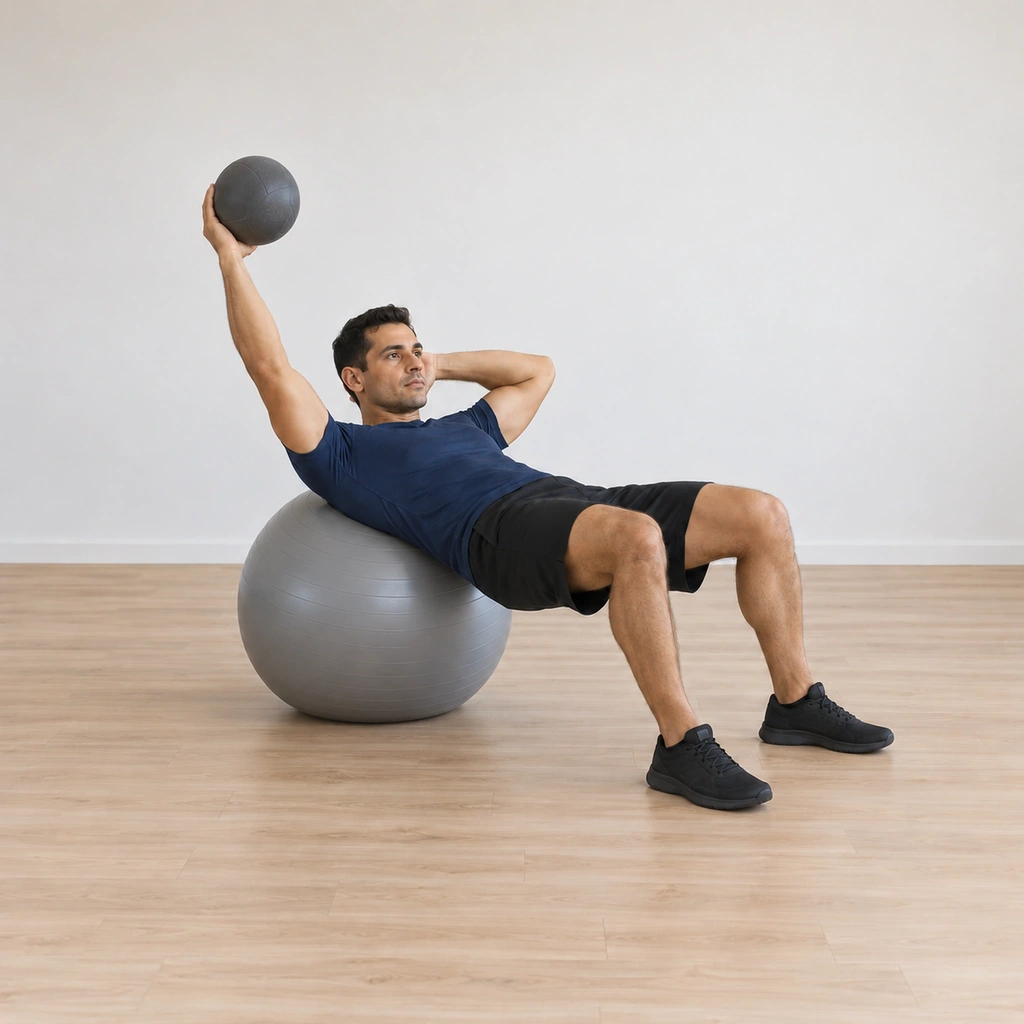
Return to the starting position in a controlled manner and repeat.
Step 5 of 5
Sit on the ball and roll down until your upper back rests on it; feet flat, knees at ninety degrees, hips elevated.
Breathing
- Exhale as you rotate and lower the medicine ball; inhale as you return to the starting position.
Safety Information
Avoid a hyperextended neck, keep the head aligned with the spine, and keep the glutes engaged to keep the hips from dropping. Keep the movement slow to maximise the oblique contraction and free of momentum. Caution: keep the hips stable and elevated throughout the rotation. Anyone with a shoulder, elbow, wrist, hip, back or balance problem should ask a physical therapist or physician before attempting this exercise and stop at pain or dizziness. Stop if the exercise causes pain or you become unwell. Seek appropriate professional advice about symptoms or suitability.
Get your free personalized program at clapmove.com/register
Printed from clapmove.com. ClapMove is not a replacement for professional medical advice — always consult a healthcare provider before starting any exercise program.