ClapMove · clapmove.com
Exercise handout — move better, feel better.
Medicine Ball Push-Up With Both Hands on the Ball
You hold a plank with both palms on the sides of a medicine ball and your shoulders directly over it. You slowly lower your body toward the ball with your torso rigid until your chest nears it, then press back up.
Stop if
Choose an easier exercise if pain reaches 6 out of 10 or becomes sharp. Stop and rest if pain reaches 8 out of 10.
This is the general ClapMove rule. This exercise has no extra stop rule of its own.
- Pain 6 out of 10 or more: choose an easier exercise.
- Pain 8 out of 10 or more: stop and rest.
Equipment needed
- Works at home
- Works at the gym
medicine_ball
Home Options
- medicine ball
Dosage
3
Sets
8
Reps / Time
60 sec
Rest
controlled
Tempo
Step-by-Step Guide
Set up
- Kneel on the mat and place both palms on the sides of the medicine ball.
- Shift forward until the shoulders sit directly over the hands and the ball, body in full plank with the torso braced.
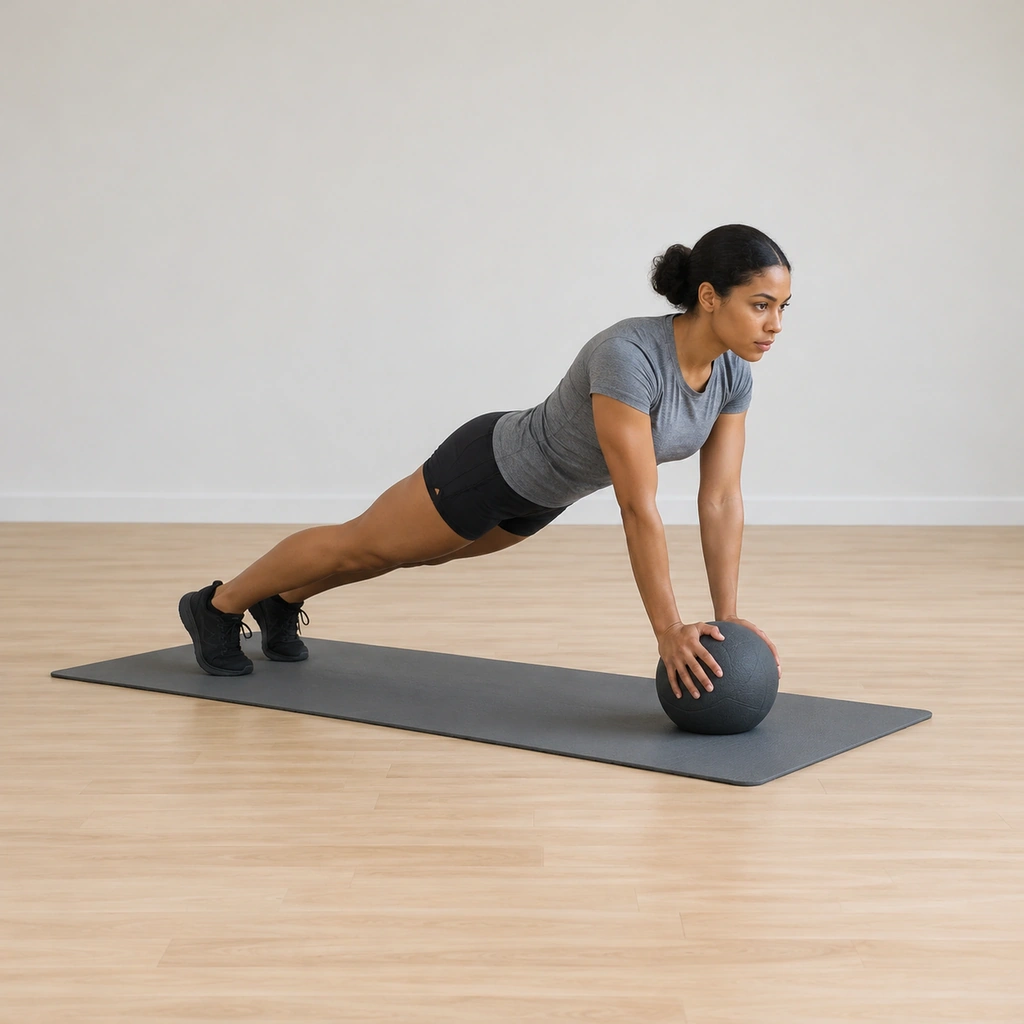
Step 1 of 5
Extend into a plank with both palms on the sides of the medicine ball, shoulders directly over the ball.
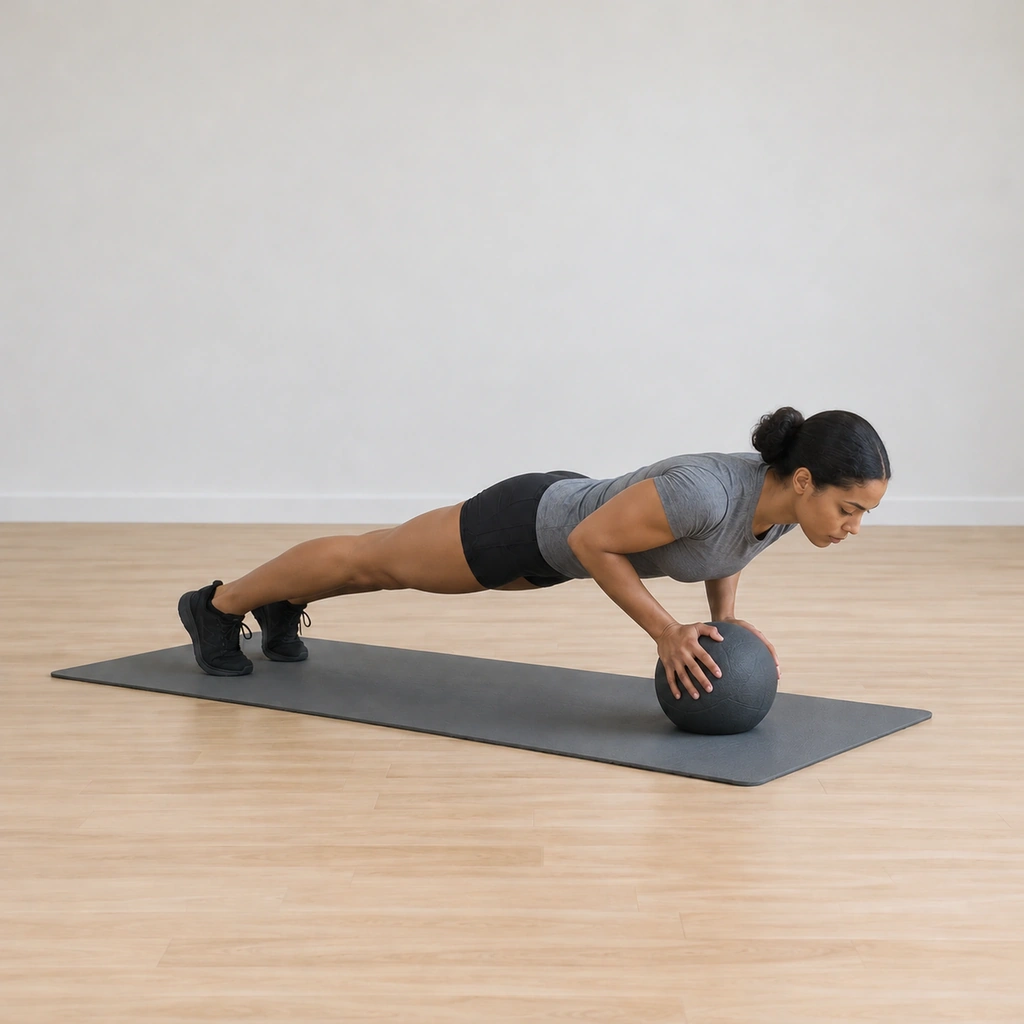
Step 2 of 5
Slowly lower your body toward the ball, keeping the torso rigid and the head aligned with the spine.
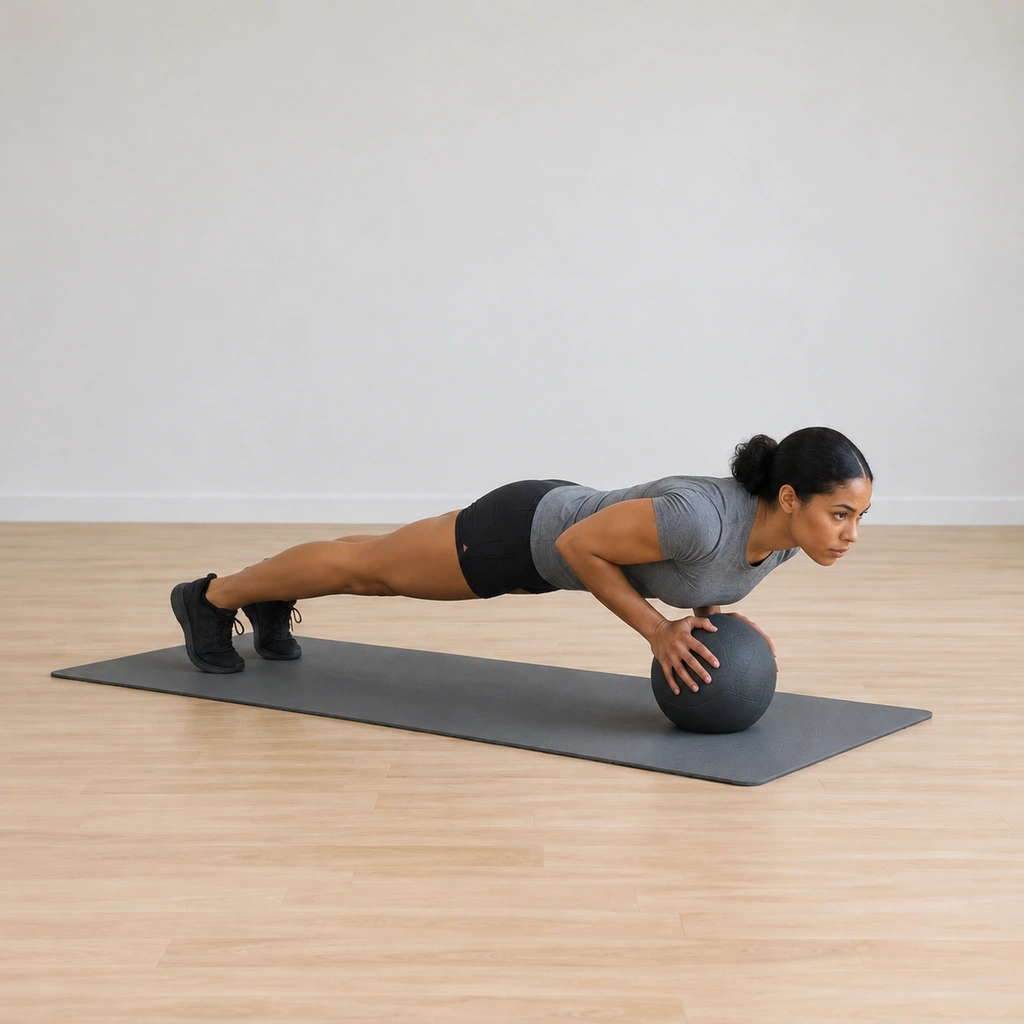
Step 3 of 5
Continue lowering until your chest nears or lightly touches the ball.
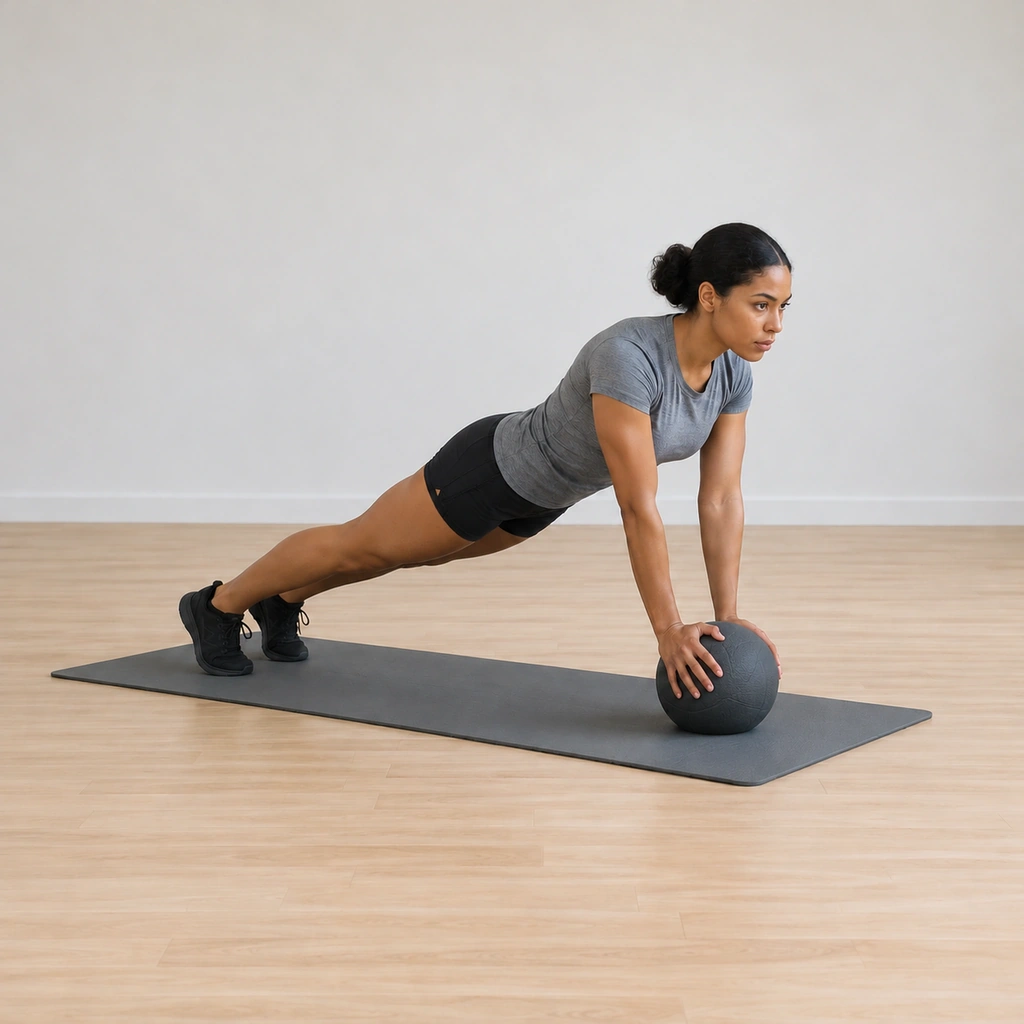
Step 4 of 5
Press upwards through your arms until the elbows are fully extended, keeping the torso rigid.
Step 5 of 5
Extend into a plank with both palms on the sides of the medicine ball, shoulders directly over the ball.
Safety Information
From kneeling, place the palms on the sides of the medicine ball, then shift forward until the shoulders sit directly over the hands and the ball. Keep the torso braced with no sagging or hiking, the chest lowered until it nears or lightly touches the ball, and the elbows kept close to the sides or flaring slightly. Then press to full extension. Caution: the ball adds instability, so the movements are slow and controlled to reduce the chance of injury; a ball with handles may be substituted to ease the wrists. Anyone with a shoulder, elbow, wrist, hip, back or balance problem should ask a physical therapist or physician before attempting this exercise and stop at pain or dizziness. Stop if the exercise causes pain or you become unwell. Seek appropriate professional advice about symptoms or suitability.
Get your free personalized program at clapmove.com/register
Printed from clapmove.com. ClapMove is not a replacement for professional medical advice — always consult a healthcare provider before starting any exercise program.