ClapMove · clapmove.com
Exercise handout — move better, feel better.
Battle Rope Hip Toss
Face the anchor in an athletic stance holding both rope tails. Raise the ropes overhead, then slam them to one side with a rotational hip drive. Slam to the opposite side next.
Stop if
Choose an easier exercise if pain reaches 6 out of 10 or becomes sharp. Stop and rest if pain reaches 8 out of 10.
This is the general ClapMove rule. This exercise has no extra stop rule of its own.
- Pain 6 out of 10 or more: choose an easier exercise.
- Pain 8 out of 10 or more: stop and rest.
Equipment needed
- Works at the gym
Gym
- battle ropes (No safe home substitute has been reviewed yet.)
Dosage
3
Sets
6
Reps / Time
90 sec
Rest
controlled
Tempo
Step-by-Step Guide
Set up
- Face the anchor in an athletic stance holding both rope tails.
- Set the stance wide enough to rotate the hips into the slams.
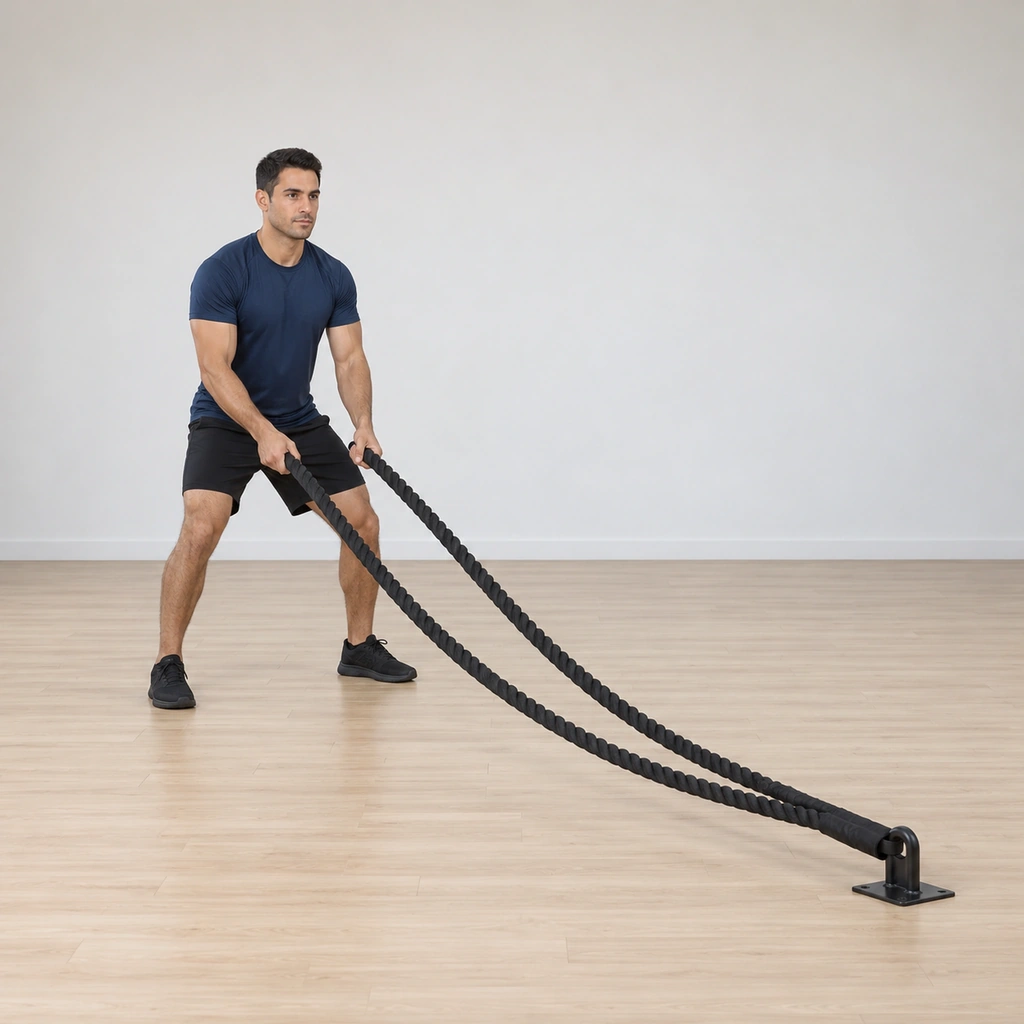
Step 1 of 5
Face the anchor in an athletic stance holding both rope tails.
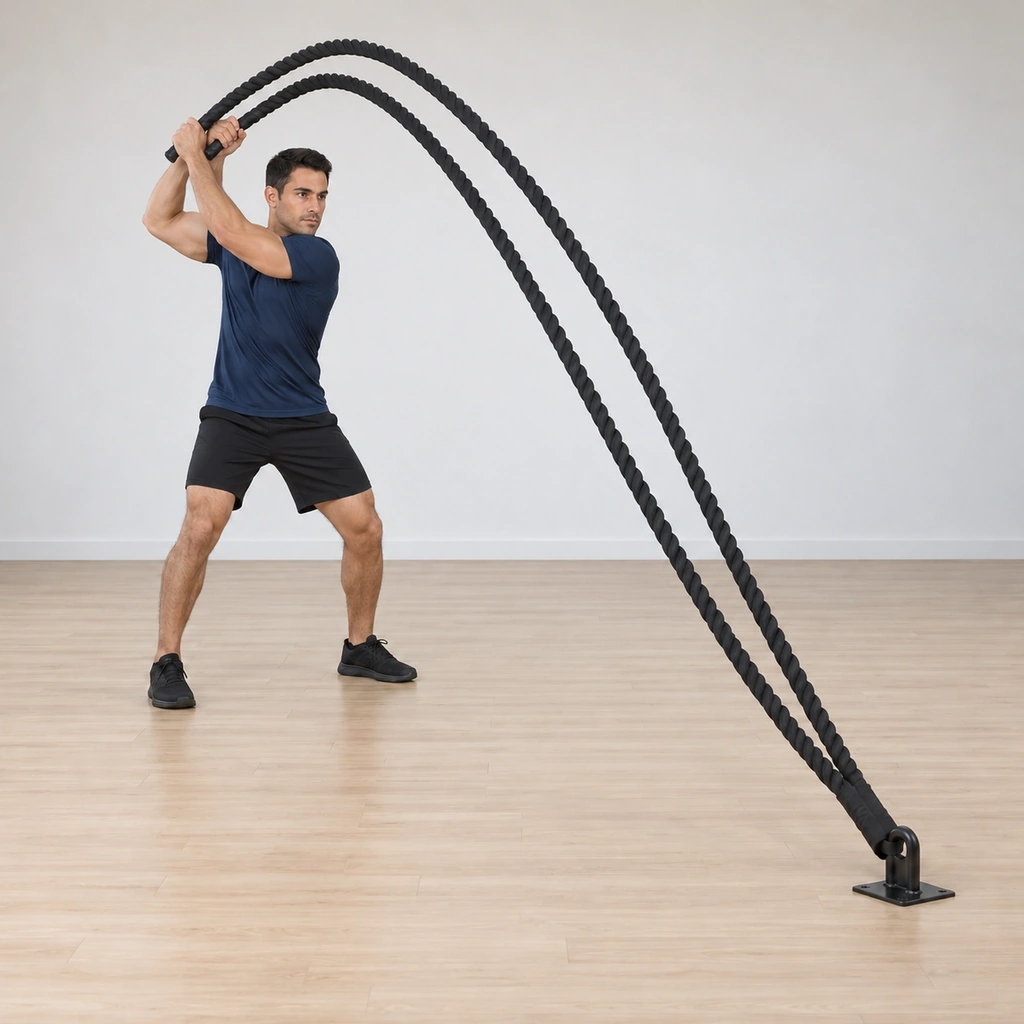
Step 2 of 5
Raise the battle ropes high overhead.
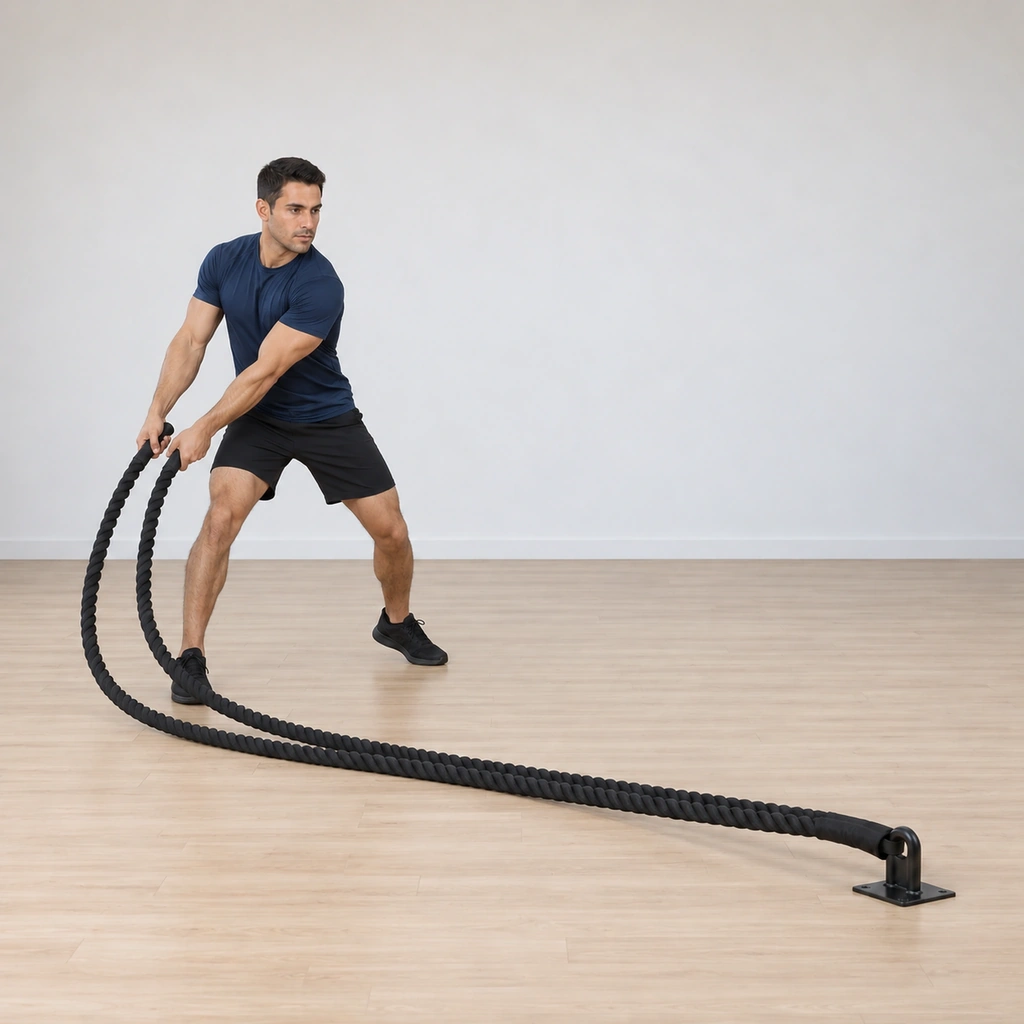
Step 3 of 5
Slam the ropes to one side with rotational hip drive.
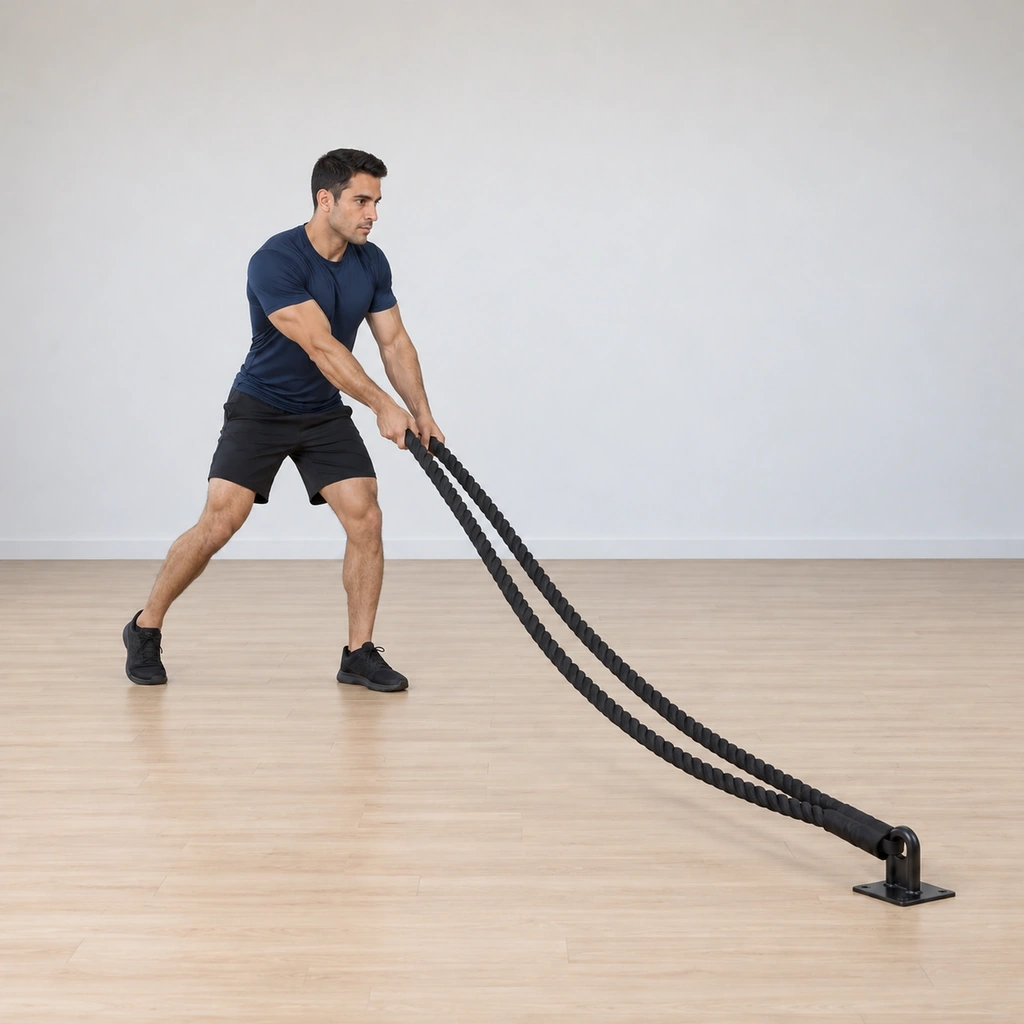
Step 4 of 5
Drive the next slam to the opposite side.
Step 5 of 5
Face the anchor in an athletic stance holding both rope tails.
Safety Information
Hold both rope tails facing the anchor before raising them. Anyone with a shoulder, elbow, wrist, hip, back or balance problem should ask a physical therapist or physician before attempting this exercise and stop at pain or dizziness. Keep the high raise and the hip-driven side-to-side slams. Stop if the exercise causes pain or you become unwell. Seek appropriate professional advice about symptoms or suitability.
Get your free personalized program at clapmove.com/register
Printed from clapmove.com. ClapMove is not a replacement for professional medical advice — always consult a healthcare provider before starting any exercise program.