ClapMove · clapmove.com
Exercise handout — move better, feel better.
Cones Box Drill
Around four cones in a square, sprint forward, shuffle sideways, backpedal, then shuffle back to the first cone, always facing the same way.
Stop if
Choose an easier exercise if pain reaches 6 out of 10 or becomes sharp. Stop and rest if pain reaches 8 out of 10.
This is the general ClapMove rule. This exercise has no extra stop rule of its own.
- Pain 6 out of 10 or more: choose an easier exercise.
- Pain 8 out of 10 or more: stop and rest.
Equipment needed
- Works at home
- Works at the gym
step_box
Home Options
- agility ladder or cones + step or plyo box
Dosage
4
Sets
20 sec
Reps / Time
90 sec
Rest
controlled
Tempo
Step-by-Step Guide
Set up
- Set four cones as a square about five metres a side.
- Stand at corner one in an athletic stance facing the square.
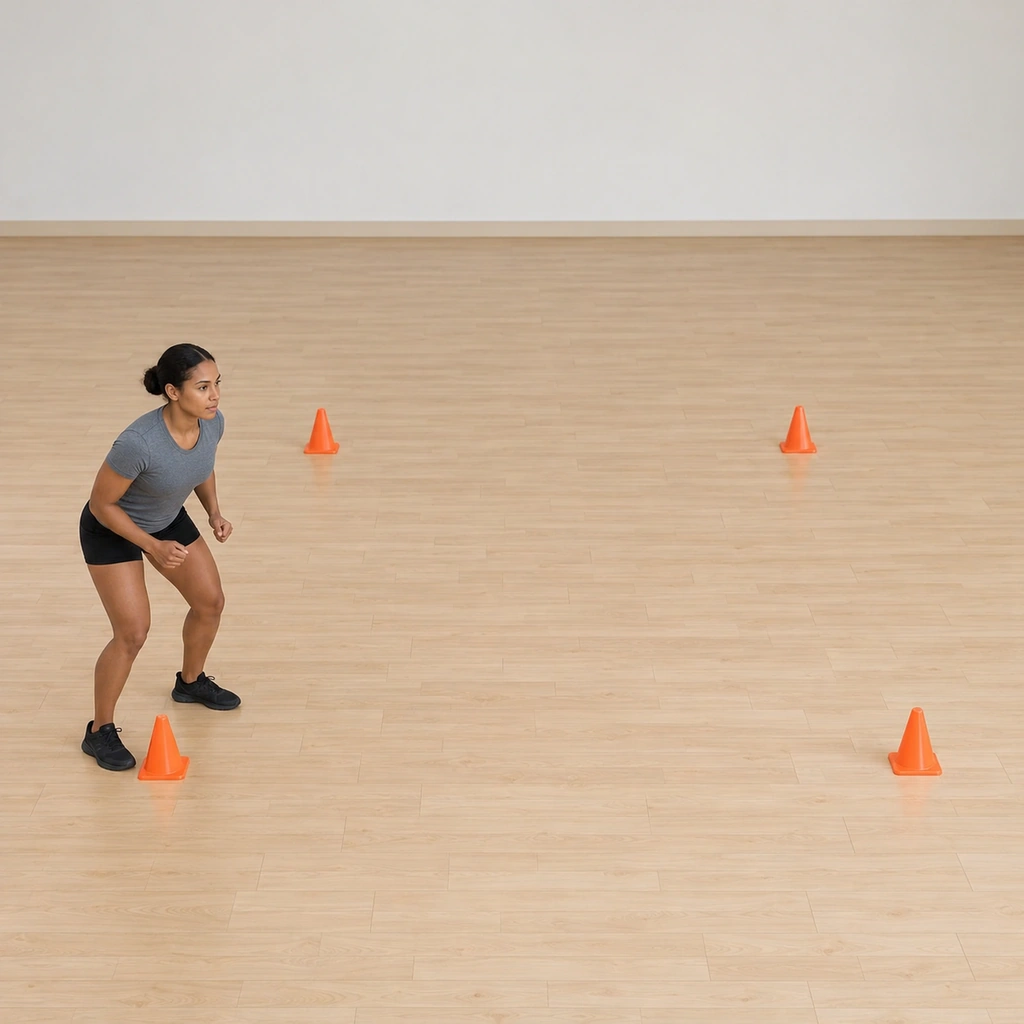
Step 1 of 5
Stand at the first corner ready to sprint the square.
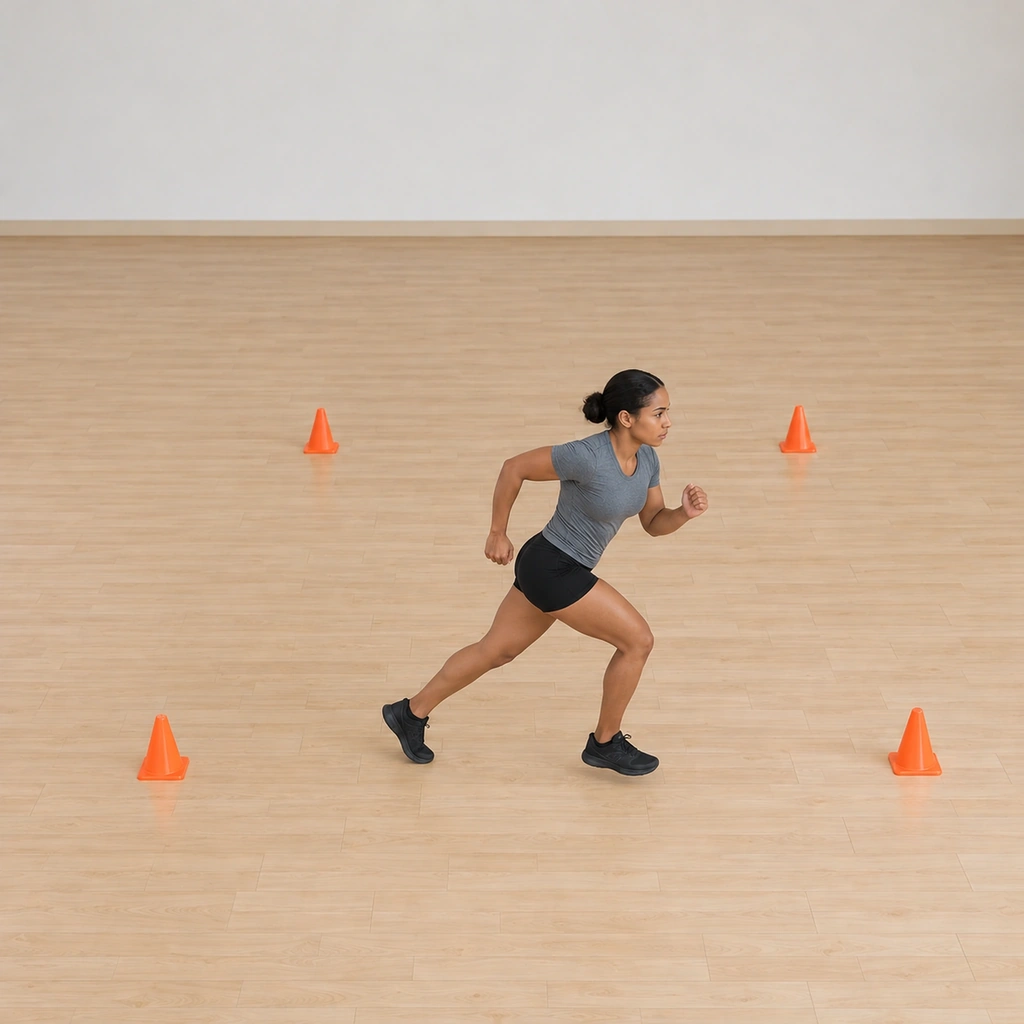
Step 2 of 5
Sprint forward to cone two.
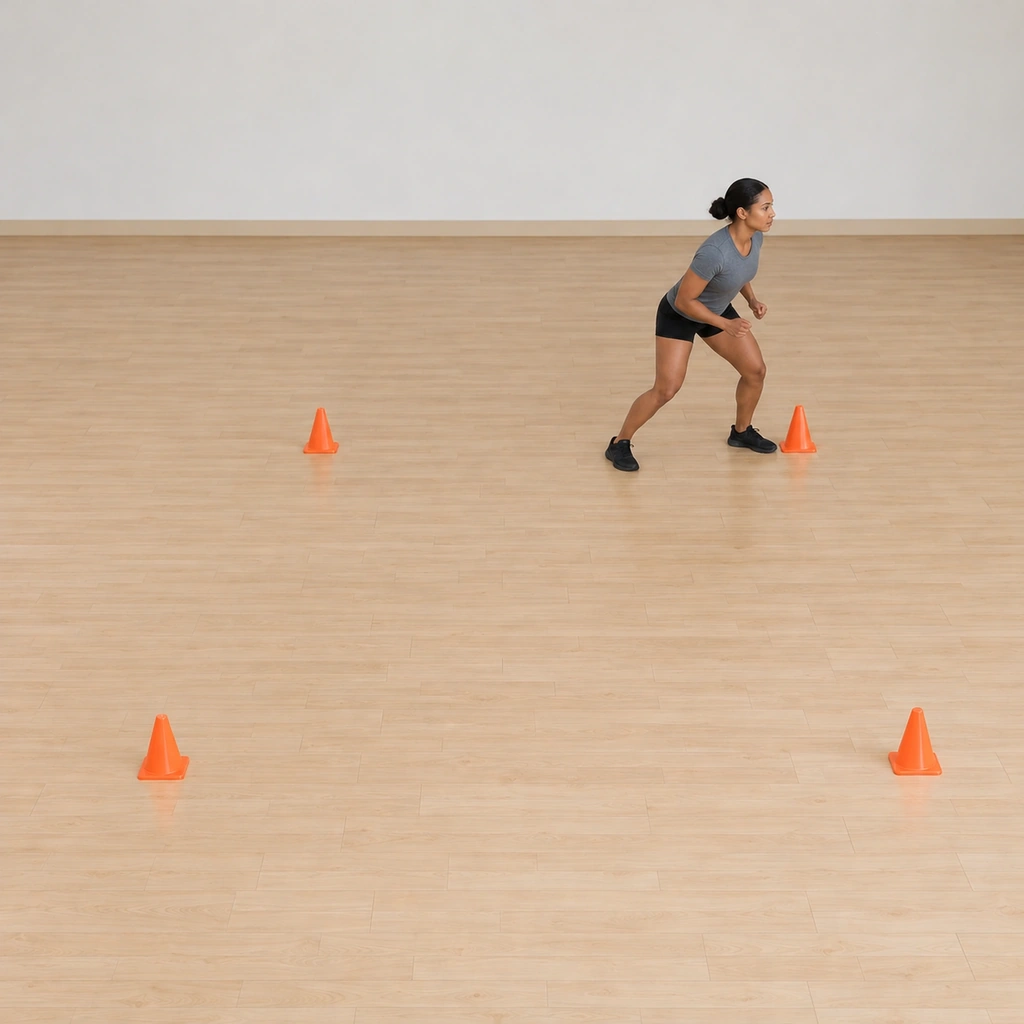
Step 3 of 5
Lateral shuffle to cone three.
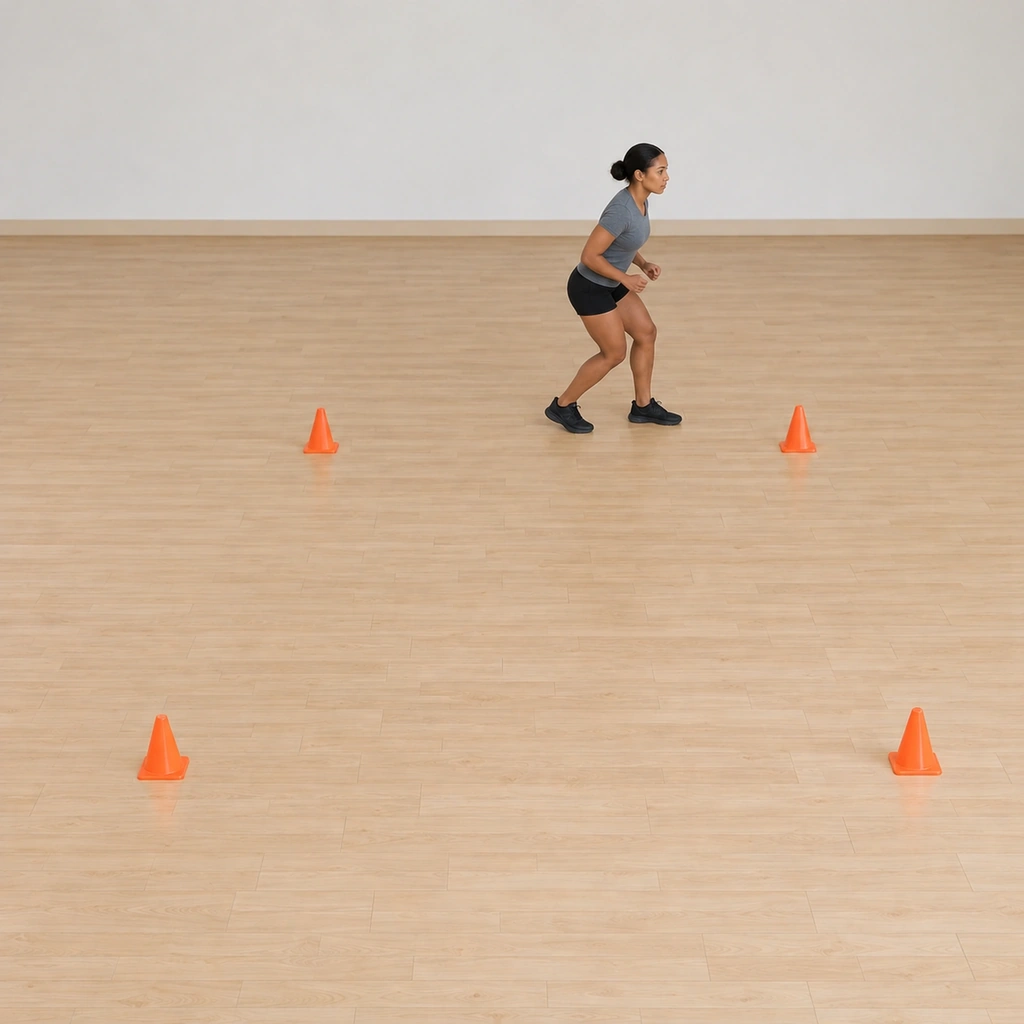
Step 4 of 5
Backpedal to cone four.
Step 5 of 5
Stand at the first corner ready to sprint the square.
Safety Information
Sprint forward, shuffle, backpedal and shuffle around the square, always looking in the same direction. The backpedal leg keeps the gaze forward - travel backward under control, staying low. Anyone with a shoulder, elbow, wrist, hip, back or balance problem should ask a physical therapist or physician before attempting this exercise and stop at pain or dizziness. Keep a fixed-direction gaze; do not turn the head through the course. Stop if the exercise causes pain or you become unwell. Seek appropriate professional advice about symptoms or suitability.
Get your free personalized program at clapmove.com/register
Printed from clapmove.com. ClapMove is not a replacement for professional medical advice — always consult a healthcare provider before starting any exercise program.