ClapMove · clapmove.com
Exercise handout — move better, feel better.
See-Saw Press
Stand with a dumbbell at each shoulder, palms facing in. Press one arm overhead with a wrist turn, then the other, in a steady see-saw rhythm.
Stop if
Choose an easier exercise if pain reaches 6 out of 10 or becomes sharp. Stop and rest if pain reaches 8 out of 10.
This is the general ClapMove rule. This exercise has no extra stop rule of its own.
- Pain 6 out of 10 or more: choose an easier exercise.
- Pain 8 out of 10 or more: stop and rest.
Equipment needed
- Works at home
- Works at the gym
dumbbells
Home Options
- dumbbells
Dosage
3
Sets
8
Reps / Time
60 sec
Rest
controlled
Tempo
Step-by-Step Guide
Set up
- Stand with a dumbbell in each hand at shoulder level, palms facing in.
- Brace the core.
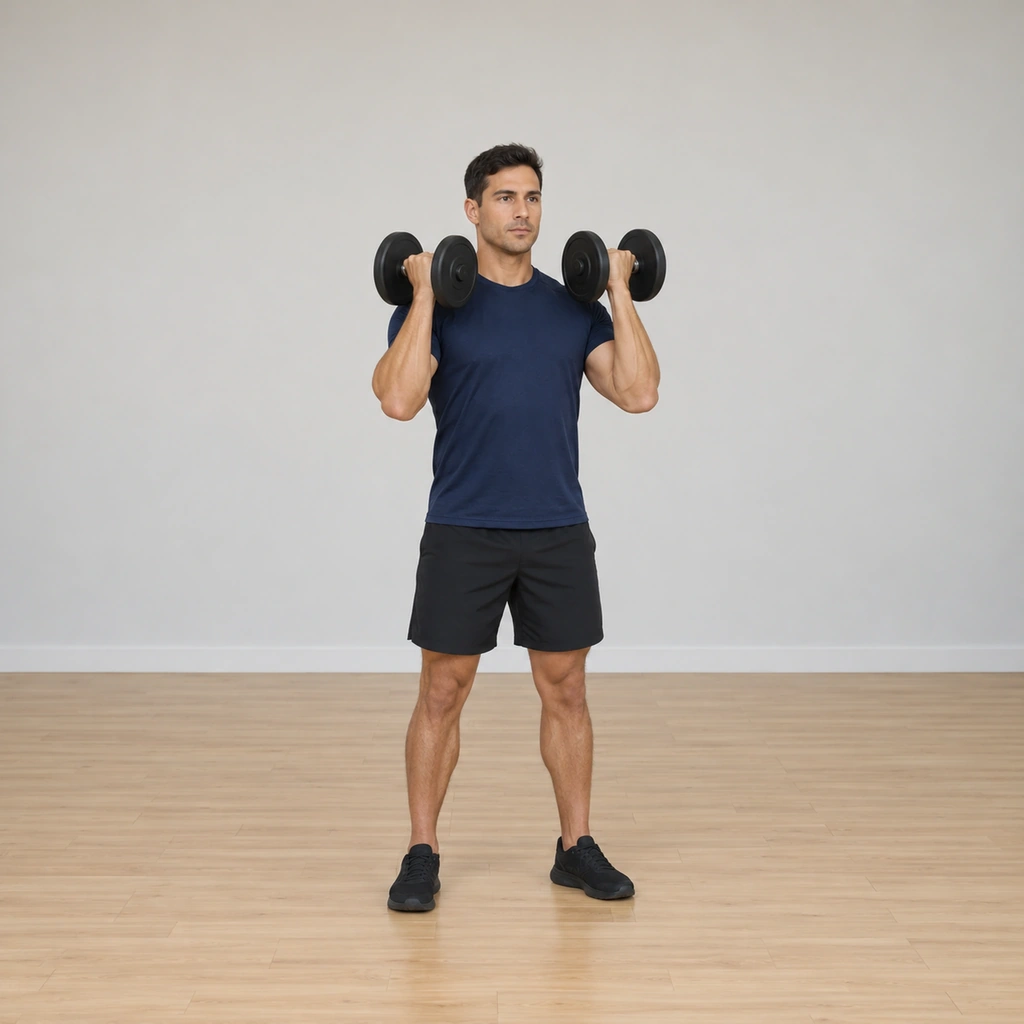
Step 1 of 5
Hold the dumbbells at shoulder level with palms facing in.
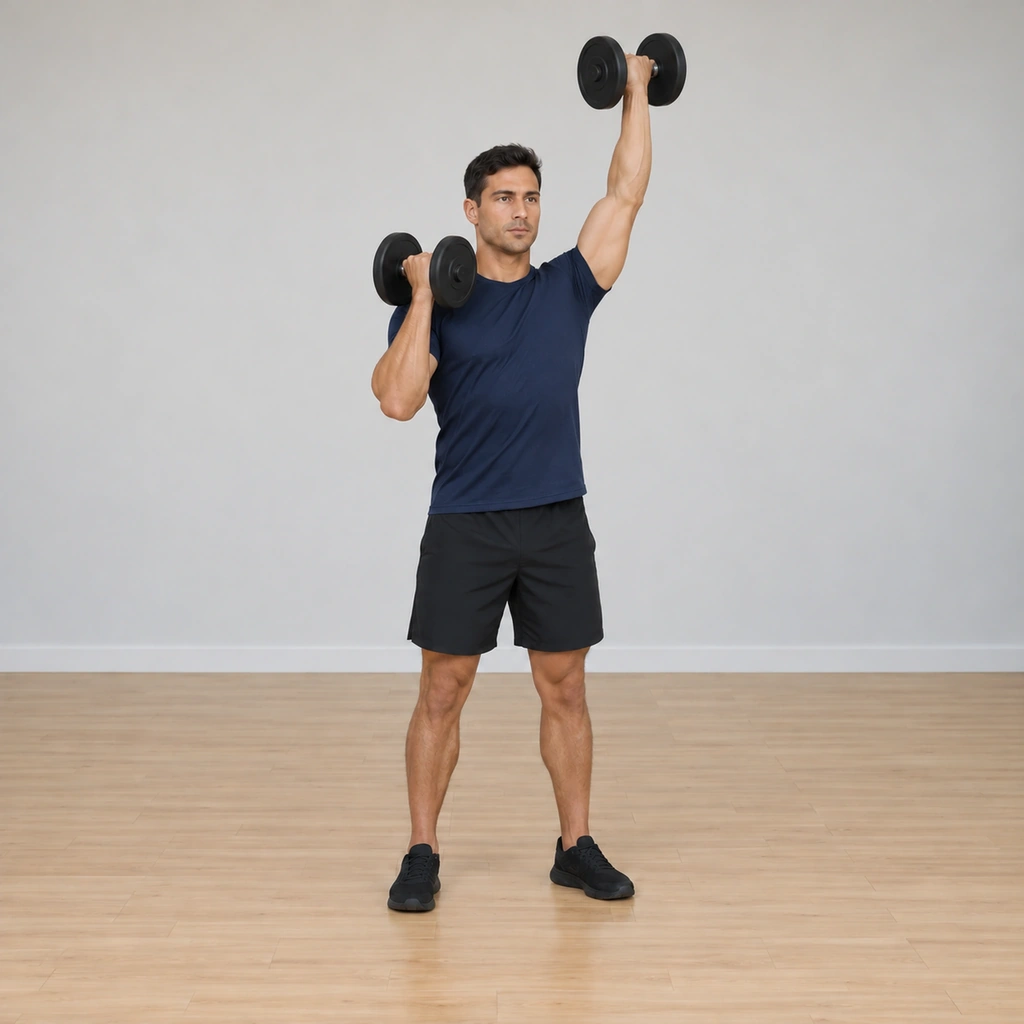
Step 2 of 5
Extend the left arm overhead, rotating the wrist so the palm faces forward.
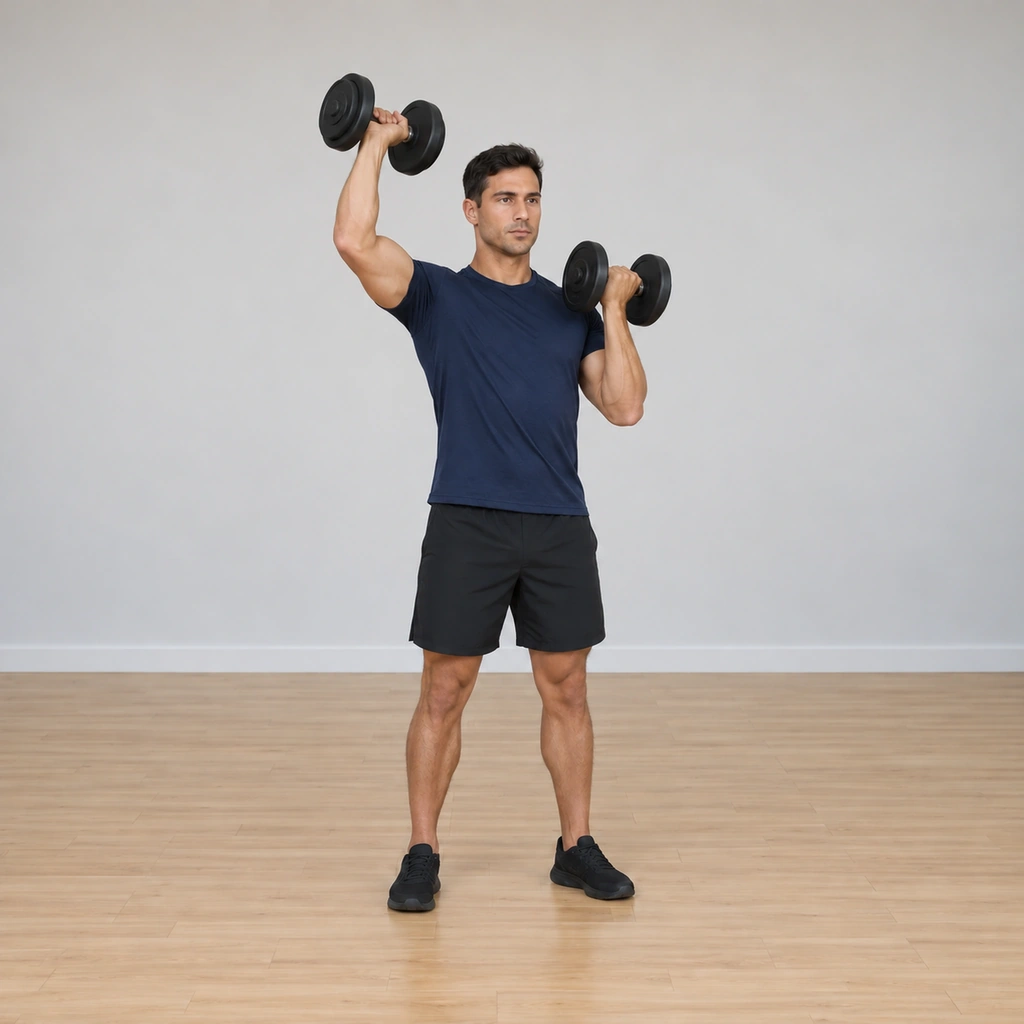
Step 3 of 5
Lower the left bell as the right presses.
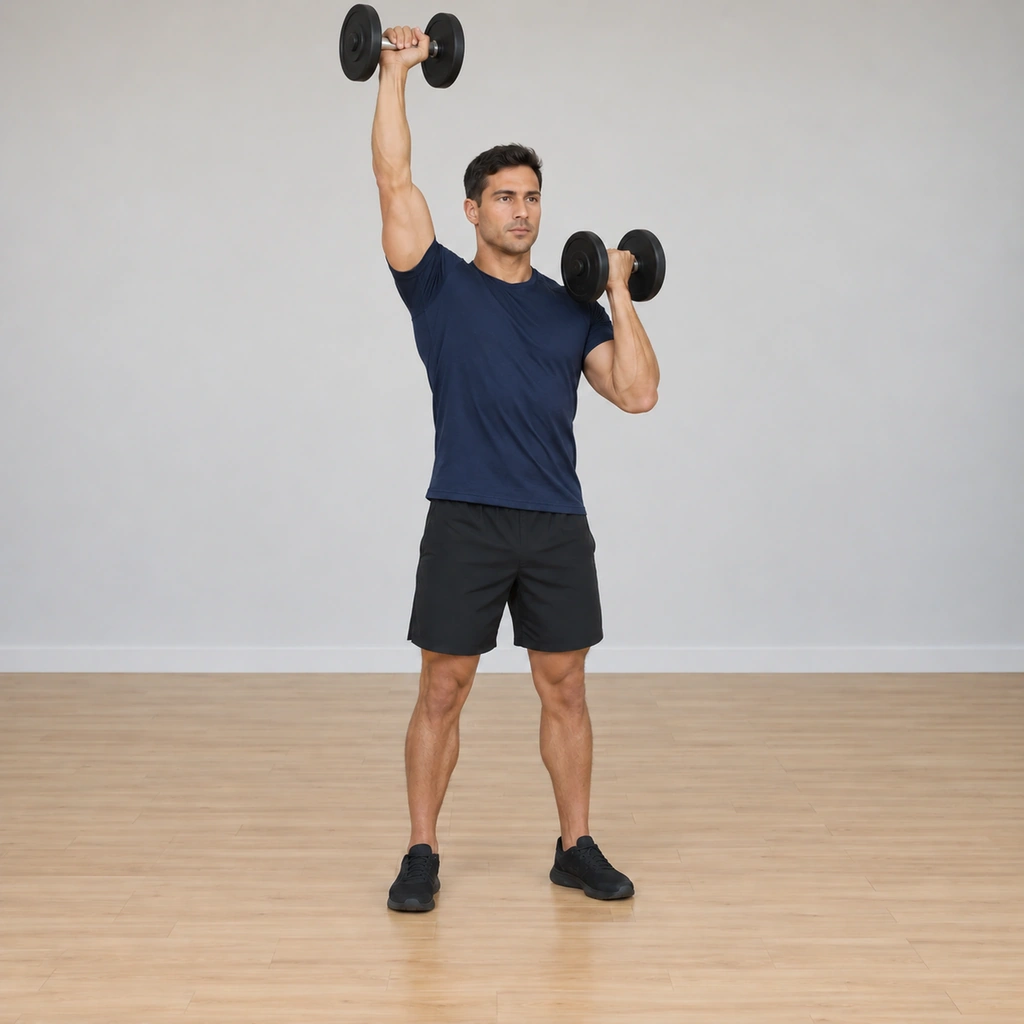
Step 4 of 5
Finish with the right arm extended and the left back at the shoulder.
Step 5 of 5
Hold the dumbbells at shoulder level with palms facing in.
Safety Information
Clean the dumbbells to shoulder level palms facing in, then press each arm overhead in turn with the wrist rotating palm-forward, lowering one weight as the other presses. Synchronize the lowering of one weight with the pressing of the other and brace the obliques against the lateral inclination. Keep the rotation smooth and avoid swinging the trunk. Anyone with a shoulder, elbow, wrist, hip, back or balance problem should ask a physical therapist or physician before attempting this exercise and stop at pain or dizziness. Stop if the exercise causes pain or you become unwell. Seek appropriate professional advice about symptoms or suitability.
Get your free personalized program at clapmove.com/register
Printed from clapmove.com. ClapMove is not a replacement for professional medical advice — always consult a healthcare provider before starting any exercise program.