ClapMove · clapmove.com
Exercise handout — move better, feel better.
Tai Chi Raise Arms
A Tai Chi movement. Stand balanced with arms hanging soft and let a slow upward pressure raise your arms without tension.
Stop if
Choose an easier exercise if pain reaches 6 out of 10 or becomes sharp. Stop and rest if pain reaches 8 out of 10.
This is the general ClapMove rule. This exercise has no extra stop rule of its own.
- Pain 6 out of 10 or more: choose an easier exercise.
- Pain 8 out of 10 or more: stop and rest.
Equipment needed
- Works at home
- Works at the gym
none
Home Options
- bodyweight
Dosage
2
Sets
10
Reps / Time
30 sec
Rest
controlled
Tempo
Step-by-Step Guide
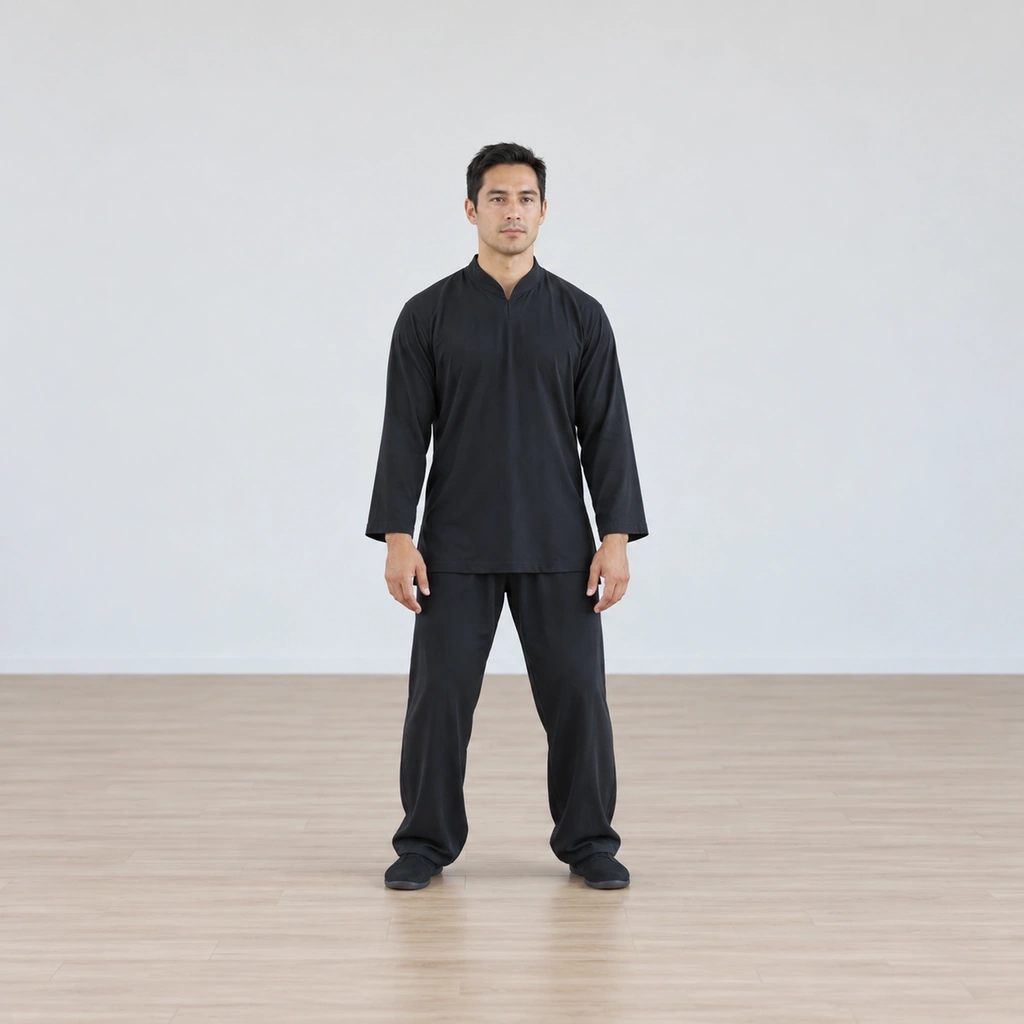
Step 1 of 4
Stand balanced and sunk, arms hanging soft, and let an upward pressure gather from your lower belly while every point of the body keeps sinking.
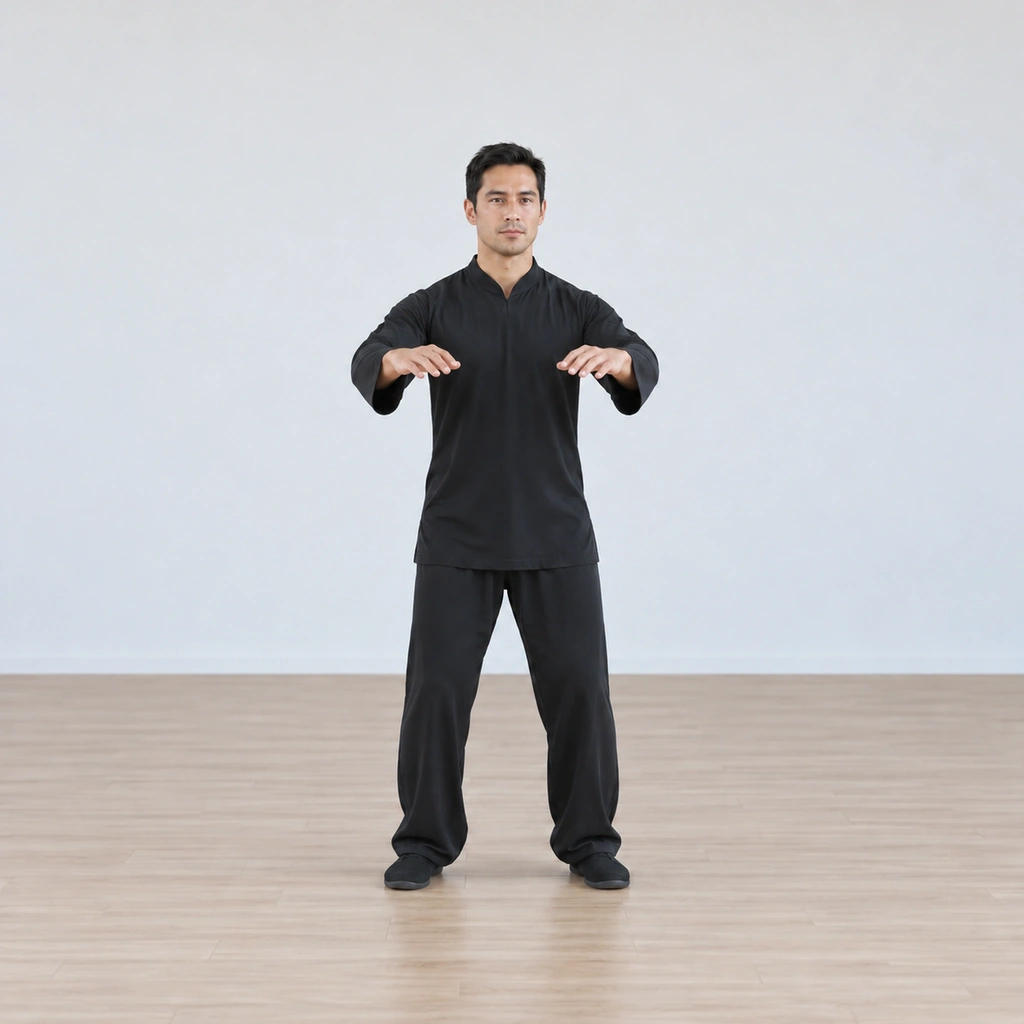
Step 2 of 4
Let the upward pressure slowly push your arms up, soft and tension-free, as though they are almost floating.
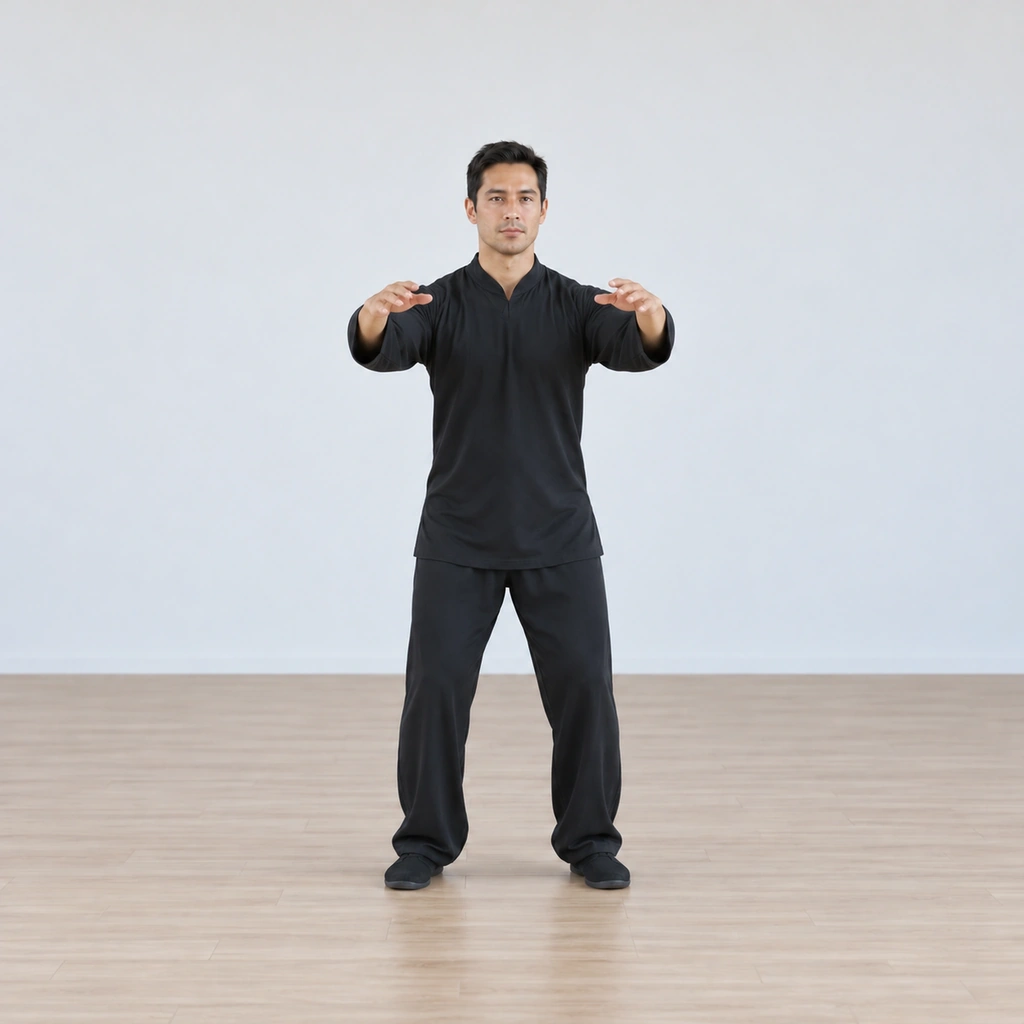
Step 3 of 4
Let the arms arrive at shoulder height, tailbone sunk and waist bowed very slightly forward, every joint soft and none collapsed.
Step 4 of 4
Stand balanced and sunk, arms hanging soft, and let an upward pressure gather from your lower belly while every point of the body keeps sinking.
What you should feel
The arms should feel as though they are almost floating up, with no tension building in the muscles to lift them.
Safety Information
Practise on a clear, flat, non-slip floor with nothing to trip on within reach. Anyone with a shoulder, neck, back or balance problem should ask a physical therapist or physician before attempting this exercise and stop at pain or dizziness. Lift the arms only within a comfortable range and stop on unusual pain or on loss of balance. Stop if the exercise causes pain or you become unwell. Seek appropriate professional advice about symptoms or suitability.
Get your free personalized program at clapmove.com/register
Printed from clapmove.com. ClapMove is not a replacement for professional medical advice — always consult a healthcare provider before starting any exercise program.