ClapMove · clapmove.com
Exercise handout — move better, feel better.
Hangboard Half-Crimp Edge Dead Hang
A hang from a fingerboard edge in the half-crimp grip. You press three fingers at ninety degrees with the thumb under the pointer, lift your feet and hang your body weight.
Stop if
Choose an easier exercise if pain reaches 6 out of 10 or becomes sharp. Stop and rest if pain reaches 8 out of 10.
This is the general ClapMove rule. This exercise has no extra stop rule of its own.
- Pain 6 out of 10 or more: choose an easier exercise.
- Pain 8 out of 10 or more: stop and rest.
Equipment needed
- Works at home
- Works at the gym
none
Home Options
- bodyweight
Dosage
1
Sets
30 sec
Reps / Time
60 sec
Rest
controlled
Tempo
Step-by-Step Guide
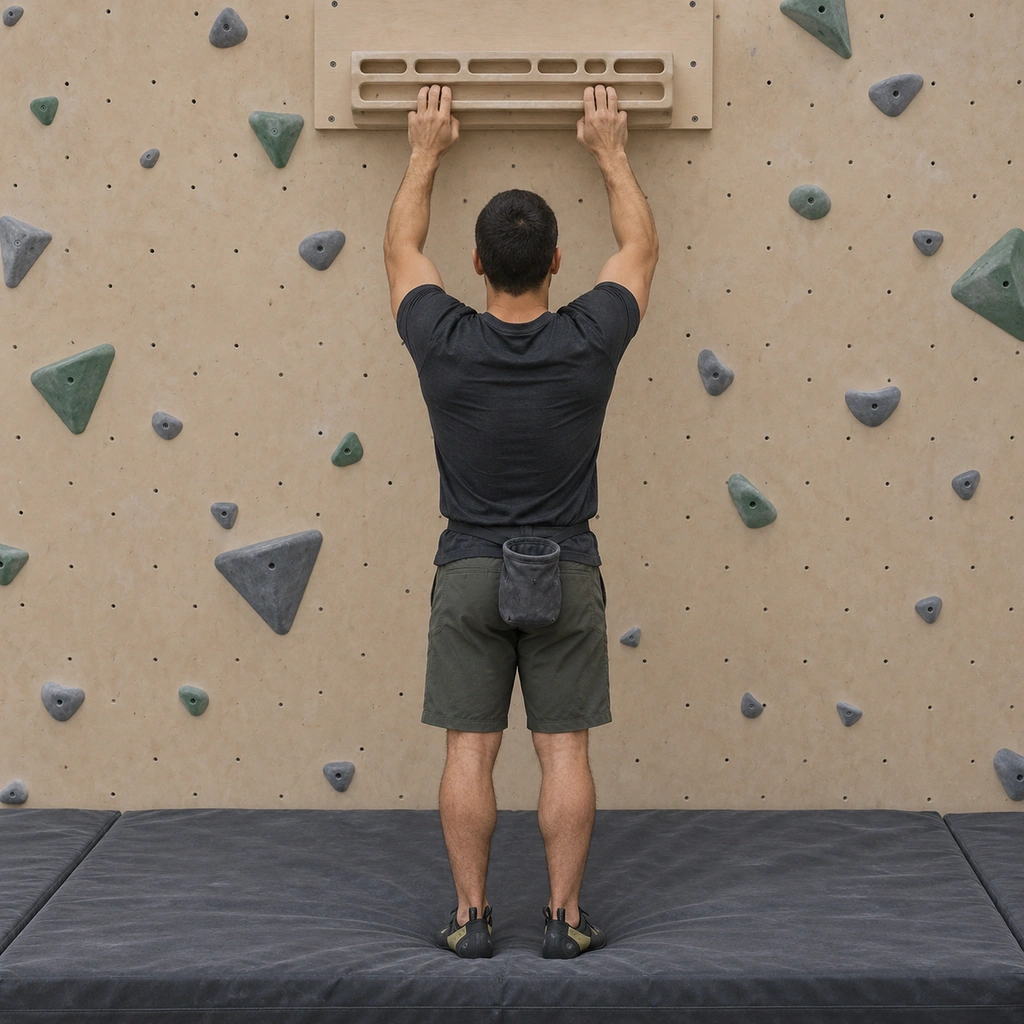
Step 1 of 4
Set the pointer, middle and ring fingers pressing at ninety degrees on the edge - thumb resting offset beneath the pointer, not wrapped over it.
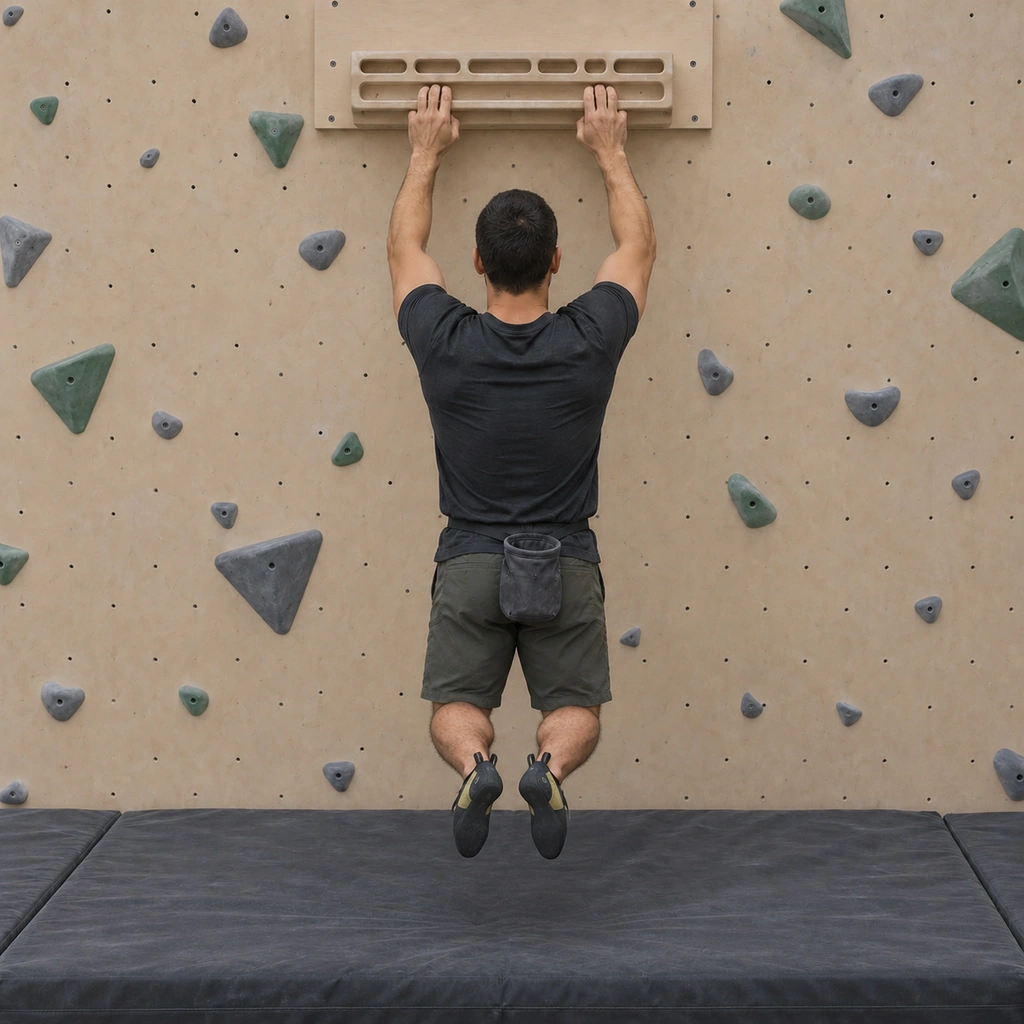
Step 2 of 4
Lift your feet and hang your whole bodyweight on the half-crimp - keep the ninety-degree press honest, don't slide open.
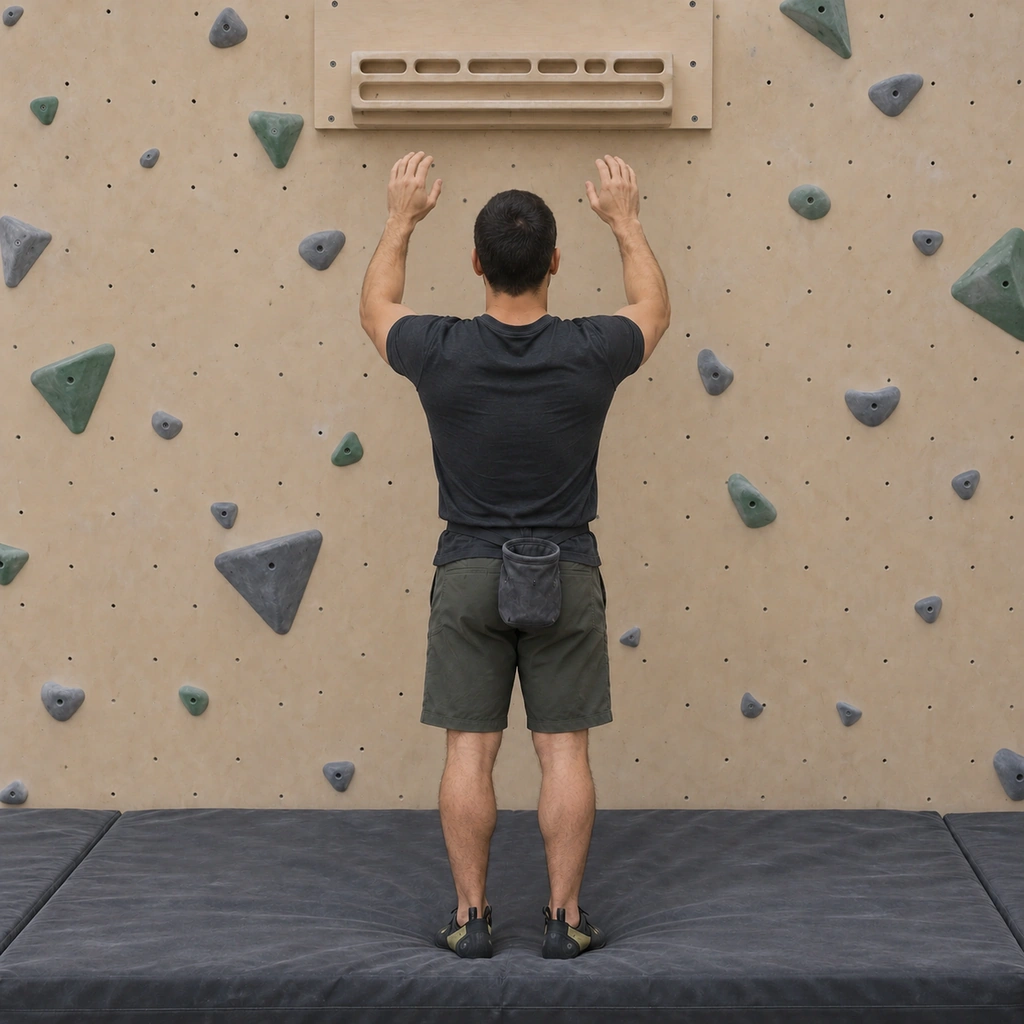
Step 3 of 4
Put your feet back on the floor and let the grip come off - the hang ends clean.
Step 4 of 4
Set the pointer, middle and ring fingers pressing at ninety degrees on the edge - thumb resting offset beneath the pointer, not wrapped over it.
Safety Information
Practise only in a properly equipped climbing facility over a matted landing with qualified supervision or instruction with the feet supported until the grip is set. Anyone with a finger, wrist, elbow or shoulder problem should ask a physical therapist or physician before attempting this exercise and stop at pain or dizziness. Repeat only within a comfortable range and stop on unusual pain, slip or fatigue. Stop if the exercise causes pain or you become unwell. Seek appropriate professional advice about symptoms or suitability.
Get your free personalized program at clapmove.com/register
Printed from clapmove.com. ClapMove is not a replacement for professional medical advice — always consult a healthcare provider before starting any exercise program.