ClapMove · clapmove.com
Exercise handout — move better, feel better.
Anterior Ankle Stretch (Half-Kneeling)
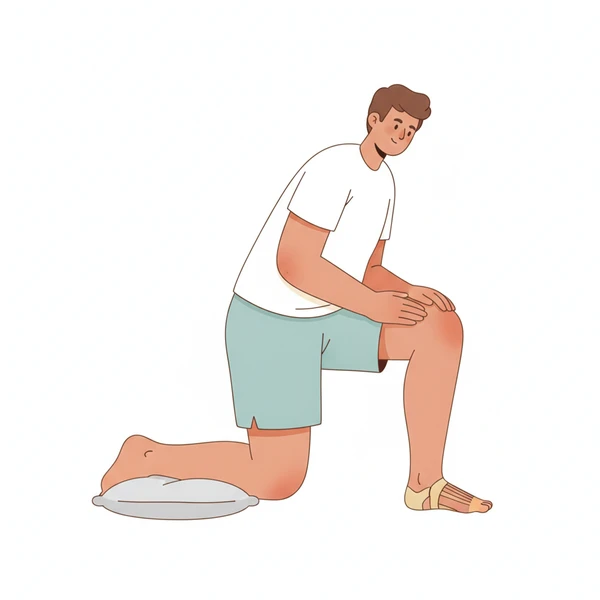
Stretch for the front of the ankle in a half-kneeling position. Helps if the front of the ankle feels tight.
Stop if
Choose an easier exercise if pain reaches 6 out of 10 or becomes sharp. Stop and rest if pain reaches 8 out of 10.
This is the general ClapMove rule. This exercise has no extra stop rule of its own.
- Pain 6 out of 10 or more: choose an easier exercise.
- Pain 8 out of 10 or more: stop and rest.
Equipment needed
- Works at home
- Works at the gym
Home Options
- pillow or cushion
No equipment? Try: Towel for knee padding
Dosage
2
Sets
20 sec
Reps / Time
30 sec
Rest
20-30 sec hold
Tempo
Step-by-Step Guide
Set up
- Start in half-kneeling position
- Back knee on pad or pillow
- Front foot flat on floor
Step 1 of 4
Shift weight forward onto front leg
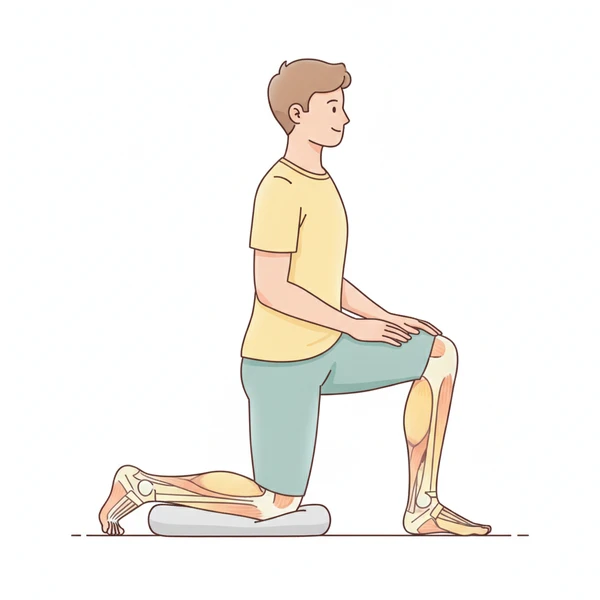
Step 2 of 4
Allow front knee to move past toes
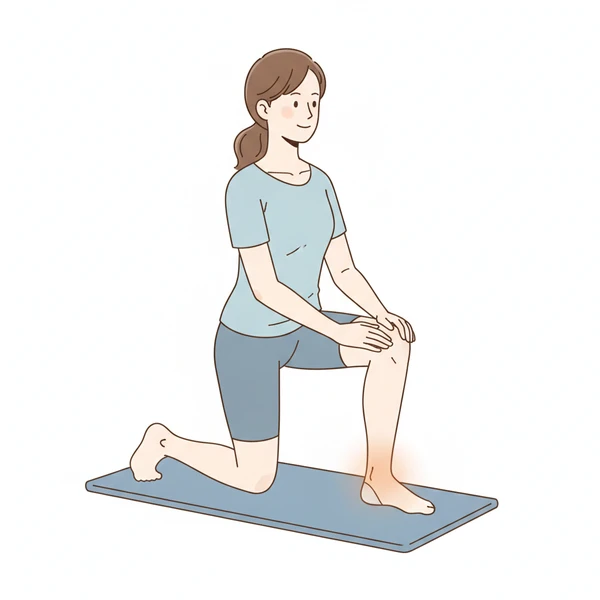
Step 3 of 4
Feel stretch at front of ankle or top of foot
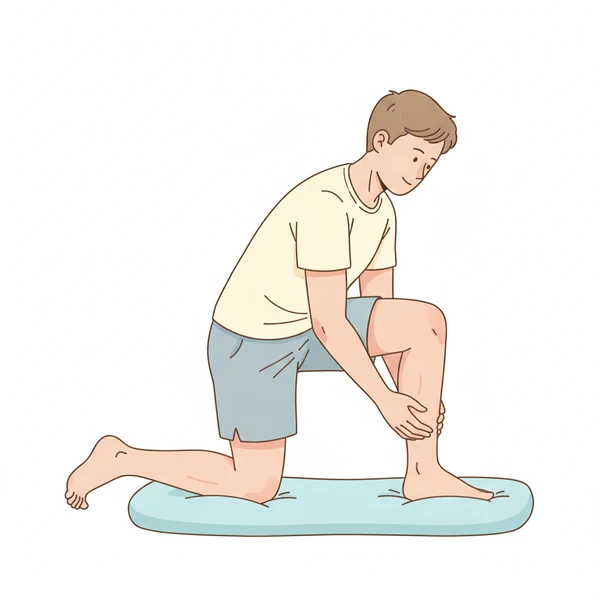
Step 4 of 4
Hold, then return
Breathing
- Exhale as you shift forward
- Breathe steadily during hold
Form Cues
- Move slowly and controlled
- Keep heel of front foot down if possible
- Stop if pinching at front of ankle
- Slight stretch is sufficient
Common Mistakes to Avoid
- Moving too aggressively
- Ignoring pinching pain
- Not using pad under knee
- Rushing the stretch
Safety Information
Stop if sharp pinching at front of ankle - may indicate impingement. Avoid if anterior ankle pain.
Progressions
Greater forward shift, add oscillations
Regressions
Smaller weight shift, less forward travel
Get your free personalized program at clapmove.com/register
Printed from clapmove.com. ClapMove is not a replacement for professional medical advice — always consult a healthcare provider before starting any exercise program.