ClapMove · clapmove.com
Exercise handout — move better, feel better.
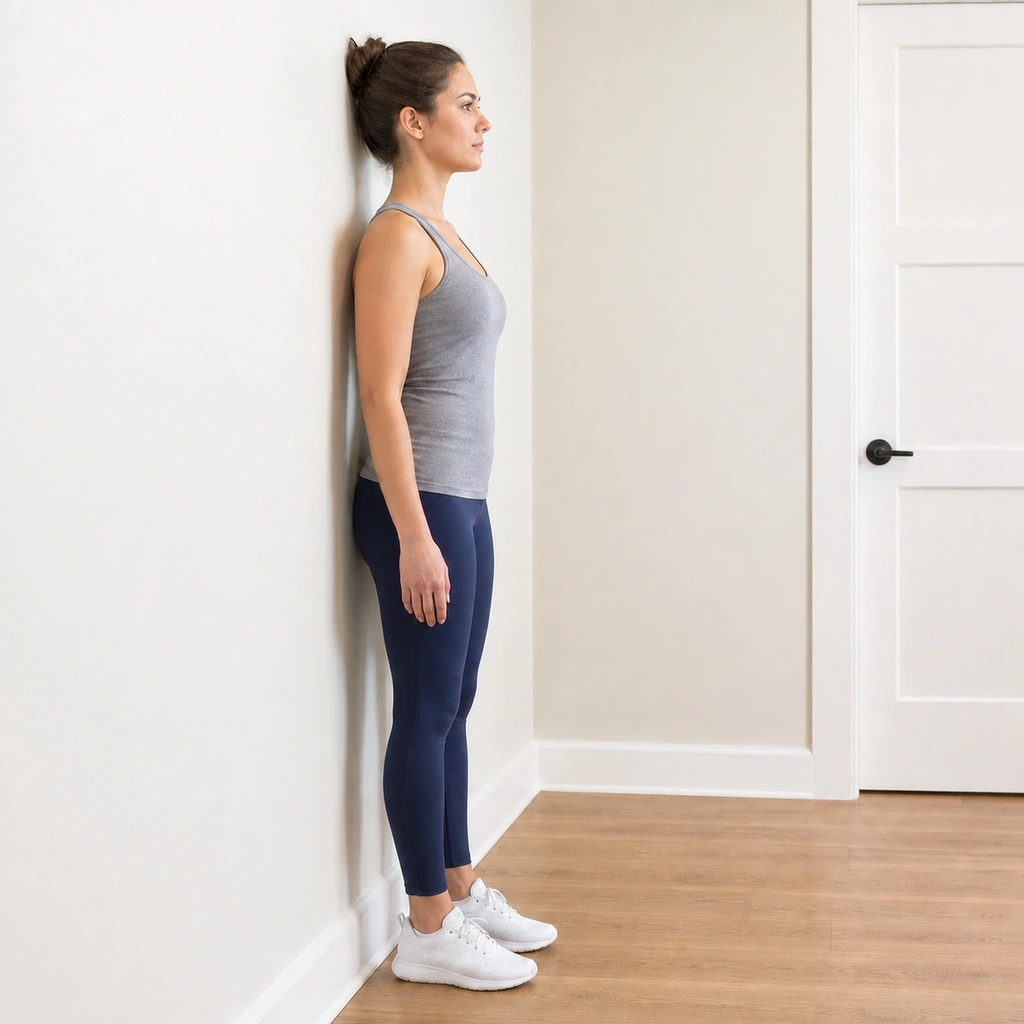
Chin Tuck Against Wall
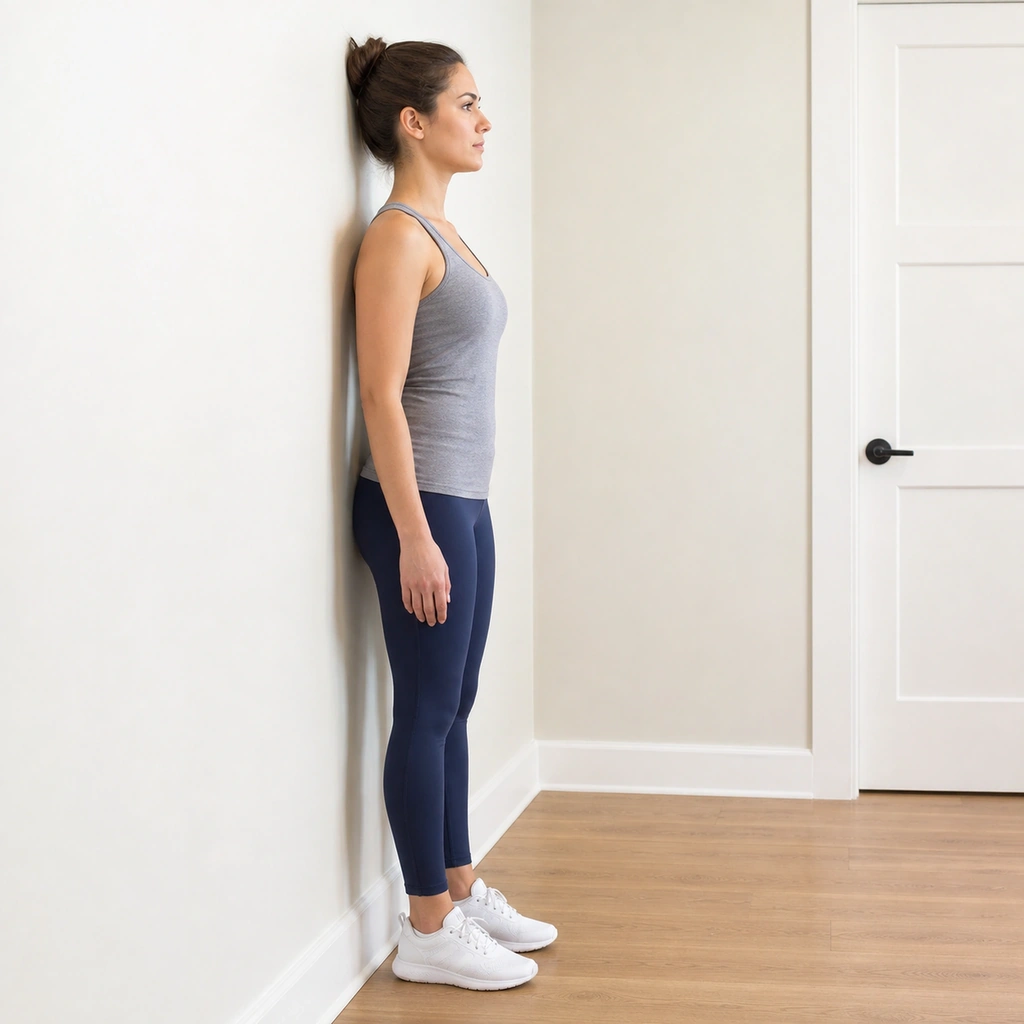
Practice proper head alignment by tucking chin while standing against a wall. Great for desk workers with forward head posture.
Stop if
Choose an easier exercise if pain reaches 6 out of 10 or becomes sharp. Stop and rest if pain reaches 8 out of 10.
This is the general ClapMove rule. This exercise has no extra stop rule of its own.
- Pain 6 out of 10 or more: choose an easier exercise.
- Pain 8 out of 10 or more: stop and rest.
Equipment needed
- Works at home
Home Options
- wall
No equipment? Try: Door frame
Dosage
2
Sets
10
Reps / Time
30 sec
Rest
Hold 5 seconds
Tempo
Step-by-Step Guide
Set up
- Stand with your back flat against a wall
- Feet about 6 inches from wall
- Head touching wall
Step 1 of 5
Gently draw your chin back as if making a double chin
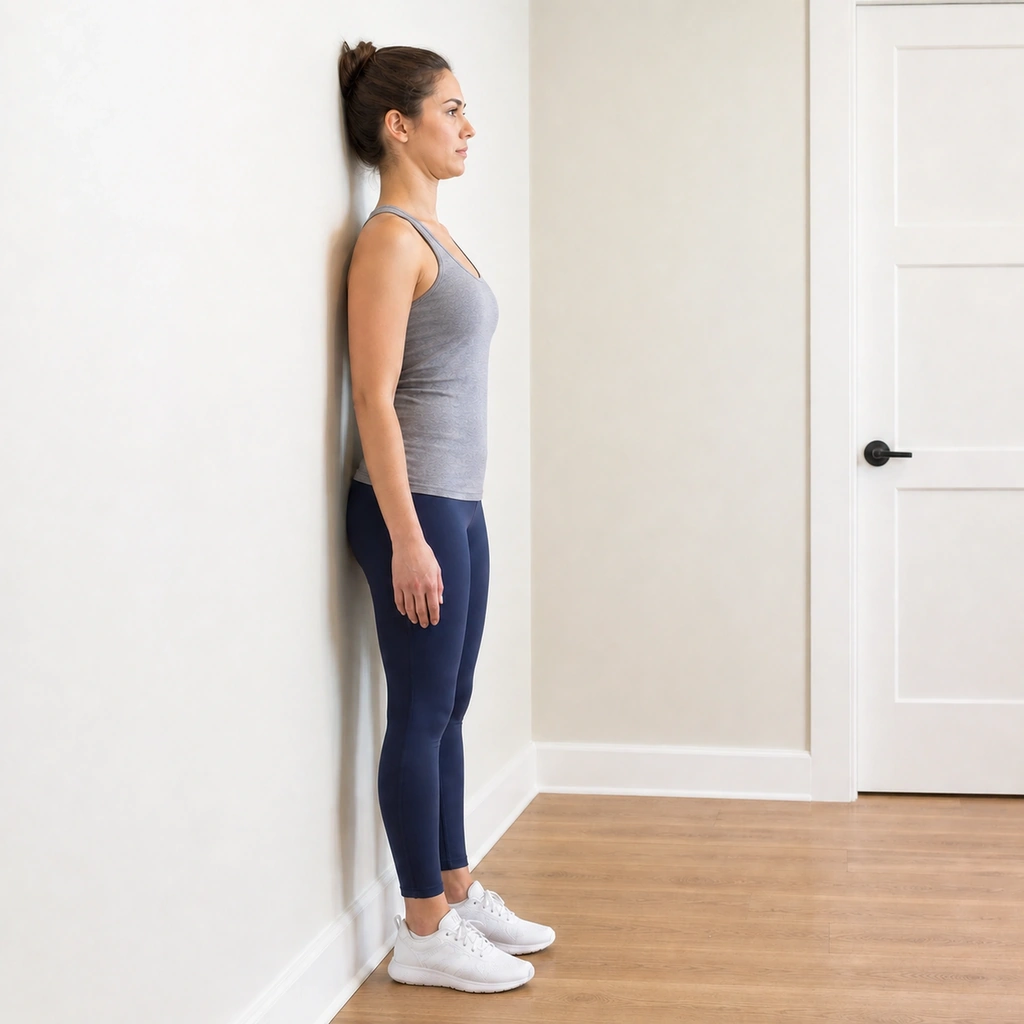
Step 2 of 5
Keep the back of your head on the wall
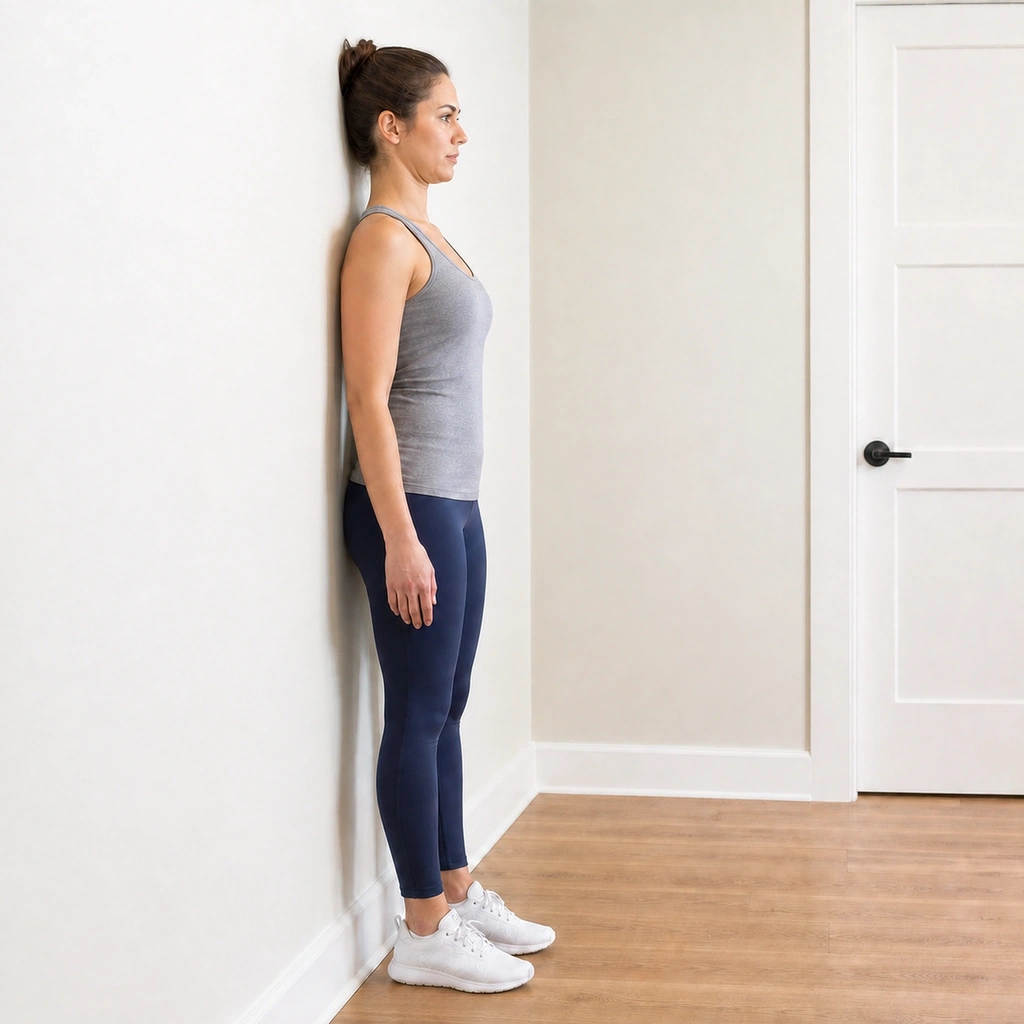
Step 3 of 5
Your eyes should stay level with the horizon
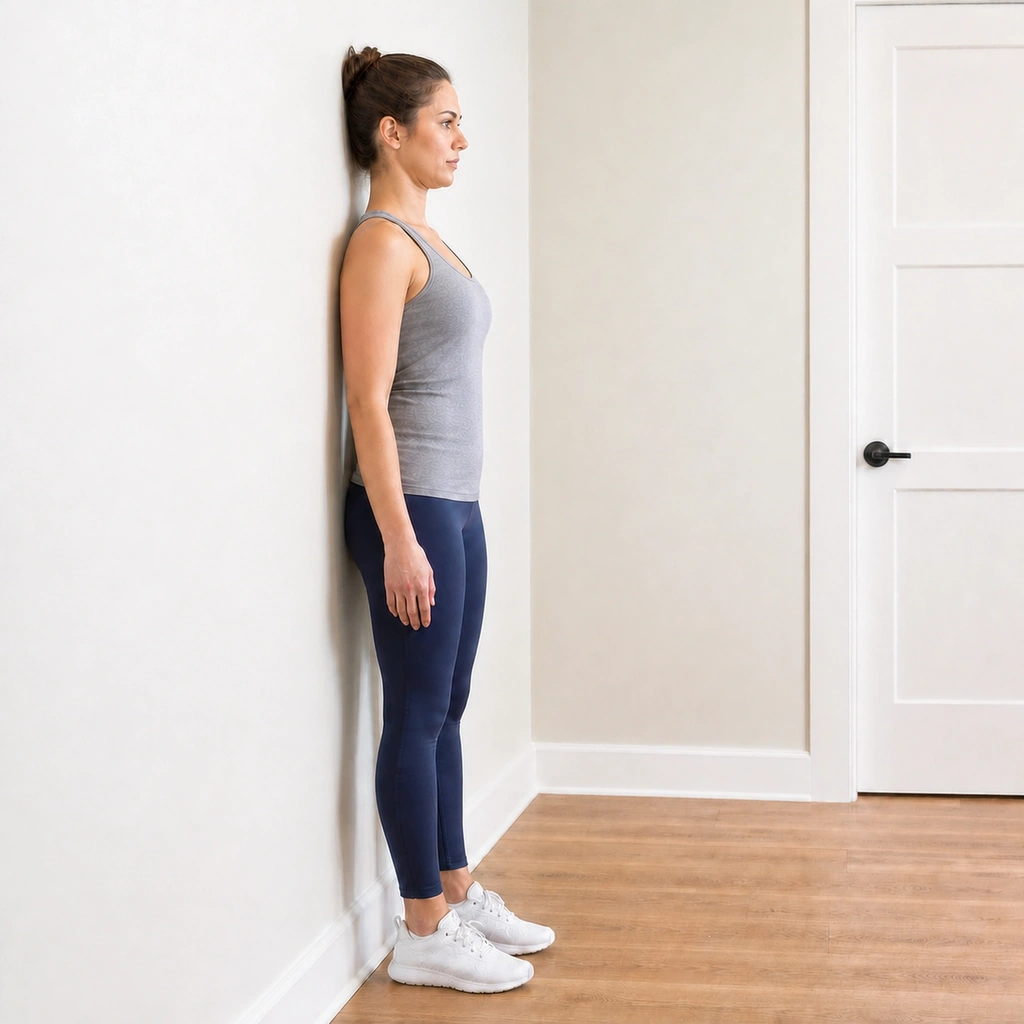
Step 4 of 5
Hold for 5 seconds
Step 5 of 5
Relax and repeat
Breathing
- Breathe normally while holding
- Exhale as you tuck
Form Cues
- Eyes stay level
- Feel like you are growing taller
- Shoulders stay down
- Do not look down
Common Mistakes to Avoid
- Looking down instead of tucking
- Head coming off wall
- Forcing too hard
- Holding breath
Safety Information
Stop if this causes headache or neck pain.
Progressions
Add rolled towel behind head for resistance.
Regressions
Shorter holds. Smaller tuck.
Get your free personalized program at clapmove.com/register
Printed from clapmove.com. ClapMove is not a replacement for professional medical advice — always consult a healthcare provider before starting any exercise program.