ClapMove · clapmove.com
Exercise handout — move better, feel better.
Diaphragmatic Breathing (Belly Breathing)
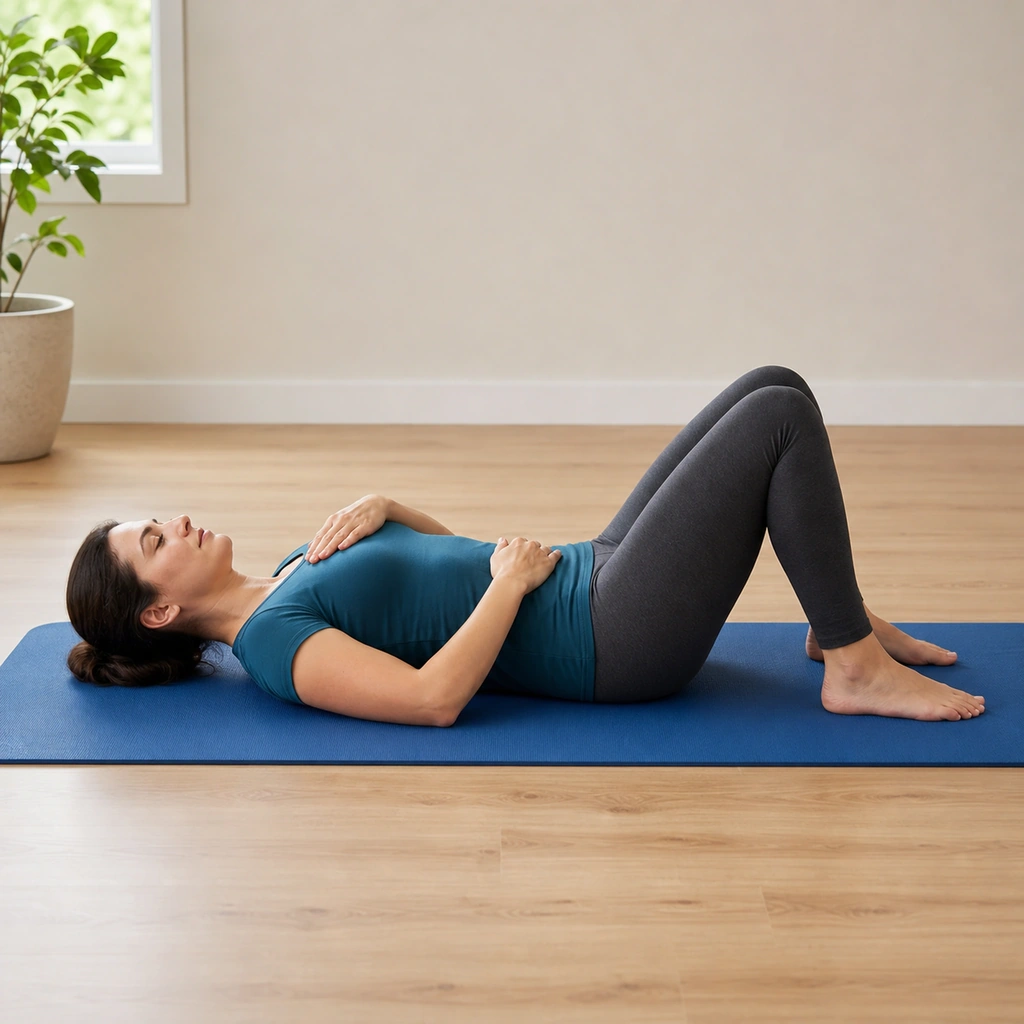
Deep breathing using your diaphragm to reduce neck muscle tension and improve relaxation. Foundation for neck health.
Stop if
Choose an easier exercise if pain reaches 6 out of 10 or becomes sharp. Stop and rest if pain reaches 8 out of 10.
This is the general ClapMove rule. This exercise has no extra stop rule of its own.
- Pain 6 out of 10 or more: choose an easier exercise.
- Pain 8 out of 10 or more: stop and rest.
Equipment needed
- Works at home
chair
Home Options
- chair
Dosage
1
Sets
180 sec
Reps / Time
0 sec
Rest
4 in / 6 out
Tempo
Step-by-Step Guide
Set up
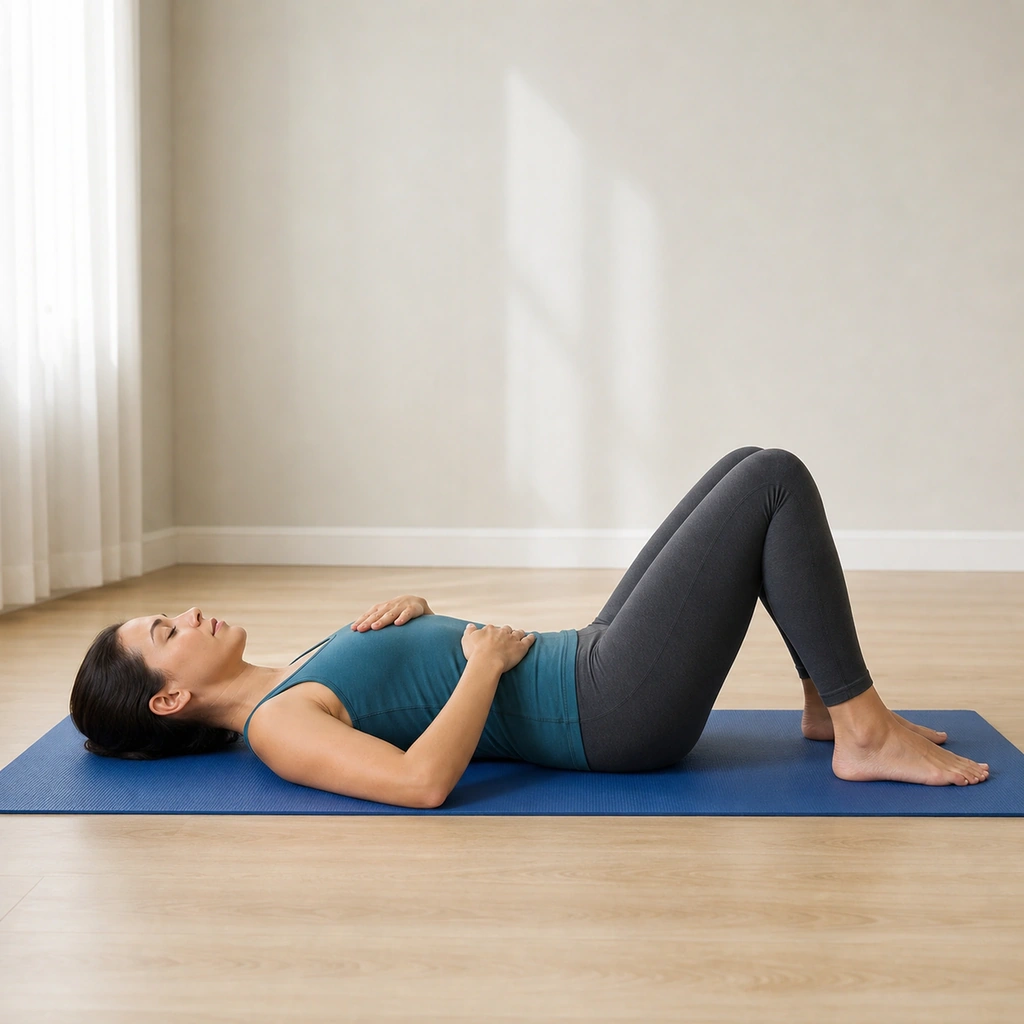
- Lie on your back with knees bent, or sit in a comfortable chair
- Place one hand on your chest, one on your belly
- Relax your shoulders completely
Step 1 of 5
Breathe in slowly through your nose
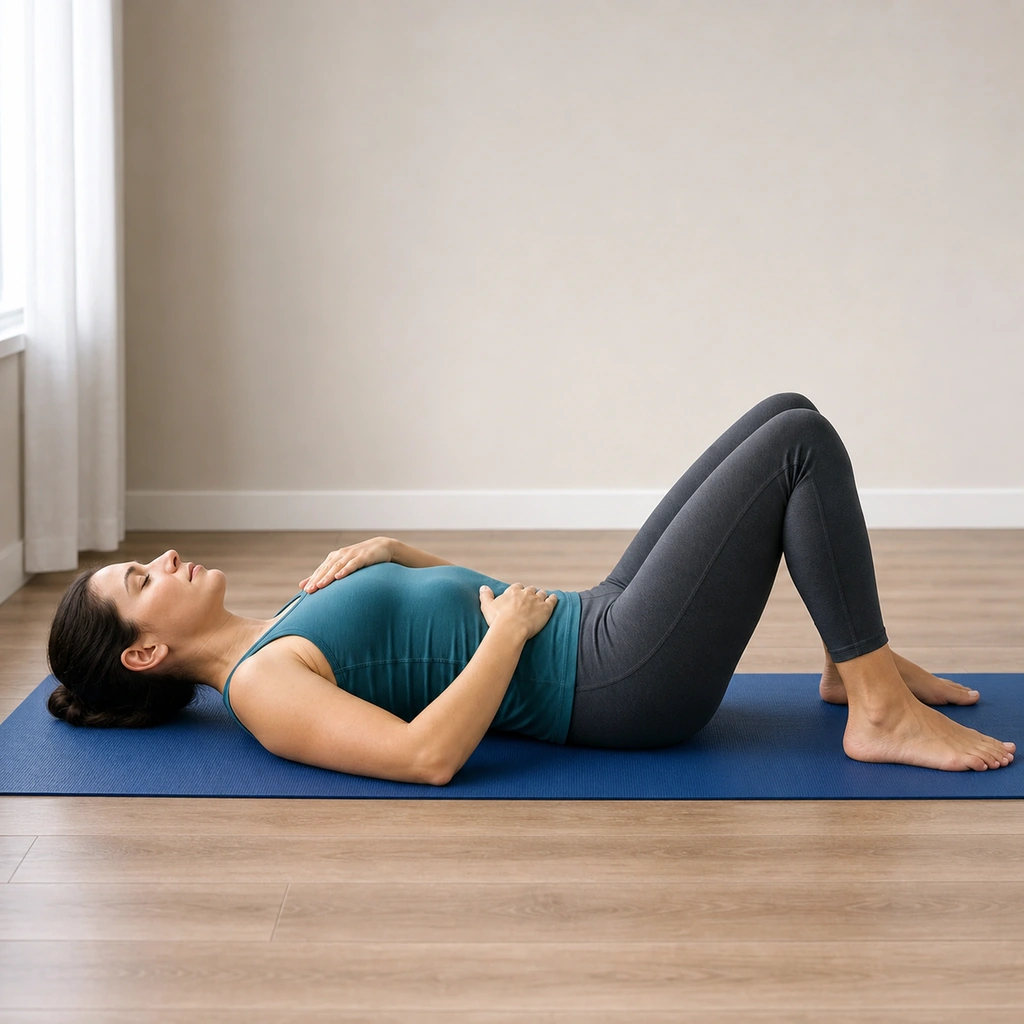
Step 2 of 5
Your belly should rise while chest stays relatively still
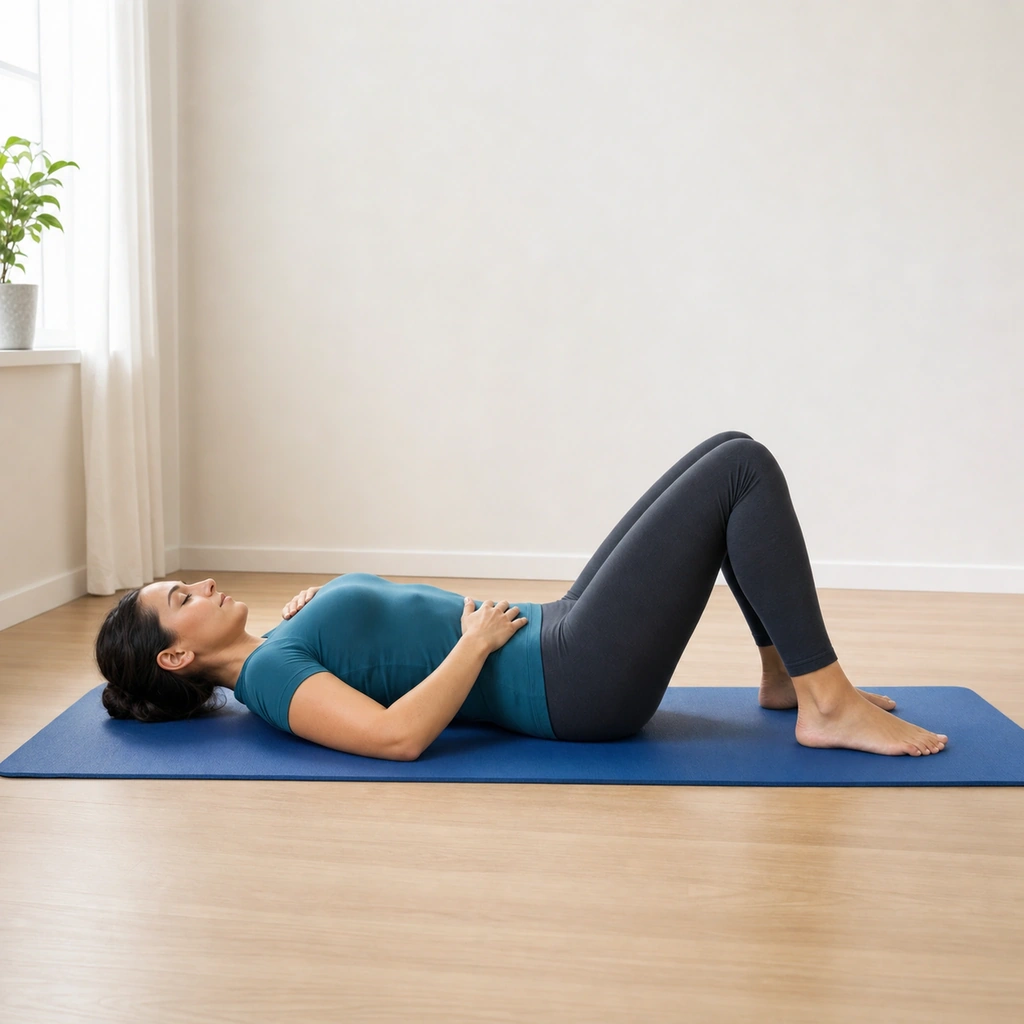
Step 3 of 5
Pause briefly at top of breath
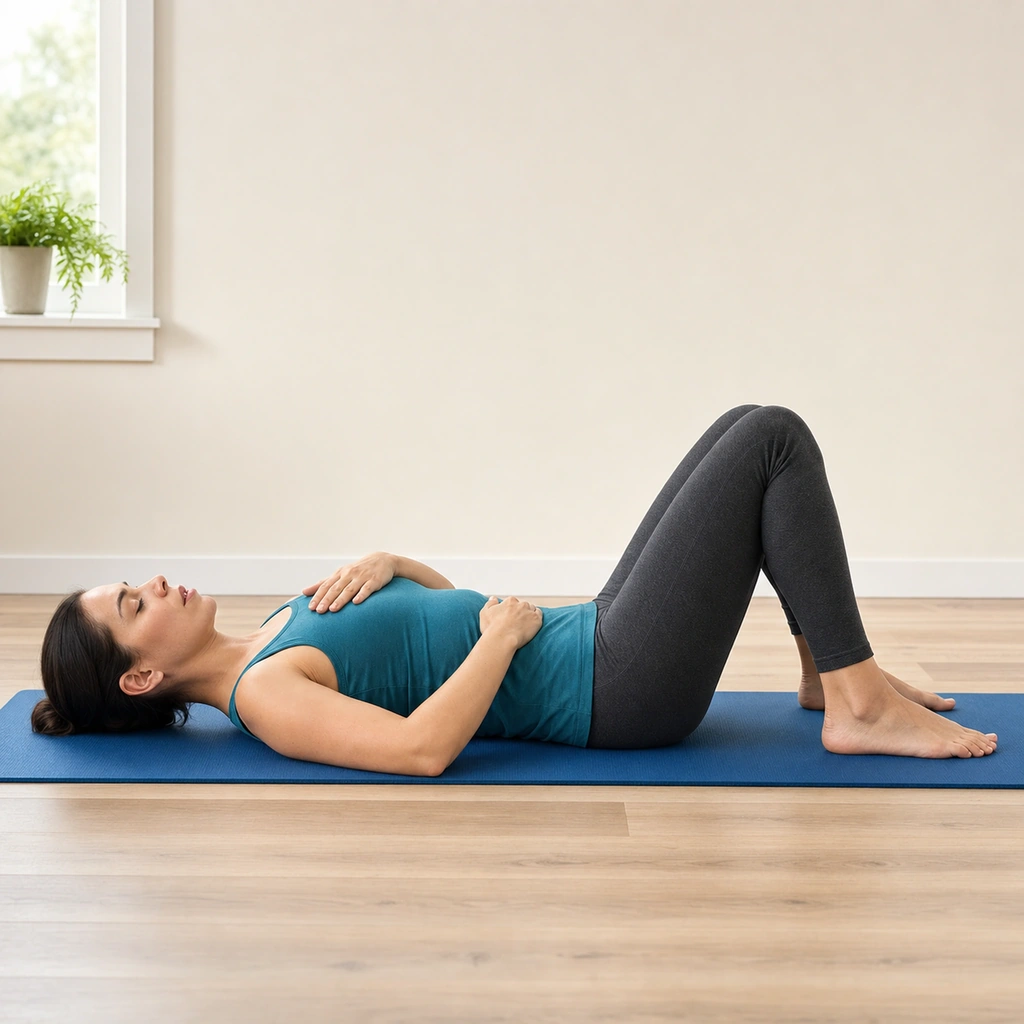
Step 4 of 5
Exhale slowly through your mouth or nose
Step 5 of 5
Belly naturally falls as you exhale
Breathing
- 4 count inhale
- 6 count exhale
- Slow and steady
Form Cues
- Belly rises on inhale
- Chest stays quiet
- Slow exhale
- Shoulders stay relaxed
Common Mistakes to Avoid
- Chest rising instead of belly
- Breathing too fast
- Tensing shoulders while breathing
- Shallow breaths
Safety Information
Very safe for all populations. Stop if lightheaded.
Progressions
Longer sessions. Eyes closed. During activities.
Regressions
Shorter sessions. Guided audio.
Get your free personalized program at clapmove.com/register
Printed from clapmove.com. ClapMove is not a replacement for professional medical advice — always consult a healthcare provider before starting any exercise program.