spine core
Multifidus exercises
Segmental spinal stability and motor control.
88
Exercises
26
Primary target
Related exercise guides
Home equipment tiers prioritize bodyweight, walls, chairs, towels, bands, and household loads before gym-only equipment.

Back Extension - 45 Degree Bench
Using a 45-degree back extension bench, hinge at the hips and raise your torso. Great for posterior chain strength.

Back Extension - Floor (Prone Superman)
Lying face down, lift arms and legs slightly off floor. A gentle way to activate back extensors without equipment.
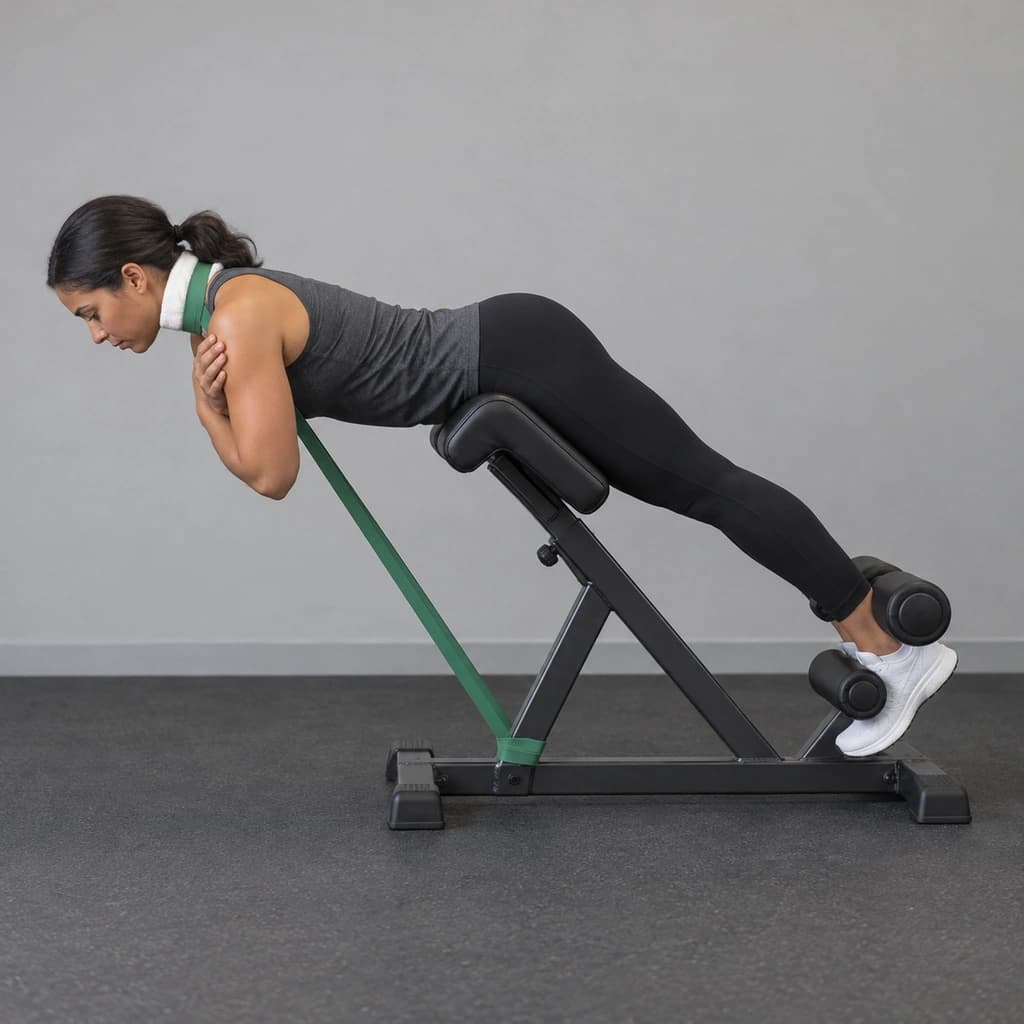
Band Back Extension on a Hyperextension Bench
You lie face down on a hyperextension bench with your hips on the pad and feet locked under the footpads. A resistance band loops around you. You raise your upper body against the band, then lower it.

Band Resisted Hip IR/ER (Standing)
Standing hip rotation against band resistance for rotational control and strength.
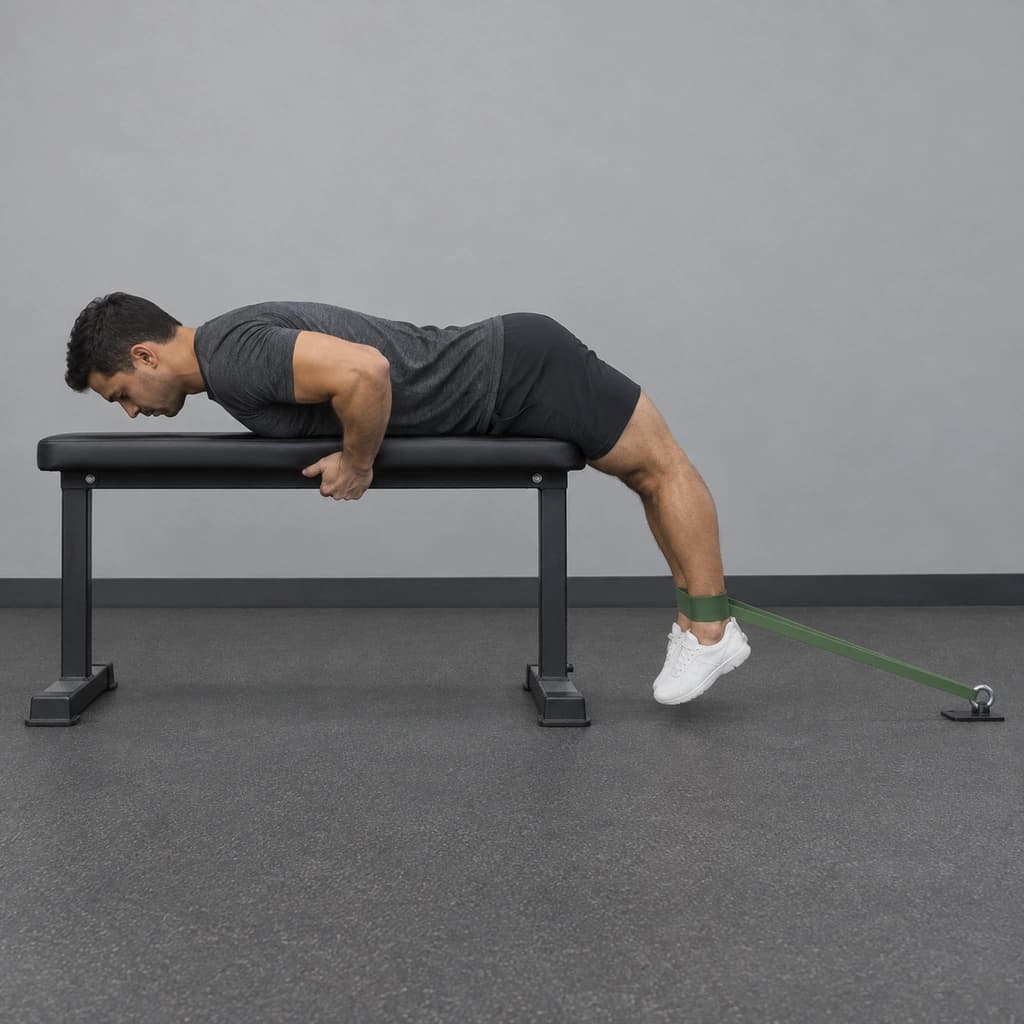
Band Reverse Hyperextension
You lie face down on a flat bench with your legs hanging off the end and a band looped around both ankles. You lift your legs up behind you against the band, then lower them.

Band-Resisted Neck Extension
Use a band for gentle resistance during neck extension. Use caution and small range.

Band-Resisted Neck Flexion
Use a band for gentle resistance during neck flexion. Only attempt after mastering isometrics.

Band-Resisted Neck Rotation
Use a band for gentle resistance during neck rotation. Strengthens rotational muscles.

Band-Resisted Neck Side Bend
Use a band for gentle resistance during neck side bending. Strengthens lateral neck muscles.

Banded Clamshell
Clamshell with band resistance for increased glute medius activation. Progression from bodyweight clamshell.

Barbell Hip Thrust
Heavy loaded hip thrust for maximal glute strength. The primary exercise for building powerful glutes to support SI joint.

Barbell RDL
Barbell Romanian deadlift for maximal posterior chain loading. Advanced exercise requiring excellent hip hinge mechanics.

Bird Dog
On hands and knees, extend opposite arm and leg. Builds shoulder stability and core strength together.

Bird Dog (Contralateral Chain Training)
Trains the posterior chain to work diagonally across the spine - the way we actually move in life. Essential for spine stability.

Bird Dog (SI Safe)
Quadruped core stability exercise teaching anti-rotation control. Critical for SI joint stability during movement.

Bird Dog - Full (Contralateral)
Extend opposite arm and leg while on all fours. One of the most back-friendly core exercises that builds stability and coordination.

Bird Dog - Leg Only
On all fours, extend one leg straight back while keeping your hips level. This builds back and hip stability without aggravating most back conditions.

Bird Dog with Band Resistance
Bird dog with band around extending limbs for added resistance. Advanced anti-rotation core exercise.

Bird Dog with Elbow to Knee
Full bird dog with a crunch: bring elbow and knee together under your body, then extend. Adds dynamic movement to the classic exercise.

Bird-Dog
From hands and knees, extend opposite arm and leg. Classic core and back stability exercise.

Box Jump (Low)
Explosive jumping onto box for power development. Only for those fully recovered with no symptoms during impact.

Bridge Hold (Isometric)
Isometric glute bridge hold for building endurance and control in the hip extensors.

Bridge with Adductor Squeeze
Glute bridge combined with inner thigh activation. Particularly effective for 'shear-type' SI pain patterns.

Bridge with Band Abduction
Glute bridge with band pushing knees outward. Activates both glute max and glute med simultaneously for complete hip stability.

Bulgarian Split Squat
Single-leg squat with rear foot elevated. Builds unilateral leg strength and hip stability for SI joint support.

Bulgarian Split Squat (Rear Foot Elevated)
Split squat with rear foot elevated on a bench. Excellent single-leg strength and quad development.

Cable Chop (Anti-Rotation)
Diagonal pulling pattern for rotational core strength. Trains controlled rotation through upper back while protecting SI joint.

Cable Chop - High to Low
Pull a cable from high to low diagonally across your body. Builds rotational core strength with controlled movement.

Cable Lift (Anti-Rotation)
Diagonal pushing pattern for rotational core strength. Complements the chop pattern for balanced rotational training.

Cable Lift - Low to High
The opposite of the chop - pull a cable from low to high across your body. Builds upward rotational power.

Cable Pull-Through
Cable hip hinge movement for glute and hamstring activation with constant tension.

Cable Seated Row
Use a cable machine to perform seated rows. Gold standard gym exercise for mid-back strength.

Cable/Band Row
Horizontal pulling exercise for upper back and trunk stability. Improves posture and trunk stability for SI joint protection.

Cat-Camel (Cat-Cow)
Alternate between arching and rounding your back on all fours. This gentle motion lubricates your spine and reduces stiffness.

Cat-Camel (Full Spine Wave)
The classic spine mobility exercise that moves each segment of the spine sequentially. Wakes up the entire spine chain and lubricates the joints.

Cat-Cow
Classic spine mobility exercise alternating between rounding and arching your back. Warms up the entire spine.

Cat-Cow with Neck Focus
Classic spinal mobility exercise with emphasis on controlled neck movement during transitions.

Cervical Rotation (Look Left/Right)
Gently turn your head left and right to improve neck rotation. A fundamental mobility exercise safe for most neck conditions.

Cervical SNAG (Self-Mobilization)
Self-mobilization technique using a towel to assist cervical movement. Based on Mulligan technique principles.

Cervical Side Bend (Ear to Shoulder)
Gently tilt your head to bring ear toward shoulder. Improves lateral neck mobility without straining muscles.

Child's Pose
A gentle resting position where you sit back on your heels with arms extended. Good for relaxing back muscles when flexion feels comfortable.

Child's Pose with Reach
Rest in child's pose and walk your hands forward to stretch your shoulders and back.

Copenhagen Plank (Short Lever)
Side plank variation with adductor emphasis using elevated leg position. Short lever version for beginners.

Crocodile Breathing
Lie on your stomach to feel your belly and ribs expand into the floor. This teaches diaphragmatic breathing and calms the nervous system.

Dead Bug (SI Safe)
Core stability exercise that maintains neutral spine while moving limbs. Essential for SI joint control and protection.

Dead Bug (Spine Chain Stability)
The gold standard for training the core to protect the spine during arm and leg movement. Teaches the whole chain to work together.

Dead Bug - Contralateral
The full dead bug: extend opposite arm and leg simultaneously while keeping your back stable. One of the best anti-extension core exercises.

Dead Bug - Heel Taps
Lie on your back and slowly lower one heel to tap the floor while keeping your back stable. This teaches core control without stressing your spine.

Dead Bug - Leg Extension
A more challenging dead bug where you extend one leg out straight while keeping your back flat. Excellent for building anti-extension core strength.

Dead Bug Arm Reach
Lie on back and reach arms overhead while keeping back flat. Works core and shoulder control together.

Dead Bug with Band Pull
Dead bug with added resistance from band pull-down. Increases challenge to core stability and anti-extension control.

Dead Bug with Neck Neutral
Core exercise performed with focus on maintaining neutral neck position. Builds core-neck coordination.

Diaphragmatic Breathing (90/90 Position)
Learn proper breathing to calm pain, relax tight back muscles, and improve core timing. The 90/90 position takes pressure off your lower back.

Diaphragmatic Breathing (Belly Breathing)
Deep breathing using your diaphragm to reduce neck muscle tension and improve relaxation. Foundation for neck health.

Front Squat
Barbell squat with bar in front rack position. Emphasizes quadriceps and requires upright torso.

Goblet Squat
Squat while holding a weight at your chest. The counterbalance often helps depth and form.

Good Morning (Bodyweight)
Bodyweight hip hinge exercise for posterior chain activation and hamstring flexibility.

Half-Kneeling Thoracic Rotation
Assume a half-kneeling position and rotate your torso. Adds hip stability challenge to thoracic rotation.

Hip Flexor March (Supine)
Controlled hip flexor strengthening performed lying on back without spinal strain.

Hip Hinge Drill
Foundational movement pattern teaching proper hip hinge mechanics for deadlift preparation.

Hip Hinge with Dowel
Teaches the fundamental hip hinge pattern while maintaining a neutral spine. Essential for protecting the back during bending and lifting.

Hip Thrust (Bench)
Gold standard glute strengthening exercise with upper back elevated on bench.

Inverted Row
Row your body up to a bar while lying under it. Like a reverse push-up.

Lateral Lunge (Controlled)
Side lunge with emphasis on controlled movement for adductor and glute development.

Lateral Lunge (Loaded)
Weighted side lunge for adductor and glute strength in frontal plane.

Leg Press (Hip-Dominant)
Leg press with high and wide foot position emphasizing hip extensors.
Prone Press-Ups (McKenzie Press-Up)
Press your upper body up while keeping hips on the floor. This extension exercise is a cornerstone of disc-related back pain treatment.
Quadruped Thoracic Rotation
On hands and knees, place one hand behind your head and rotate to open up your chest. Simple yet effective rotation drill.
Reverse Hyperextension
Hip extension exercise with torso fixed and legs moving. Great for posterior chain and spinal decompression.
Seated Hip External Rotation Lift-Off
Seated hip external rotation strengthening for deep rotator muscles.
Seated Hip Internal Rotation Lift-Off
Seated hip internal rotation strengthening targeting deep hip rotators.
Seated Slump to Tall
Practice moving between slouched and tall postures to improve spinal mobility and body awareness.